What Are the Signs You Need New Ductwork?
The clearest signs your ductwork needs attention: rooms that stay too hot or too cold, weak airflow from some registers, stuffy areas, rising heating or cooling bills, visible damage, or flexible ducts that are crushed, kinked, or disconnected. Those symptoms don't automatically mean every duct in the house needs replacing. They mean the air distribution system needs a closer look.
In Frederick County homes, ducts may run through attics, crawlspaces, garages, dropped ceilings, walls, or basements. Some problems are accessible and repairable. Others involve damaged material, wet insulation, poor sizing, or a layout that can't deliver air reliably. The real question isn't whether you need new ductwork. It's what's causing the comfort problem, and whether sealing, repair, insulation, balancing, or replacement is the sensible fix.
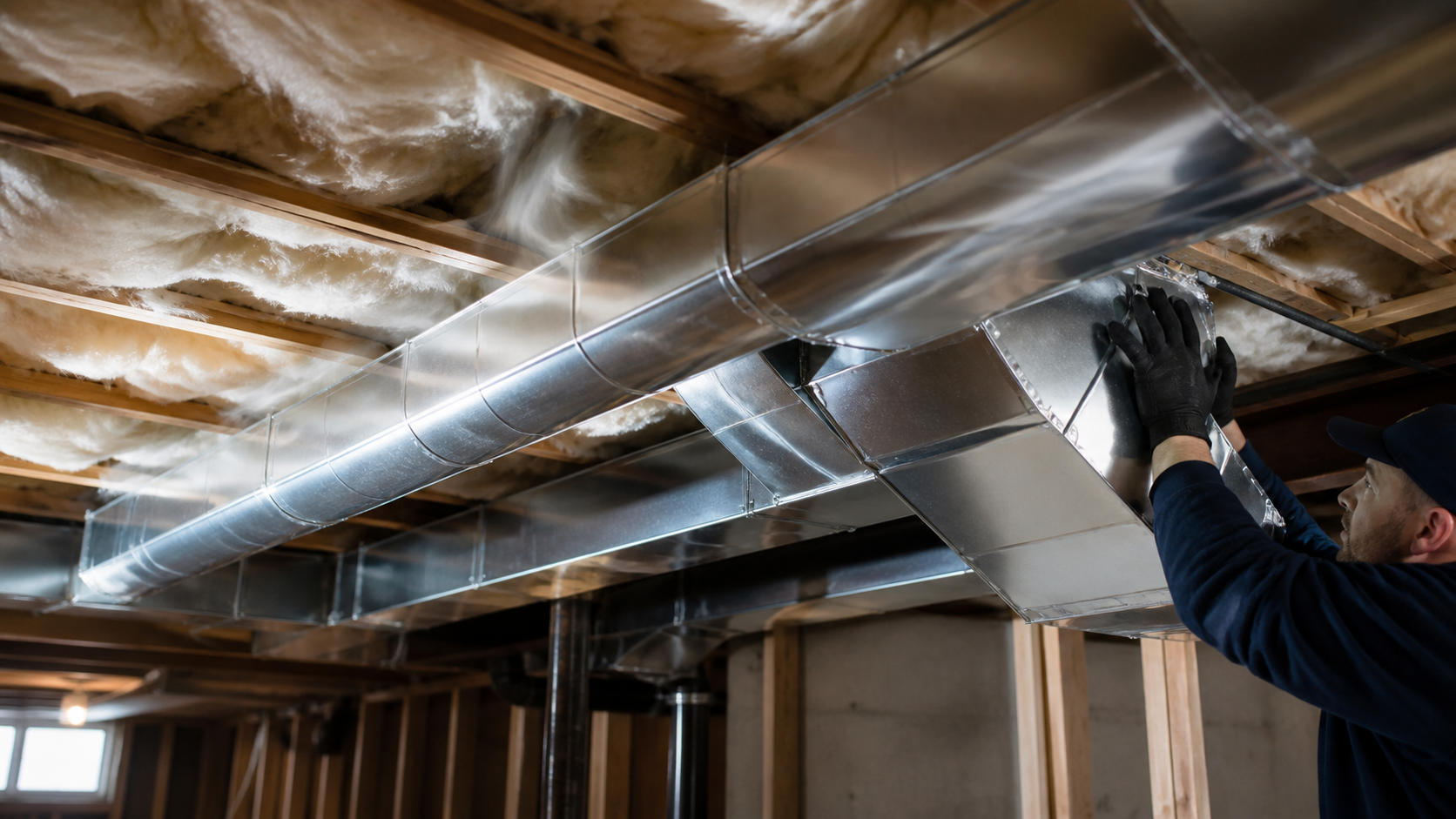
Ductwork symptoms and what they may suggest
| What you notice | What it may point to |
|---|---|
| The same room never reaches the thermostat setting | A leak, blockage, poor sizing, insulation problem, equipment issue, or missing return path could be affecting delivery. |
| Airflow is weak or missing from certain registers | The cause may be a separated or crushed duct, blocked return, closed damper, dirty filter, blower problem, or another HVAC fault. |
| The house feels stuffy even when the system runs | Supply or return leakage can disrupt air movement, but filter, equipment, insulation, and ventilation issues can feel similar. |
| Heating or cooling bills rise without a clear change in use | Leaks, holes, poor connections, weather, equipment condition, insulation, and household use all deserve consideration. |
| You can see crushed, wet, or disconnected flexible duct | A damaged section may be more practical to replace, especially when the material is wet, repeatedly fails, or can't be sealed reliably. |
Start with the pattern, not a replacement quote
If one bedroom is always warm while another is too cool, or an addition never feels like the rest of the house, the duct system is asking for attention. ENERGY STAR lists rooms that are difficult to heat or cool as a sign of poorly performing ducts. A room-to-room difference can also come from insulation, windows, solar exposure, equipment capacity, or a blocked filter, so the symptom alone doesn't identify the failed part.
Weak airflow is useful information, but it isn't proof of duct failure. A healthy central system usually shows a 15 to 20 degree split between the air going in and the air coming out. A dirty filter, blower problem, closed damper, frozen coil, or control issue can look similar. We separate those possibilities during an inspection by checking whether conditioned air is reaching the room, whether return air can leave the room, and whether the equipment's operating the way it should.
- Write down which rooms are affected and whether the symptom shows up during heating, cooling, or both.
- Compare nearby registers while the system is running, without opening equipment or entering an unsafe crawlspace or attic.
- Note whether the problem is new, getting worse, or tied to a filter change, weather pattern, or recent service.
Visible damage and moisture change the decision
Flexible duct needs room to carry air without being sharply bent or compressed. If an accessible section is crushed, kinked, separated, or missing its insulation, we can figure out whether it's worth straightening, reconnecting, sealing, or replacing. Don't disturb insulation or climb into an area that isn't safe to inspect.
Some duct problems are a sealing or connection job. Others make replacement of one section, several sections, or the insulation more practical. The U.S. Department of Energy says damaged duct sections may be replaced when replacement is more cost effective than repairing and air sealing them. Moisture matters too. The EPA says wet or moldy insulated duct material can't be effectively cleaned and should be removed and replaced. A musty smell alone doesn't prove mold inside the ducts, so we still track down the source of the moisture.
Visible dust isn't, by itself, a reason to replace all ductwork. The EPA identifies specific conditions that may warrant further action, including substantial visible mold, vermin, excessive dust or debris, or particles released from supply registers. We correct the underlying cause before cleaning, retrofitting, or replacing the ducts.
- Look only at duct sections you can reach safely in an unfinished area.
- Treat wet insulation, standing water, and repeated disconnection as reasons to call us for an evaluation.
- Don't approve a whole-home replacement based on dust alone or one uncomfortable room.
Can ductwork be repaired instead of replaced?
Often, the first question is whether we can improve the system without replacing every section. We can seal accessible leaks and connections. ENERGY STAR describes mastic and appropriate metal tape as materials for accessible leaks and warns that ordinary cloth duct tape isn't a durable duct sealant. We may also reconnect damaged sections, straighten crushed flexible duct, seal registers, and insulate ductwork in unconditioned areas.
Repair makes more sense when the existing material is sound, the leak or separation is accessible, and the system can deliver balanced airflow after the work. Replacement makes more sense when a section is structurally damaged, wet or moldy, repeatedly fails, or can't be repaired without wasting labor and material. That's why duct sealing versus replacement should follow an inspection, not a guess.
Testing keeps the decision grounded. ENERGY STAR recommends inspecting the duct system, running a leakage test, and making necessary repairs. A before-and-after leakage test can show whether sealing actually improved the system. Ask us what we found, what the proposed work addresses, and how we'll check airflow once the work is complete.
- Ask whether the material is sound enough to repair and whether the work is accessible.
- Separate the runs that need work from the ones that are still performing well.
- Ask how we'll check leakage, airflow, or temperature balance after the repair.
What a useful ductwork evaluation should check
A useful evaluation looks past the one register that feels weak. ENERGY STAR recommends inspecting the whole duct system, including attic and crawlspace areas, and evaluating supply and return air balance. Our inspection connects the symptom you noticed to the section, restriction, leak, moisture problem, or equipment condition that could explain it.
Duct condition also matters when your HVAC equipment changes. The Department of Energy notes that leaky, uninsulated, or undersized ducts can reduce the realized performance of a new heat pump. A new system connected to a problem distribution system may not fix the comfort issue on its own.
- Supply and return airflow, including a blocked, undersized, or missing return air path.
- Accessible connections, register boots, plenums, holes, and separated or crushed flexible duct.
- Duct insulation in an attic, crawlspace, garage, or another unconditioned area.
- Leakage testing or another way to establish whether conditioned air is escaping.
- Filter, coil, blower, equipment, and controls that could mimic a duct problem.
- Moisture, standing water, wet insulation, or contamination that could damage the system.
When to stop troubleshooting
Don't inspect or modify ductwork around a fuel-burning furnace if you smell gas, hear an alarm, or suspect a venting problem. Fuel-burning heating systems can produce carbon monoxide when they're poorly maintained or have defective or blocked venting. Leave the home if a carbon monoxide alarm sounds, then call 911 or the gas utility from a safe location. Don't restart the furnace or reset equipment before the property's been cleared.
For a non-emergency problem, write down the rooms affected, when the symptom began, whether it happens during heating or cooling, and what you can see at accessible registers or duct sections. Tell us all of it. A local diagnosis can help you understand whether the next step is sealing, repair, insulation, balancing, a section replacement, or a broader HVAC repair.
- Leave first for gas odor, a carbon monoxide alarm, smoke, fire, or a suspected venting problem.
- Call 911 or the gas utility from a safe location when there's an immediate safety concern.
- For a comfort problem, bring the symptom pattern and accessible observations to us.
Questions that come up next
What are the signs you need new ductwork?
Persistent uneven rooms, weak or missing airflow, stuffiness, rising bills, and visible damage can all point to a ductwork problem. Testing still matters because the right fix may be sealing, repair, insulation, balancing, or replacing only the damaged sections.
Does weak airflow mean I need new ducts?
Not necessarily. A dirty filter, blower issue, closed damper, frozen coil, blocked return, control problem, or separated duct can create the same symptom. We check the duct path and the equipment before we ever recommend replacement.
When should ductwork be repaired instead of replaced?
Repair makes more sense when the duct material is sound, the problem is accessible, and the system can deliver balanced airflow after the work. Replacement gets more practical when sections are structurally damaged, wet, repeatedly failing, or not worth repairing.
Can wet or moldy ductwork be cleaned?
Wet or moldy insulated duct material needs professional attention. The EPA says insulated duct material that's wet or moldy can't be effectively cleaned and should be removed and replaced. We also track down and fix the moisture source.
What should I do if a carbon monoxide alarm sounds near the furnace?
Leave the home and call 911 or the gas utility from a safe location. Don't restart the furnace, reset equipment, or inspect the ductwork until responders or the utility clear the property.
Need HVAC help in Frederick?
Tell us what the system is doing and what you've checked already. If it needs a visit, we'll say so.