You'll talk to someone who knows HVAC
Describe what changed, and we'll walk you through the safe checks first. Sometimes it's a tripped breaker or a clogged filter, and we'll tell you.
HVAC repair in Frederick County
Most repair bills go wrong at the diagnosis. We test your system, show you what failed, and give you a price before any work starts. No guessing and no upselling.
Serving Frederick, Ballenger Creek, Urbana, Walkersville, Middletown, New Market, Mount Airy, Thurmont and Brunswick.
Every call
Describe what changed, and we'll walk you through the safe checks first. Sometimes it's a tripped breaker or a clogged filter, and we'll tell you.
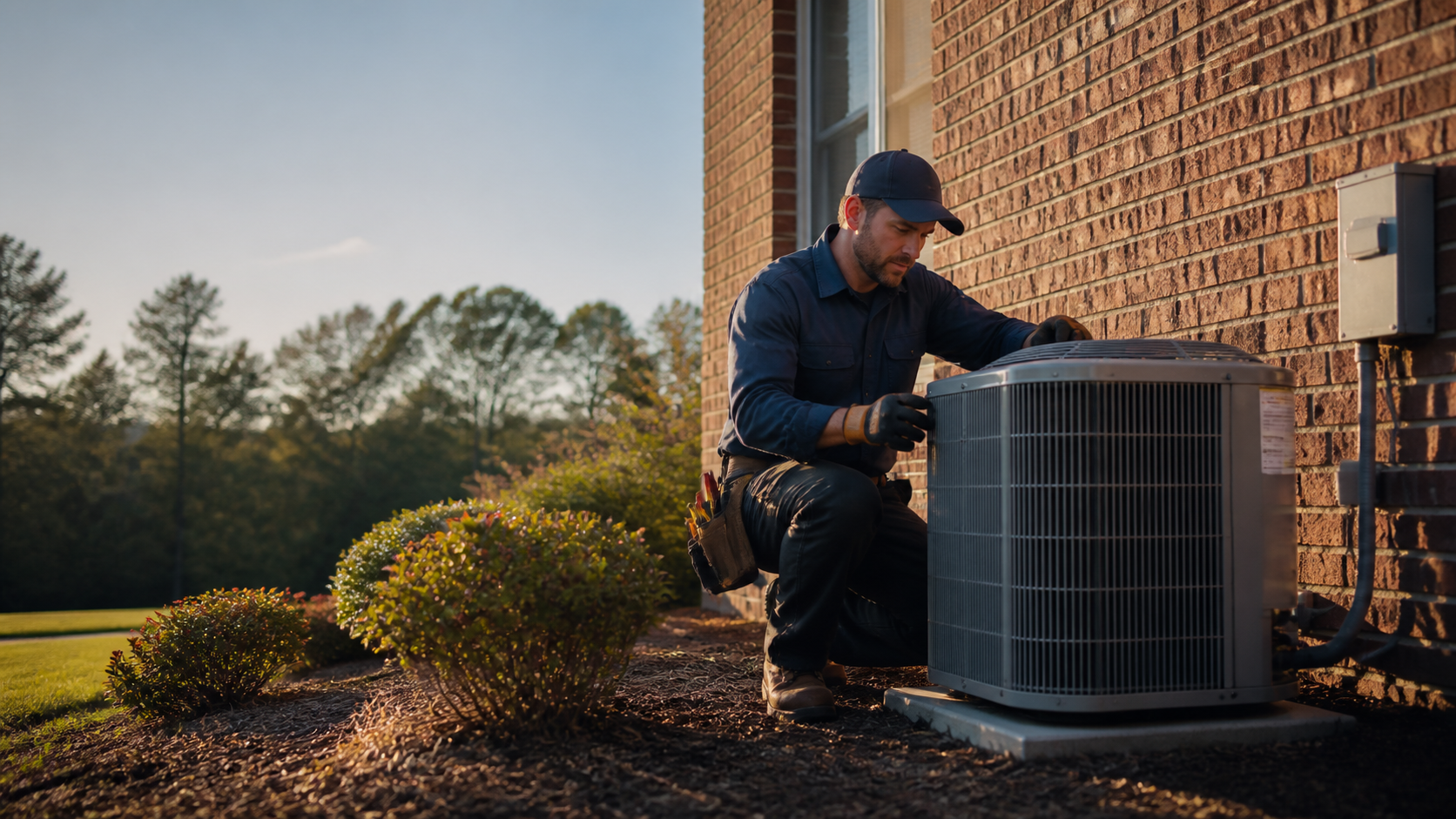
The technician checks electrical, airflow, refrigerant and controls before recommending anything.
We show you the failed part or the reading, so you know why the repair is needed.
If a repair doesn't make sense for your system's age and condition, we'll say so, and if it does, we'll say that too.
Start with what changed
Pick the closest match. Each one explains the usual causes, what you can safely check, and when to call.
Often a dirty coil, low refrigerant or a failing capacitor. Check the filter and the outdoor unit first.
AC running but not coolingCheck the thermostat batteries, the breaker and the furnace door switch. If the igniter clicks but nothing lights, call us.
Furnace running but not heatingIt could be a normal defrost cycle or a reversing valve problem. We'll help you tell which.
Heat pump blowing cold airTurn the system off and let it thaw. Running it frozen can damage the compressor.
Frozen evaporator coilFrequent on/off cycles usually point to sizing, airflow or thermostat issues.
Furnace short cyclingA grinding, banging or burning smell means shut it off and call.
Burning smell from the furnace or air handlerThe equipment matters too
Local housing stock
Frederick summers bring long stretches of heat and humidity, and winter brings cold snaps that push heat pumps to their limits. Many homes in Ballenger Creek, Urbana and New Market were built during the 1990s–2000s boom, and the original systems are now reaching the end of their lives.
Older homes downtown and in Brunswick often have ductwork that was never designed for central air, which makes a working system feel broken. Knowing the housing stock helps us find the real problem faster.
Frederick County extreme heat informationA diagnosis you can follow
The exact order changes with the equipment and the problem. What stays the same: you'll know what we found before you spend anything.
The room, the temperature, a sound, a smell, water, ice, or whatever the thermostat shows. You don't have to know which part quit — describing it is enough.
Check the thermostat and the filter, make sure vents and returns are clear, and look at the outdoor unit from a distance. Stop there — don't open equipment or touch wiring.
We test whatever the symptom points at — how the system starts, the airflow, the controls, the drain, the electrical readings — until the cause shows itself.
We'll show you what failed, what the repair fixes, and whether anything else in the house is affecting comfort. Then it's your call.
Safety before service
Leave the house first, then call your gas utility or 911 from outside. Call us after it's safe. Don't try to diagnose a gas smell yourself.
Repair or replacement
Age alone doesn't decide it. We look at the repair cost compared to the system's value, how often it's failed, the refrigerant type, and how comfortable the house really is. You'll get a straight recommendation, and the decision is yours.
Repair or replace: how we call itOne part quit, the rest of the system is sound, and there's no pattern of repeat breakdowns.
A major component, repeated repairs, poor comfort, a safety concern, or equipment that no longer fits the house.
Frederick County weather
Extreme heat, a hard freeze, or someone medically vulnerable at home can change the urgency. If cooling fails in a heat wave, get to a cooler place first — the county's extreme-heat page lists options.
Frederick County extreme heat informationENERGY STAR recommends cooling maintenance in spring and heating maintenance in fall. Same idea on our end — we'd rather find the small stuff before the hardest weather arrives.
Review the maintenance timingBefore you call
If the system won't start or won't keep up, it's worth a diagnosis. So are new noises, weak airflow, water at the unit, ice, or constant cycling on and off. You don't have to work out which part failed — that's our job.
Check the thermostat mode and set point, swap the batteries if the display is blank, and look at the filter without opening the cabinet. Make sure vents and returns are clear. Note any water, ice, rust, odd sounds, or a unit that isn't running — and don't touch wiring, don't add refrigerant, don't keep resetting a breaker.
It depends on the symptom. We usually test the thermostat and filter first, then follow where the problem points — airflow for weak vents, the drain for water, electrical readings for a unit that won't start. The goal is to tie what you noticed to the part that's actually failing, before anyone talks about a repair.
Repair usually wins when one part failed and the rest of the system is sound. Replacement enters the conversation when safety is involved, a major component has gone, repairs keep repeating, or the house hasn't been comfortable in years. Age alone doesn't decide it.
Get out of the house and call 911 or the gas utility from outside. Don't go looking for the leak, don't restart the furnace, and don't reset the breaker. HVAC service comes after everyone is safe.
Yes. We service all major residential brands, including Carrier, Trane, Lennox, Rheem, Goodman, Daikin and Mitsubishi mini-splits.
Frederick and the surrounding communities in Frederick County, including Ballenger Creek, Urbana, Walkersville, Middletown, New Market, Mount Airy, Thurmont and Brunswick.
What the system is doing, when it started, the brand or age if you know it, and any error codes on the thermostat or unit.
Sometimes. If it's clearly a simple fix, or clearly a replacement, we'll tell you before we come out.
Call (301) 555-1234 or request service online. Tell us what changed, and we'll take it from there.