One room stays warm
A distant bedroom, a kinked duct, a disconnected joint, or poor distribution can all look like a problem at the register.
Urbana HVAC diagnosis
Much of Urbana went up inside a couple of decades - the Villages of Urbana and the subdivisions that followed - so a lot of the equipment here is the same age and hitting its first real repairs together. A newer home can still have one room that stays uncomfortable or a system that runs without keeping up. We start with what the equipment, the ducts, and the airflow are actually doing.
Start with the symptom
Note the thermostat mode and filter, then airflow, water, or ice, plus any noise, error code, or sign that the outdoor unit won't start.
A distant bedroom, a kinked duct, a disconnected joint, or poor distribution can all look like a problem at the register.
Poor cooling can involve airflow, refrigerant, controls, load, or the outdoor equipment. Runtime alone doesn't tell us which one.
The filter, supply and return paths, duct design, or an indoor blower can all affect how much air reaches the room.
Drainage trouble, construction debris, a frozen coil, or a venting problem needs a closer look. Stop if it involves gas, smoke, sparking, or carbon monoxide.
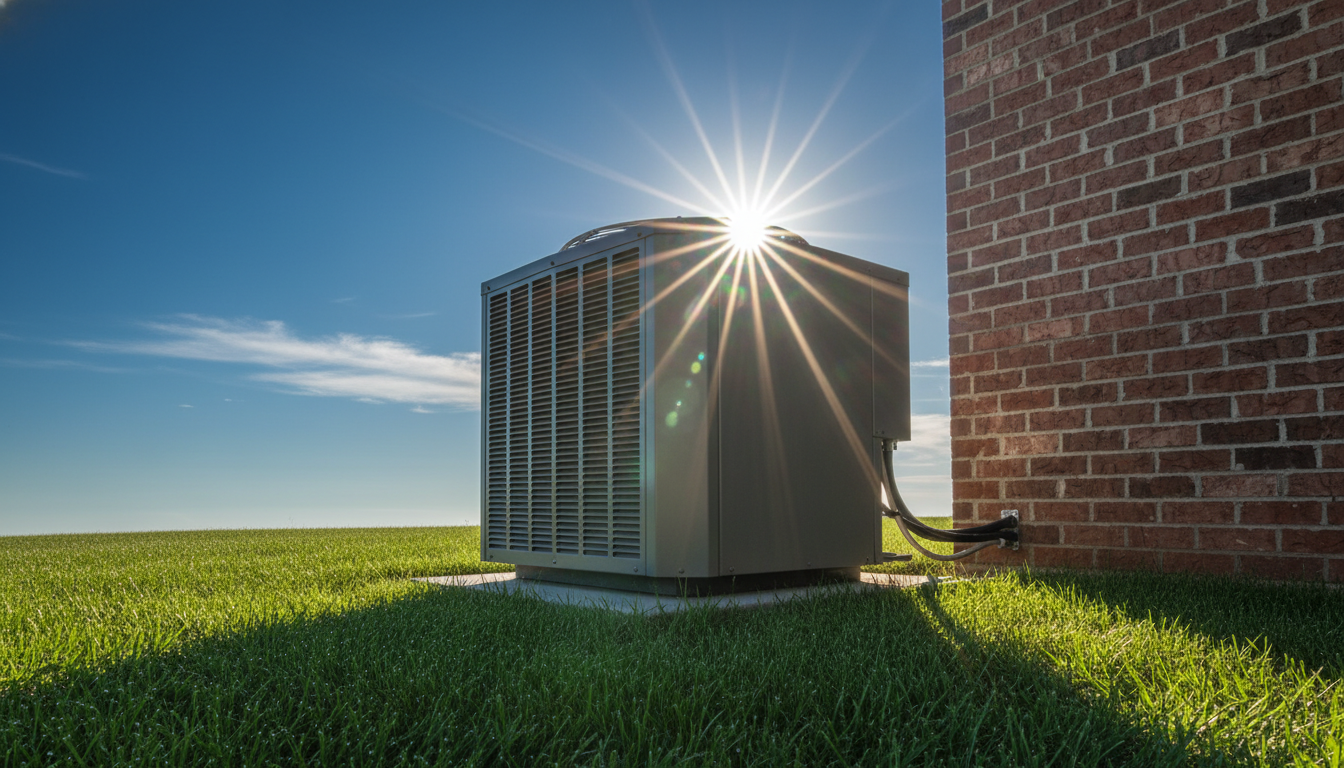
What a whole-system diagnosis checks
Visible equipment isn't always the source of the trouble. A newer air handler can run just fine while a duct's kinked, disconnected, poorly configured, or unable to move air effectively to a distant room.
On the visit we check the thermostat response, the filter, and the airflow, then the duct connections, the drain, the controls, or the venting - whichever the symptom calls for. Your complaint gets tied to an actual condition before we talk about a fix.
See why new-home inspection and live system performance are different questions.A clearer next step
Age is context, not a diagnosis. You should walk away understanding what we found, which part of the system relates to your complaint, and why the next step we're proposing fits.
Tell us which room's uncomfortable, when the problem began, and whether it affects one zone or the whole home.
We follow the path from the thermostat through the filter, the airflow, the duct connections, and the drain, out to the equipment.
A focused repair may be right for a limited failure. A major or repeated problem may call for a separate replacement conversation.
Frederick County context
A newer home in Urbana may not show the same diagnostic picture as one in Walkersville, Middletown, New Market, Mount Airy, or another part of the county. Layout, insulation, ductwork, equipment, and fuel source all matter.
One room may be affected by a duct, a connection, a damper, or a return-air problem while the equipment itself is running fine.
A component can be installed correctly on paper without the complete system performing as expected once the home's occupied.
A control, electrical part, refrigerant issue, or major failure can change the repair question once we've traced the symptom.
Before you call
You don't need to remove a panel or test a theory. The safest information is what you observed, when it happens, and where the comfort problem shows up.
Don't handle refrigerant, alter gas or electrical connections, or keep operating the system while guessing about a serious venting concern. For gas odor, smoke, sparking, or a carbon monoxide alarm, leave the home and call 911 first.
Questions before calling
New construction can still hide installation details or performance problems that only show up once the home's occupied. We evaluate a newer system as a working system, not by its age alone.
When the home's safe, check the thermostat mode, set point, filter, and unobstructed registers. Try a breaker once only if there's no burning smell or visible damage. Leave the panels closed. Don't handle refrigerant or alter gas or electrical connections.
No. The most useful information is what changed, when it happens, which rooms are affected, and what the system's doing now.
After the diagnosis connects the complaint to a major failure, repeated problems, unsafe operation, or a condition that changes the long-term math. A newer home doesn't automatically need a new system.
Tell us what the system is doing and whether the problem affects one room, one zone, or the whole home.