The AC runs but the house stays warm
Warm air at the vents, weak airflow, ice on the line, or water on the floor. We find out which part of the cooling side quit instead of guessing at a part.
Serving Walkersville, MD 21793
No AC. No heat. Weak airflow. A strange noise. A heat pump that can't keep up. Walkersville runs from older houses with ductwork added after the fact to newer subdivisions, and both kinds break. We'll tell you what failed, what the fix takes, and what it costs. We repair, maintain, and replace heating and cooling systems across Walkersville and the 21793 area.
Common problems we fix
Describe what the system is doing and we'll take it from there. Call (301) 555-1234.
Warm air at the vents, weak airflow, ice on the line, or water on the floor. We find out which part of the cooling side quit instead of guessing at a part.
No heat, cold air, a furnace that lights then shuts down, or a thermostat set to heat with nothing happening. Ignition, airflow, and safety controls all look the same from the hallway.
Ice on the outdoor unit, a system stuck in the wrong mode, or backup heat running for hours. Heat pumps fail in both seasons, and the fix depends on which one you're in.
Tell us when it started and what you noticed. That timing usually separates a control problem from a mechanical one, and it saves a diagnostic step.
AC repair in Walkersville
A useful diagnosis explains what you noticed. The thermostat requests heating or cooling, the equipment creates it, and the ductwork and registers deliver it. Insulation, air leaks, windows, and room layout affect how long that comfort lasts.
That is why an equipment-only guess can miss the reason one floor or one bedroom keeps feeling different.
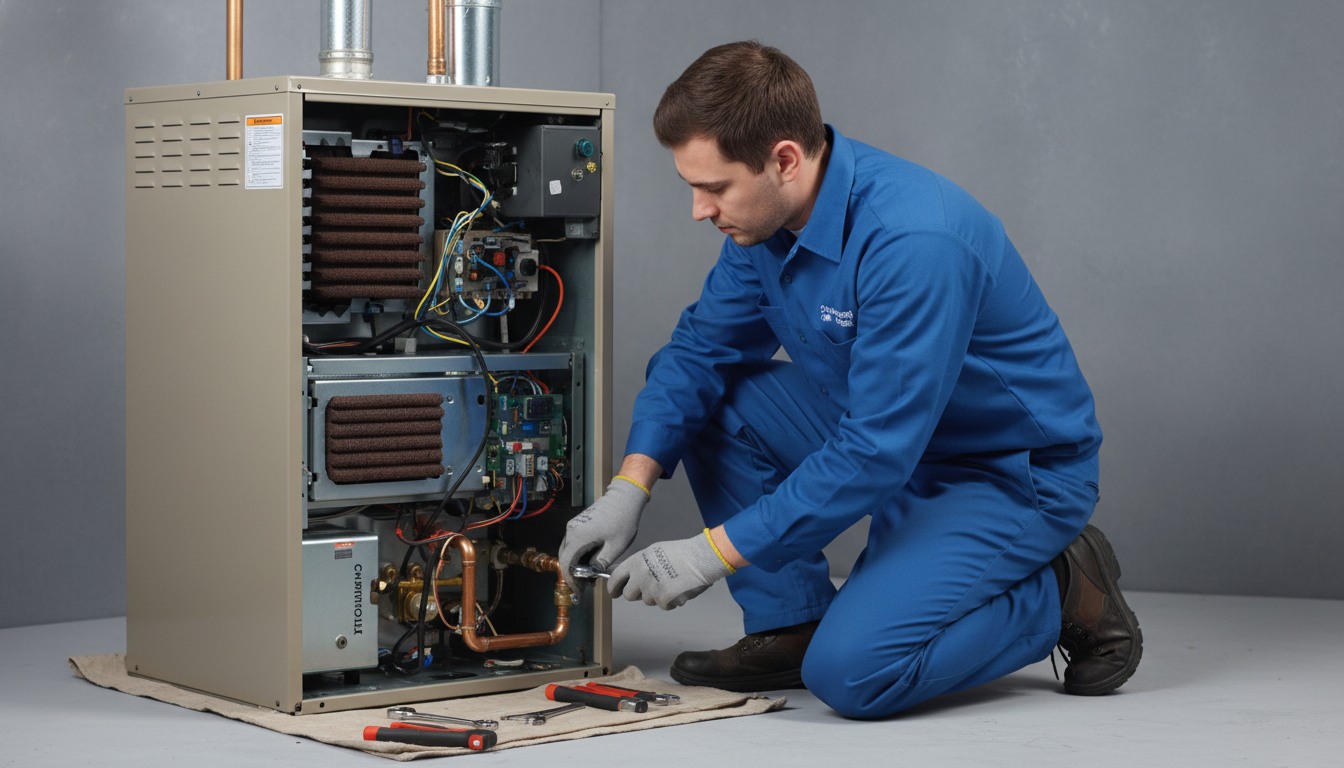
What happens when you call
You should never be guessing about what we found or what it costs.
No cooling, no heat, a strange noise, water near the furnace, one room hotter than the rest. That's enough to start. You don't need to know which part failed.
We trace the symptom through the thermostat, the airflow, the electrical controls, and the outdoor unit - into the refrigerant lines or the burners, whichever the symptom points to - until we find the actual cause.
What failed. Why it caused the problem, what the repair actually fixes, and anything else you should know about the condition of the equipment.
You know the recommended work before it starts. When it's done we test the system against the problem you called about, not just switch it back on.
What failed? What will the repair cost, and what does it actually fix? Is this a one-time repair, or is the system telling us something bigger? Anything else we should know before winter?
Repair or replacement?
We'll explain what failed first. Then you can compare both options with real numbers.
One failed part on a system that is otherwise sound is a repair, not a reason to replace. We'll say so when that's the case, and we'll show you what we found.
Read ENERGY STAR guidanceTwo or three real repairs in a season changes the math. So does a failed compressor or heat exchanger, parts nobody stocks anymore, or a safety problem. Then compare both numbers.
Read the EPA indoor air guideWe explain what failed first. If replacement is on the table, you compare cost against expected benefit. Take the numbers and decide on your own time.
See the Department of Energy checklistA broader home evaluation is a different service question from an equipment-only repair. Knowing the difference keeps one visit from being expected to answer every building-performance question.
Emergency HVAC repair in Walkersville
If you smell gas, see smoke, notice a burning odor, suspect an electrical hazard, or hear a carbon monoxide alarm, move away from the danger and contact the appropriate emergency service or utility.
Water near equipment also deserves caution. Take a photo from a safe distance, note whether the system is running, and arrange the right service instead of dismantling the unit.
HVAC service in Walkersville, MD
Questions homeowners ask
For homeowners across Walkersville and nearby Frederick County communities, the useful next step starts with what changed.
If the system won't start, isn't heating or cooling properly, makes a new noise, blows weak air, leaks water, ices up, or cycles on and off, it's worth having diagnosed. You don't have to identify the part yourself.
Yes. We service air conditioners, furnaces, heat pumps, boilers, ductless systems, thermostats, and the ductwork that connects them.
Start with the diagnosis. An isolated failure on sound equipment usually means repair. Replacement is worth comparing when failures repeat, a major component goes, parts are unavailable, or safety is involved.
Thermostat setting, filter, open vents and returns, and whether the system has power. Note any water, ice, odor, error code, or tripped breaker. Then stop. Don't open panels, touch refrigerant lines, or keep resetting a breaker that won't hold.
Call us right away for no heat in dangerous cold, no cooling in extreme heat, water around equipment, repeated breaker trips, or a burning smell. If you smell gas or a CO alarm sounds, get out and call 911 first.
Tell us the rooms affected, the symptom you noticed, when it began, and anything you observed near the equipment. You don't need to arrive with a diagnosis of your own.