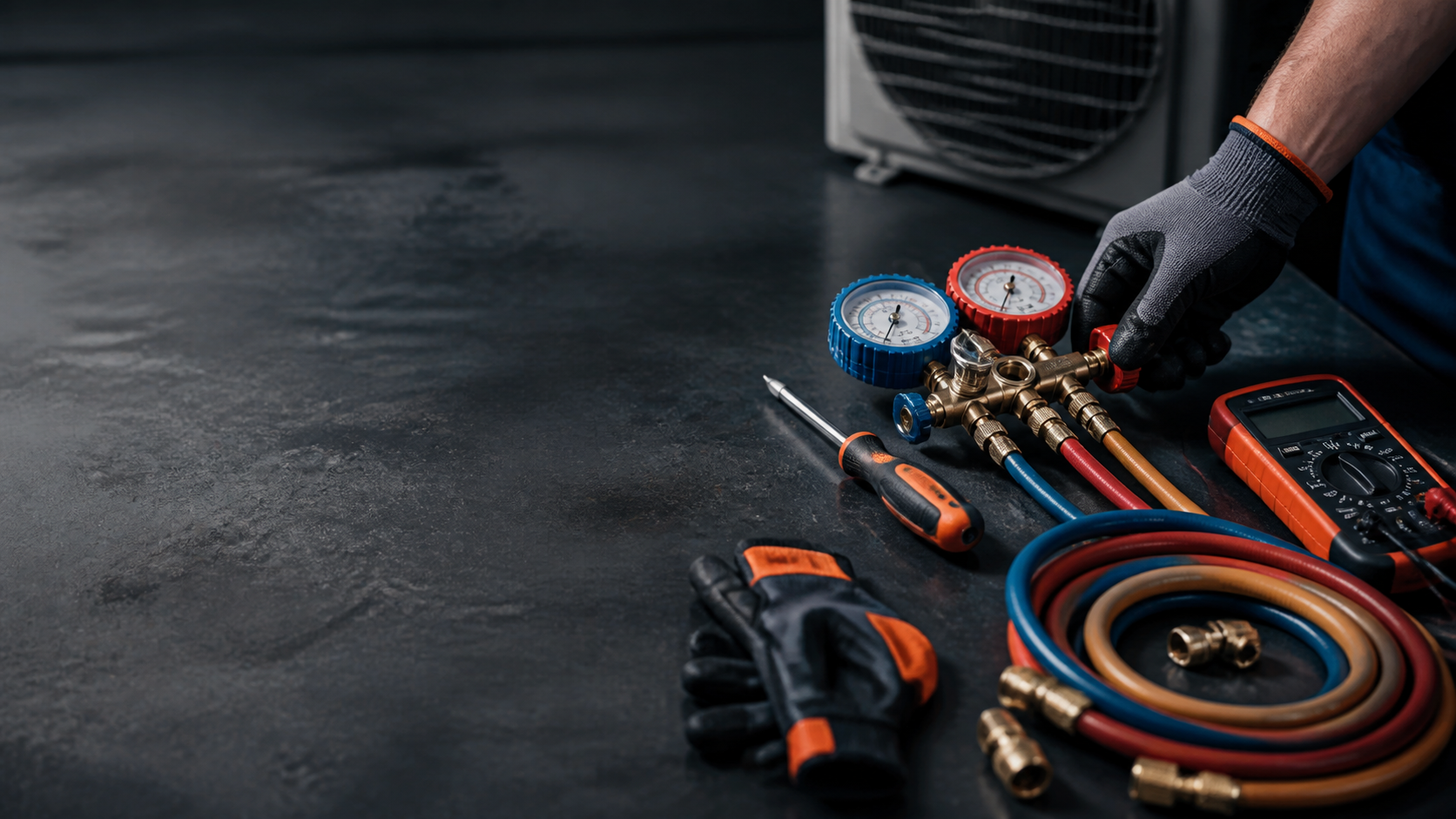
We keep your heating and cooling system ready before Maryland weather puts it under pressure. A spring check gets the air conditioner set for summer. A fall check gets the furnace or heat pump set for winter.
The best timing is before the season when you will depend on the equipment most. A new symptom moves the conversation forward sooner.
Spring cooling check
Get the air conditioner ready before summer.
We come out in spring and check the thermostat, the condensate drain (the line that carries away cooling water), the controls, the coils, the blower, and the refrigerant operation before the first 90-degree stretch hits.
Check, clean, or swap the filter on the schedule its own instructions call for. Pets, dust, remodeling, and even a 1-inch versus 4-inch filter can change how often it needs changing.
A maintenance visit follows the system, not a generic checklist.
We look at how the equipment starts, operates, and shuts off. The inspection can include the thermostat, controls, electrical connections, moving parts, drainage, coils, blower components, airflow, and safety operation specific to your equipment.
Homes around Walkersville differ in age, layout, insulation, ductwork, access, and equipment type. Tell us where the system sits and what's been hard to reach so we can plan the visit around your home.
Safe homeowner checks
Notice the clues without opening the equipment.
These observations can help before a maintenance visit or diagnosis. Stop before touching live wiring, refrigerant, gas controls, or combustion parts.
01
Confirm the thermostat is in the intended mode and the screen is working.
02
Look at the filter and follow the equipment and filter instructions before replacing it.
03
Keep supply vents and return grilles open and clear of furniture, rugs, and storage.
04
Keep leaves and grass away from the outdoor unit without bending fins or spraying into electrical areas.
05
Note what changed: weak airflow, warm air, water, ice, noise, repeated starts, or an uneven room.
Choose the next useful step
The symptom decides when maintenance stops being routine.
Maintenance is for a system that's operating normally. Diagnosis is for changed comfort or operation, and safety help always comes first when the home may be dangerous.
Maintenance
The system is operating normally
Book a seasonal check when you're getting ready for the weather you'll depend on next.
Diagnosis
Comfort or operation has changed
A new noise, short cycling, weak airflow, warm air, ice, or water needs the cause tested, not a routine visit. Call us.
Immediate safety help
The home may be unsafe
Gas odor, smoke, a carbon monoxide alarm, or a worsening electrical burning smell means leave first and call 911 or the gas utility from a safe location.
Whole-home comfort
The equipment is only part of the comfort system.
A room over a garage, finished basement, upper floor, or addition may need a wider look at airflow, ducts, insulation, drainage, humidity, or filtration.
Airflow and ductwork
A dirty filter, a blocked return, a duct gap, or thin insulation can leave one room uncomfortable even when the equipment's running fine. The Department of Energy connects efficiency with maintenance, air sealing, insulation, duct condition, and thermostat settings.
A plugged drain can cause water damage and throw off indoor humidity. Persistent dampness, a musty odor, or moisture near the equipment deserves our attention instead of a new filter alone.
EPA recommends source control, ventilation, and supplemental filtration, with indoor humidity below 60 percent and ideally between 30 and 50 percent. MERV 13 is a target only when the system fan and filter slot can accommodate it.
If a carbon monoxide alarm sounds, you smell gas, smoke is present, or a strong burning electrical smell is getting worse, leave the home and call 911 or the gas utility from a safe location. Do not keep resetting the equipment or a tripped breaker.
While arranging help
Keep portable electric heaters at least three feet from curtains, furniture, bedding, and other combustible materials. Plug them directly into a wall outlet, never an extension cord or power strip.
How often should I schedule HVAC maintenance in Walkersville?
A spring cooling check and a fall heating check are good starting points, with filter attention based on your equipment, pets, dust, remodeling, and the manufacturer's instructions. Seasonal planning helps, but we can't promise equipment will never fail.
What does a professional HVAC maintenance visit include?
We look at how the system starts, operates, and shuts off. Depending on the equipment, that can mean the thermostat, controls, electrical connections, moving parts, coils, blower components, drainage, airflow, refrigerant operation, and heating safety checks.
When is maintenance actually a repair or diagnosis call?
Call us for diagnosis when the system makes a new noise, runs in short cycles, blows warm air, loses airflow, leaves a room uncomfortable, shows ice, or produces water. A symptom can point to several causes, so we test it rather than treat it as proof of one failed part.
What should I do if I smell gas or a carbon monoxide alarm sounds?
Leave the home. Call 911 or the gas utility from a safe location. Don't reset the equipment, open the furnace, or stay inside to find the cause. CPSC recommends carbon monoxide alarms on every level and outside sleeping areas, with monthly testing.
Plan the next useful check
Tell us whether the system's operating normally or what changed. That distinction tells us whether it's maintenance or diagnosis.