No heat or no cooling
Tell us whether the system starts, whether the fan runs, and whether the whole house is off or just certain rooms.
New Market HVAC repair
New Market runs from older houses in the historic core out to newer construction on the edges of town, and those two homes can fail in very different ways. An HVAC problem rarely arrives with a neat label. Start with what changed, when you noticed it, and what the system's doing now. That gives us a clean place to begin.
Describe the problem
The same complaint can come from several different conditions. Your observation is still useful, even without the technical name for the problem.
Tell us whether the system starts, whether the fan runs, and whether the whole house is off or just certain rooms.
Note which rooms feel different. Sometimes it's the filter or a closed vent; sometimes it's the ducts or the equipment itself. We test to find out which.
Tell us where you saw it and when it started. If running the system seems to make it worse, shut it off if you safely can.
Buzzing, rattling, clicking, or a system that starts and stops every few minutes - write down when each one happens. That timing narrows the cause quickly.
If the system runs longer than it used to, the bill jumped, or a room sits 5 degrees off the setting, that's worth a diagnosis. Something changed, and testing will show what.
Diagnosis first
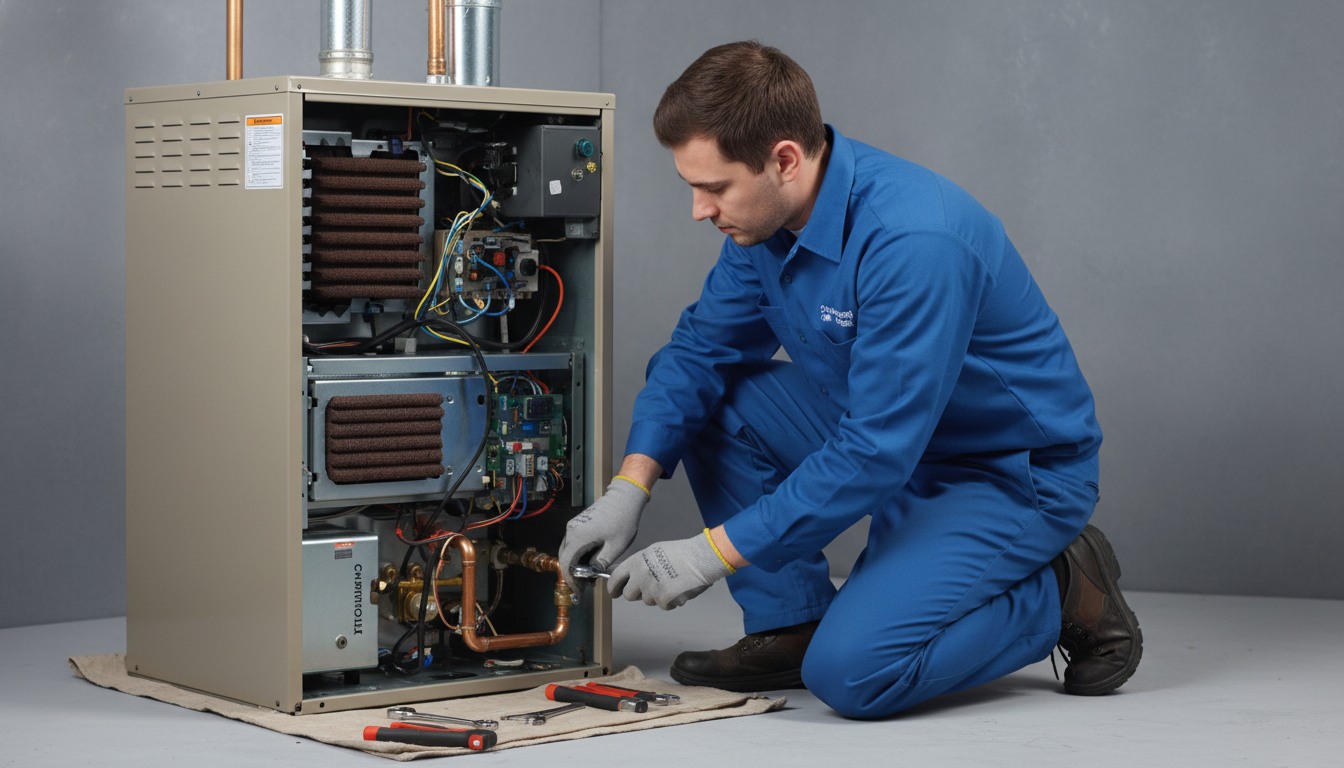
We start with the thermostat, the filter, and the airflow, then follow the symptom - the drain, the ignition (the part that lights the burners), the safety controls, whatever the problem points at. We also check how air actually reaches the rooms, because ducts, insulation, and air leaks can keep a working system from a comfortable house. One early check: we measure the air going in and the air coming out. On a healthy system it drops about 15 to 20 degrees - when it doesn't, that narrows things fast.
Repair and replacement are different conversations. First we find out what changed and why. Then we weigh the repair against the age and condition of what you've got.
Pick the next step
Maintenance, diagnosis, repair, emergency help, and replacement planning each solve a different problem. A clear first conversation keeps the plan tied to your house, not to somebody else's.
The system's working fine and just needs its seasonal once-over before the hard weather arrives.
Something changed - different behavior, lost comfort, or the same symptom coming back.
We've found the problem, and fixing it still makes sense for a system with life left in it.
Dangerous cold or heat, a gas smell, smoke, sparks, or live electrical trouble changes the first move. Safety comes before service.
Repeat breakdowns, a safety concern, or a major part going bad make it worth comparing repair against new equipment.
Safe checks before service
Check that the thermostat has power and is set to the mode you want. Look at the filter, open any blocked vents and returns, and write down error codes - all without opening the equipment.
Don't open electrical panels, handle refrigerant, work on gas or combustion equipment, bypass a safety control, or reset a breaker over and over.
Smoke, a strong gas odor, or a carbon monoxide alarm means leave the area and contact emergency or utility help from a safe location.
New Market service options
Before you call or send a request, note the rooms affected, when the change began, whether the system starts or stops early, and anything you noticed near the filter, vents, thermostat, or outdoor unit.
You don't need a perfect technical explanation. A short timeline is more useful than a guess at a part name.
For routine care, ENERGY STAR recommends regular filter changes and yearly HVAC tune-ups: heating and cooling guidance.
Questions before calling
What changed, when you noticed it, which rooms it hit, and what the system's doing now. You don't have to know which part quit - that's what the diagnosis is for.
Check the thermostat mode and setting, look at the filter, make sure vents and returns are open, and jot down any error code. Don't open panels or bypass controls.
Stop for smoke, a strong gas odor, a carbon monoxide alarm, sparking, water spreading toward electrical equipment, or a breaker that trips again. Leave and call 911 or the utility from outside.
That question gets answered after the diagnosis. What failed, how old the system is, whether it's broken down before, and how the rest of it looks - those decide it together.
Share what changed, where you noticed it, and what the system is doing now. That's enough to start the right conversation.