Emergency AC Repair in Frederick, MD
When the AC quits on a hot Frederick afternoon, people come before parts. Get anyone who can't handle the heat somewhere cooler, then tell us what the system's doing. We'll test before we quote anything.
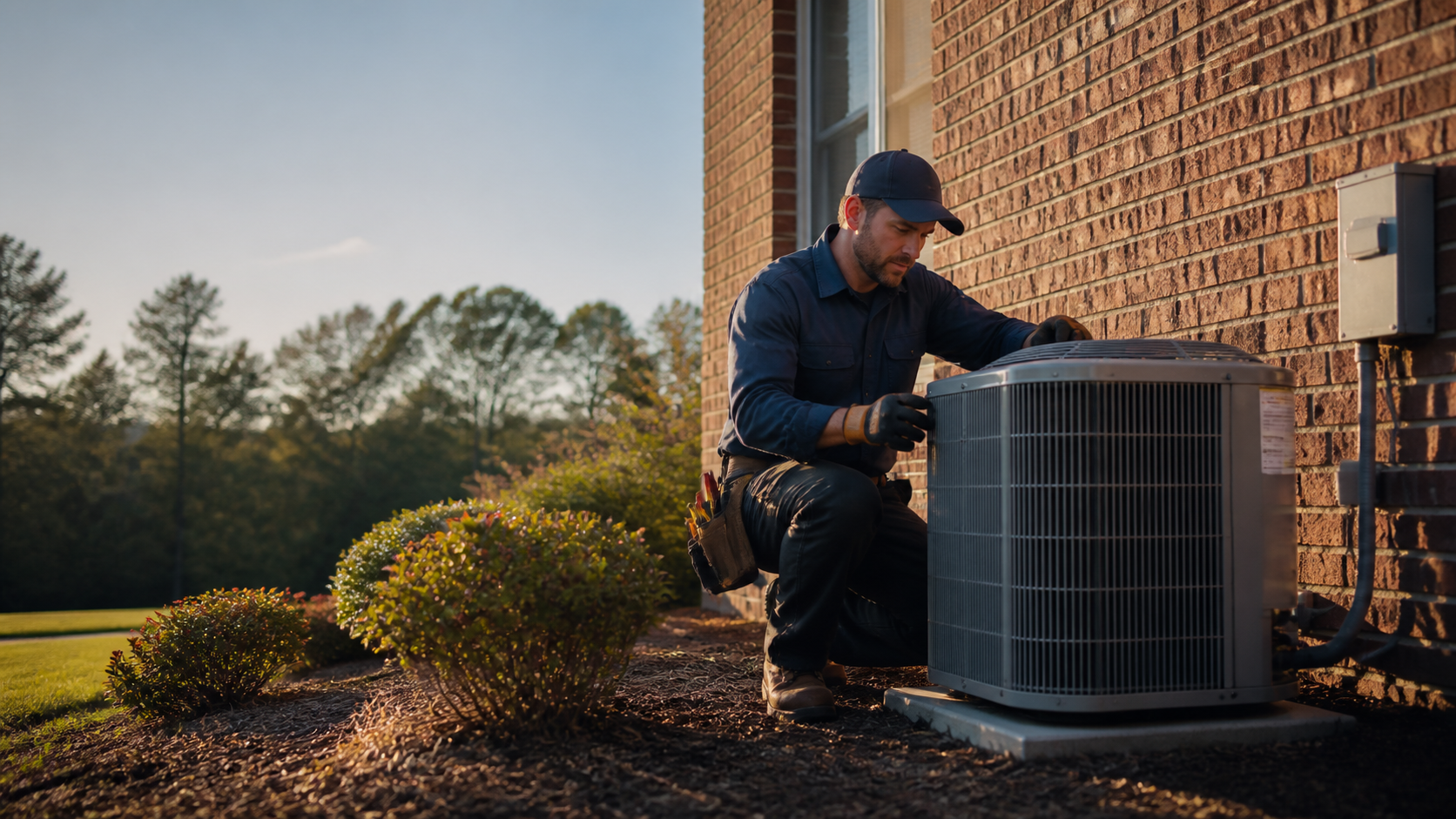
When a cooling failure is urgent
A warm house becomes a health problem once the temperature keeps climbing and someone in it — a baby, an older adult, anyone heat-sensitive — can't cool down. On a 90-degree Frederick afternoon that climb happens fast. If the house is turning unsafe, get people somewhere air-conditioned first.
Safe checks before you call
Check the thermostat and the filter, glance at a few vents, and look for water or ice where it shouldn't be. Watch the outdoor unit from a distance. Don't pull panels, touch the wiring or the capacitor, or keep resetting a breaker that trips again.
Several failures look the same from the hallway
Warm air can come from controls, airflow, coils, or refrigerant — and so can ice, water, or a blank thermostat. The symptom tells us where to start testing. It doesn't tell either of us which part failed.
We test what the symptom points at
We start with the sequence of events — what happened, in what order — then test where it points: the thermostat and the airflow first, then the coil, the electrical parts, or the drain under the unit. Ice doesn't prove the system just needs refrigerant. A dirty filter doesn't prove the filter caused the whole failure.
Repair, replacement, or not yet
One failed part doesn't mean the whole system's done. Before you approve anything rushed, you'll know what failed, whether the fix gets at the cause, and what shape the rest of the system is in. Then repair or replacement is a decision, not a reflex.
What the visit should cover.
We start with what you noticed, test until the cause is clear, and stop when you know enough to decide.
Safety, then the timeline
Tell us when cooling changed, whether the house is getting unsafe, and whether you saw smoke, a burning electrical smell, water, ice, or a breaker tripping again and again. If there's smoke, fire, a carbon monoxide alarm, or a strong electrical odor, leave first and call 911 from a safe location.
What to tell us
The thermostat setting, which rooms are affected, and whether the air's slightly cool or fully warm. How the outdoor unit's behaving matters too. Photos of ice or water help — if you can take them without touching the equipment.
We test the system
A symptom isn't a parts order, so we test instead of guessing. Depending on what you describe, that means the controls, the airflow, the coil, the drain, the electrical supply, or the refrigerant circuit.
The repair, then the retest
We'll explain what failed, what the repair changes, and whether replacement is worth a look. After the work, we run the system against the original symptom before we call the visit done.
Questions before emergency ac repair in frederick, md.
When is a failed AC actually an emergency?
Once the indoor temperature keeps climbing and someone in the house can't handle the heat — or a heat alert is active — treat it as urgent. Smoke, burning wiring, or a CO alarm moves it to safety-first: leave, call 911 if it's serious, and let the HVAC wait until people are safe.
What can I check before requesting AC repair?
From a safe distance: the thermostat, the filter, a few vents, and whether the outdoor unit's running. Leave the rest — no open panels, no wiring, no refrigerant, no bypassing a safety switch, and no resetting a breaker that trips again.
Does ice mean my AC only needs refrigerant?
No. Ice can just as easily mean restricted airflow, or something else entirely. Turn cooling off, protect the floor from meltwater, and let us diagnose it rather than scraping the coil or assuming a recharge fixes it.
Get emergency AC help now
Tell us what changed, what you saw, and whether everyone's safe. We'll sort the next step before anyone talks repair.