Read the thermostat
Confirm Heat mode, a set point above the room temperature, and the fan setting. If the display's blank, check batteries when the model uses them.
When the furnace stops heating your Urbana home, you shouldn't have to guess whether a simple check is enough or the system needs us out there. Tell us what changed, what the furnace's doing now, and whether there's a safety warning.
Check the thermostat mode, fan setting, filter, and breaker from a safe location. Much of Urbana's housing went up in the same couple of decades, so a lot of furnaces here are reaching their first real repairs together - catching a small fault beats a no-heat night. Leave the home and call 911 for a gas odor, smoke, a burning electrical smell, or a carbon monoxide alarm.
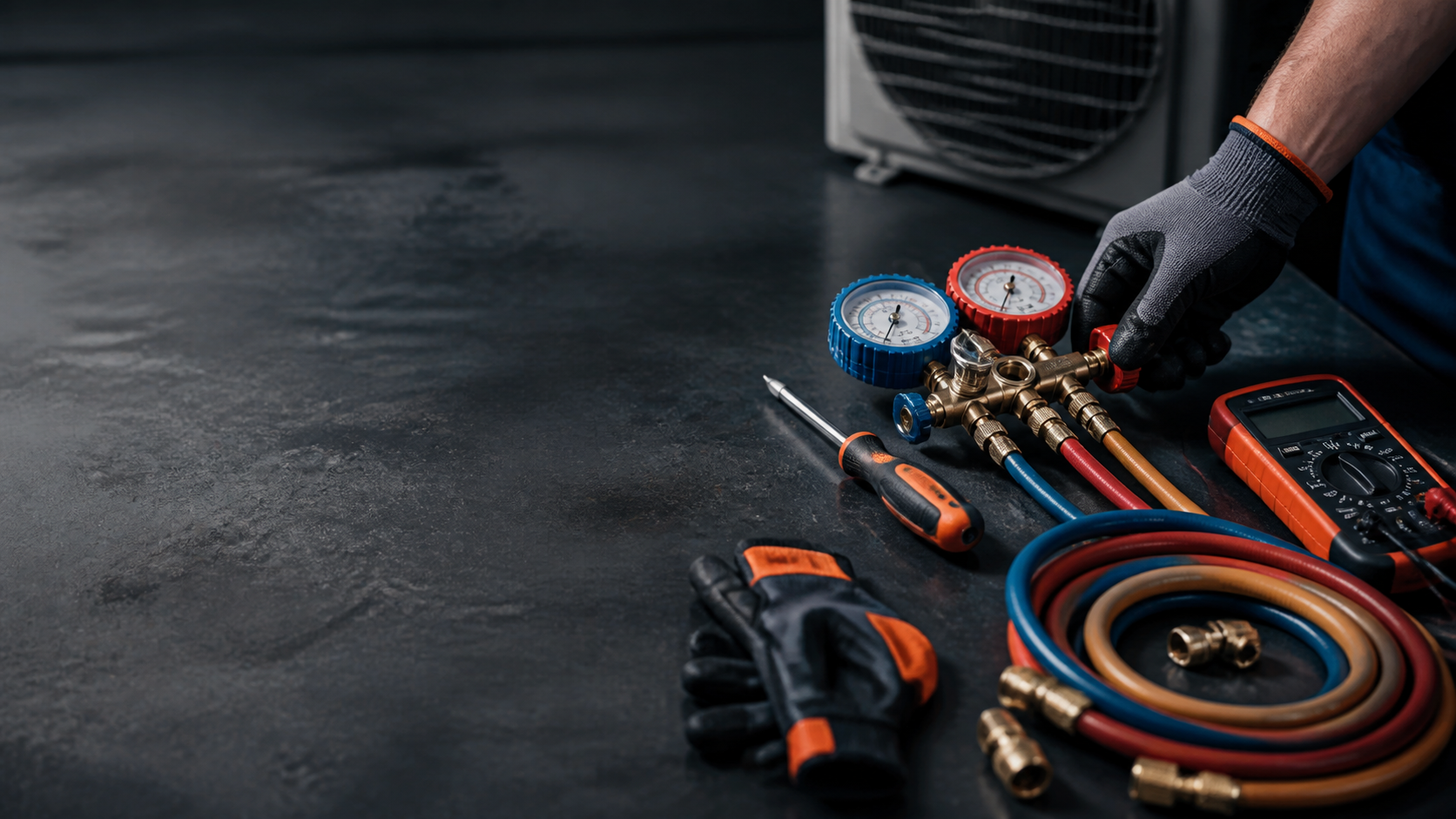
Furnace repair in Urbana should begin with evidence. A thermostat setting, filter, or power switch may be a safe first check. Repeated shutdowns, unusual ignition, damaged venting, weak heat, or a safety warning call for us instead.
These observations give us a useful starting point. Stop when the next step would mean opening the furnace, touching wiring, adjusting gas components, or repeatedly resetting a safety device.
Confirm Heat mode, a set point above the room temperature, and the fan setting. If the display's blank, check batteries when the model uses them.
Check the furnace switch, breaker, filter, return grilles, and supply registers without opening the cabinet or touching wiring.
Note whether the furnace stays silent, the blower runs with cool air, it starts and stops, or only one room stays cold. Photograph an error code through a viewing window if you can.
Gas ignition, electric heat strips, and heat-pump backup systems don't fail in the same way. What the furnace does, when it does it, and where comfort's missing all matter.
A thermostat setting, power interruption, control problem, or safety shutdown can look the same from the living room. Stop resetting a breaker if it trips again.
Check the filter and make sure registers and returns are open. The cause may involve airflow, the blower, ignition, controls, or the heat source.
Restricted airflow, thermostat trouble, a limit switch, venting, a heat exchanger, or equipment sizing can all change the cycle. A repeat pattern needs us to look.
Noise is a clue, not a parts list. A new smell, loud ignition, or a sound that's getting worse deserves attention. Don't open the furnace to chase it.
Fuel-burning furnaces can produce carbon monoxide. Leave immediately for a sounding CO alarm, possible CO symptoms, a natural-gas odor, hissing near gas equipment, smoke, soot, damaged venting, or a cracked flue. Call 911 from a safe location.
Leave the home: Don't stay inside to find the source or inspect the furnace.
Don't touch switches: If you smell gas, leave first and call 911 or the gas utility from outside.
Wait for clearance: HVAC troubleshooting comes after emergency responders or the gas utility says the property's safe.
Bring the thermostat display, model information, timing, filter condition, and any error-code pattern you can see without removing a panel.
Tell us when the problem began, whether it happens every cycle, what the thermostat shows, and which rooms are affected.
The visit may include thermostat operation, filter and airflow, the blower, ignition or another heat source, controls, and safety devices.
For a fuel-burning furnace, we look at venting, burner operation, connections, combustion condition, and the heat exchanger.
You should hear what failed, what the repair changes, what's safe to operate, and what would need more testing before a decision.
An older furnace isn't automatically a replacement. Ask us what we tested, what the repair fixes, and what condition would change our recommendation.
A sensor, igniter, or blower repair may make sense when the equipment's otherwise in reasonable condition and the repair addresses the cause.
Repeated safety faults, rising energy bills, poor comfort, or a furnace more than 10 years old make the condition of the whole system part of the conversation.
Return-air restrictions, duct balance, thermostat placement, zoning, insulation, or equipment sizing can feel like a furnace failure. The air path needs a look too.
Keep the air path open and the furnace area safe during heating season. Fuel-burning equipment still needs a yearly visit from us.
Yes. The test depends on the equipment you have. Tell us the fuel type and model if you know it, but don't open the furnace yourself to find out.
Check Heat mode, the fan setting, filter condition, and the breaker first. If those look normal, we'll look closer at the heat source, a control, or a safety switch.
Ignition, flame sensing, airflow, a limit switch, venting, or a control issue can cut the cycle short, sometimes in under 30 seconds. Note the timing and any indicator light instead of resetting it over and over.
Share the shutdown, airflow, fuel clue, or room that is staying cold before approving a repair.