How Much Does Ductwork Cost in Frederick, MD?
If you're asking how much ductwork costs in Frederick, MD, the honest answer is that the number depends on what the ducts actually need. A small repair is a different job from replacing several damaged runs or designing a full duct system. Home size, duct length, material, insulation, access, system design, and any wall or ceiling work all move the final scope.
Published cost guides can give you a starting point, but they're national reference data, not a Frederick quote. We look at the duct system, airflow, access, and the rooms affected before we recommend a repair, sealing, insulation, partial replacement, or redesign.
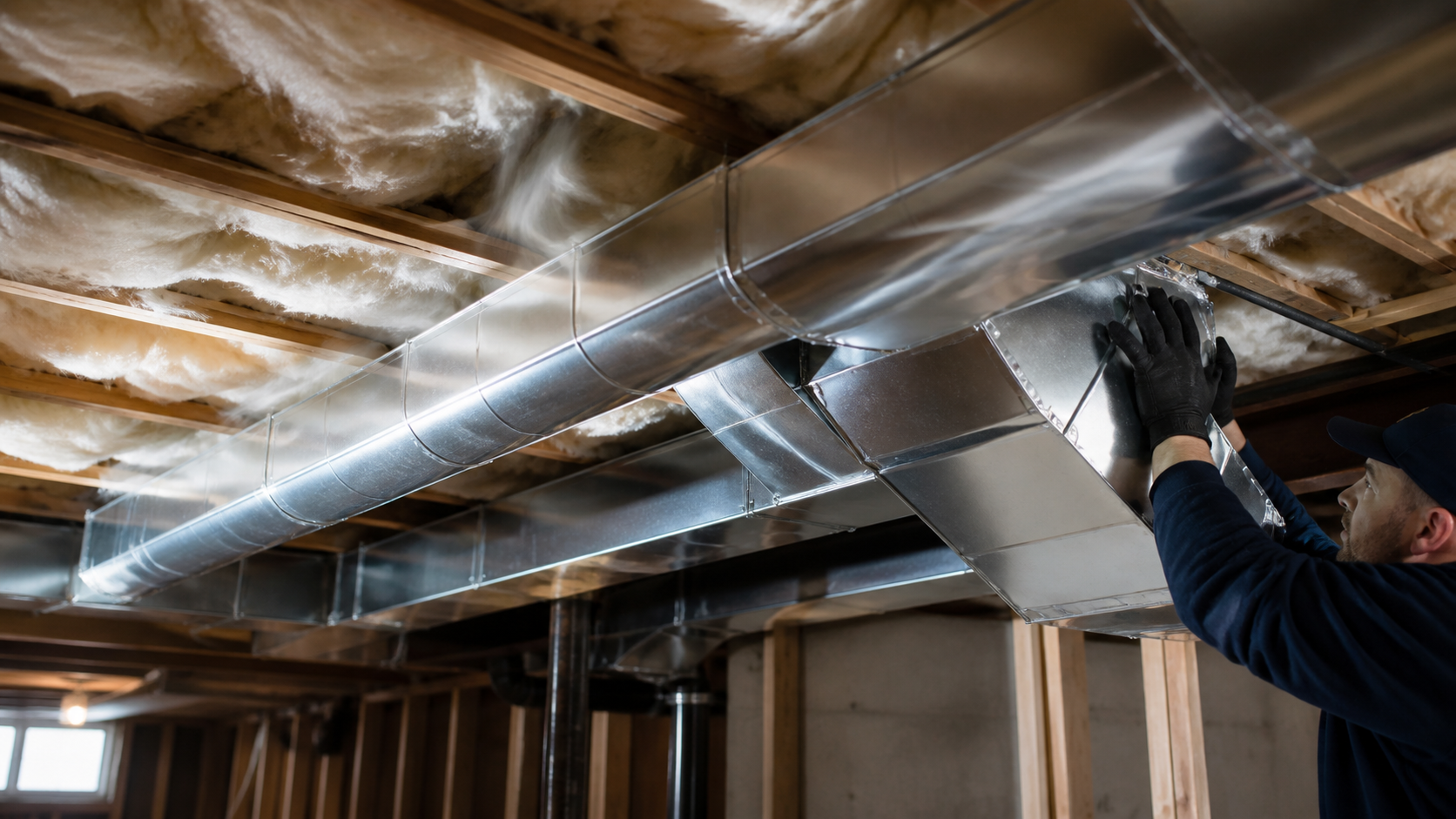
Published ranges are budgeting references, not a Frederick quote
| Reference | Published range | How to use it |
|---|---|---|
| Minor duct repair | $300 to $1,000 | Angi's national guide; confirm whether access, insulation, and testing are included. |
| Ductwork replacement | $1,400 to $5,600 | HomeGuide's national replacement range; compare the defined scope, not just the total. |
| New ductwork in an existing home | $2,400 to $6,600 | HomeGuide's reference range for homes without existing ducts. |
| Complete replacement | $2,000 to $7,500+ | Angi notes that material, access, layout, and project scope can move this range. |
| Replacement by linear foot | $16 to $19 per linear foot | This Old House's reference point; it does not replace a room-by-room estimate. |
What changes the cost of ductwork in Frederick County?
More rooms and longer runs generally mean more material, connections, supports, insulation, and install time. Flexible duct can be easier to route through tight spaces. Sheet metal often takes more time and skill to install correctly. The right material also depends on moisture, support, clearance, fire safety, and how the new work ties into what's already there. Angi's duct replacement guide and This Old House's material guidance explain why those choices move the range.
Ducts in an unfinished basement are easier to reach than ducts above a finished ceiling, behind a wall, or in a tight crawl space. If we have to open drywall, remove insulation, or work around wiring and plumbing, our estimate should say who handles patching, disposal, and cleanup. Attics, crawl spaces, garages, and other unconditioned areas may also put insulation on the scope. ENERGY STAR's guidance says ducts should be properly connected, sealed, and insulated where needed.
Permits depend on the work and your property's jurisdiction. Frederick County's permitting page notes that the City of Frederick and Mount Airy sit outside the county department's stated jurisdiction. Ask us who determines the permit path, who pulls it, and whether inspection is included.
- List the rooms that are too hot, too cold, noisy, dusty, or short on airflow.
- Mention attic, crawl-space, finished-ceiling, and basement access before the visit.
- Ask whether the proposed material needs insulation, support, sealing, or a new return path.
Do weak airflow and uneven rooms mean the ducts need replacement?
Duct problems show up as rooms that never behave. One bedroom never catches up, a second floor feels stuffy, a register has weak airflow, or a return is unusually noisy. Those symptoms can also come from a filter, blower, thermostat, insulation, equipment problem, or poor system balance. ENERGY STAR lists similar signs of poorly performing ducts and notes that typical forced-air systems can lose about 20% to 30% of the air moving through the ducts because of leaks, holes, and poor connections.
A full replacement isn't automatically better than a targeted repair. A loose connection, an accessible leak, a separated register boot, or a small damaged section may be repairable. Widespread damage, crushed sections, failing insulation, or a layout that leaves several rooms in the house uncomfortable at the same time may justify a bigger correction. Cleaning isn't a substitute for diagnosing airflow or leakage; EPA says the value of duct cleaning can't be generalized across every home.
If new distribution or equipment is part of the plan, ask us what design information supports the recommendation. Return air, duct sizing, static pressure, equipment capacity, and the layout of your home can matter more than the age of one duct. Our proposed work should explain what changed and how we'll check airflow afterward.
- Repair is proportional when the damage is localized and the surrounding ductwork is usable.
- Sealing and insulation fit ducts that are intact but leaking or exposed to an unconditioned space.
- Replacement or redesign enters the conversation when damage and comfort problems are widespread.
What should a useful ductwork estimate include?
A clear estimate helps you compare work instead of comparing unexplained totals. Ours identifies the observed problem, the proposed solution, the rooms and runs included, the duct material and insulation, access conditions, removal and disposal, expected wall or ceiling openings, airflow testing or balancing, permit responsibility, cleanup, restoration, and anything excluded from the proposal.
Be cautious with an estimate that only says "replace ductwork" and gives a total. A low number may exclude access work, insulation, restoration, testing, or permit handling. A high number may include work you don't need. Ask each company to quote the same scope, or explain why the scopes differ. Maryland OneStop's HVAC permit information shows the system elements that may matter in a plan, including trunk lines, branch runs, dampers, registers, returns, insulation, and load calculations.
- The approximate amount of ductwork being repaired, replaced, or added.
- The sealing, insulation, support, access, patching, cleanup, and testing included.
- Permit and inspection responsibility, exclusions, and items that remain outside the proposal.
The next step for a Frederick County home
If you have a persistent comfort problem, high bills, visible damage, or weak airflow, start with a diagnosis instead of guessing at a full replacement. We can tell you whether the next step is a targeted repair, duct sealing, insulation, partial replacement, or a larger HVAC design review. The Department of Energy's guide explains why some duct improvements need specialized equipment or expertise.
Before you request a quote, note which rooms are uncomfortable, when the problem shows up, any recent HVAC work, visible duct damage, unusual noises, and whether the ducts sit in an attic, crawl space, basement, or finished area. Photos of accessible sections help start the conversation, but they don't replace an on-site look. The goal is a written scope that tells you what changed, what it costs, and why that level of work fits your home.
- Ask what can remain, what must come out, and what we'll seal or insulate.
- Ask how we'll confirm that air is reaching the rooms you called about.
- Confirm the permit path for your property's actual jurisdiction before work begins.
Questions that come up next
How Much Does Ductwork Cost in Frederick, MD?
There's no single dependable price for every Frederick home. National guides report broad reference ranges, but your local number depends on duct length, access, material, insulation, layout, labor, and the condition of your existing system. A useful estimate follows an inspection and a defined scope.
Is it cheaper to repair or replace ductwork?
Often, a localized repair costs less than replacing a whole network, but the comparison depends on the surrounding ducts. Repair may fit a loose connection, a small damaged section, or an accessible leak. Replacement or redesign makes more sense when damage, leaks, failing insulation, or comfort problems are widespread.
Can new ductwork fix one hot or cold room?
Sometimes. The room may need a corrected run, a return-air path, a damper, an insulation fix, or balancing. Weak airflow can also come from a filter, blower, thermostat, equipment problem, or poor system balance, so we diagnose before we add new ductwork.
Does duct sealing cost the same as duct replacement?
No. Sealing addresses leaks and connections, while replacement removes and installs some or all ductwork. Insulation may be part of either scope when ducts run through an unconditioned space. Ask us what the estimate includes before you compare totals.
Does duct cleaning fix bad airflow?
Not necessarily. Cleaning and duct repair address different conditions. EPA says the value of cleaning can't be generalized across every home, so a comfort or airflow complaint needs a broader diagnosis when the cause isn't clear.
Need HVAC help in Frederick?
Tell us what the system is doing and what you've checked already. If it needs a visit, we'll say so.