HVAC Not Working After a Thunderstorm
What Frederick Homeowners Should Do
If your HVAC is not working after a storm, start with the home and the electrical conditions around it, not with the equipment panel. A thunderstorm can leave you with a power outage, a surge, water near the system, debris around the outdoor unit, or a problem that only appears when the system tries to start. Those situations do not all call for the same response.
For a Frederick County homeowner, wait until the storm has passed, look for hazards from a safe location, check only what you can reach without opening equipment, and arrange diagnosis when the system still will not run.
Stop if there is standing water, a downed line, a gas odor, or a burning electrical smell.
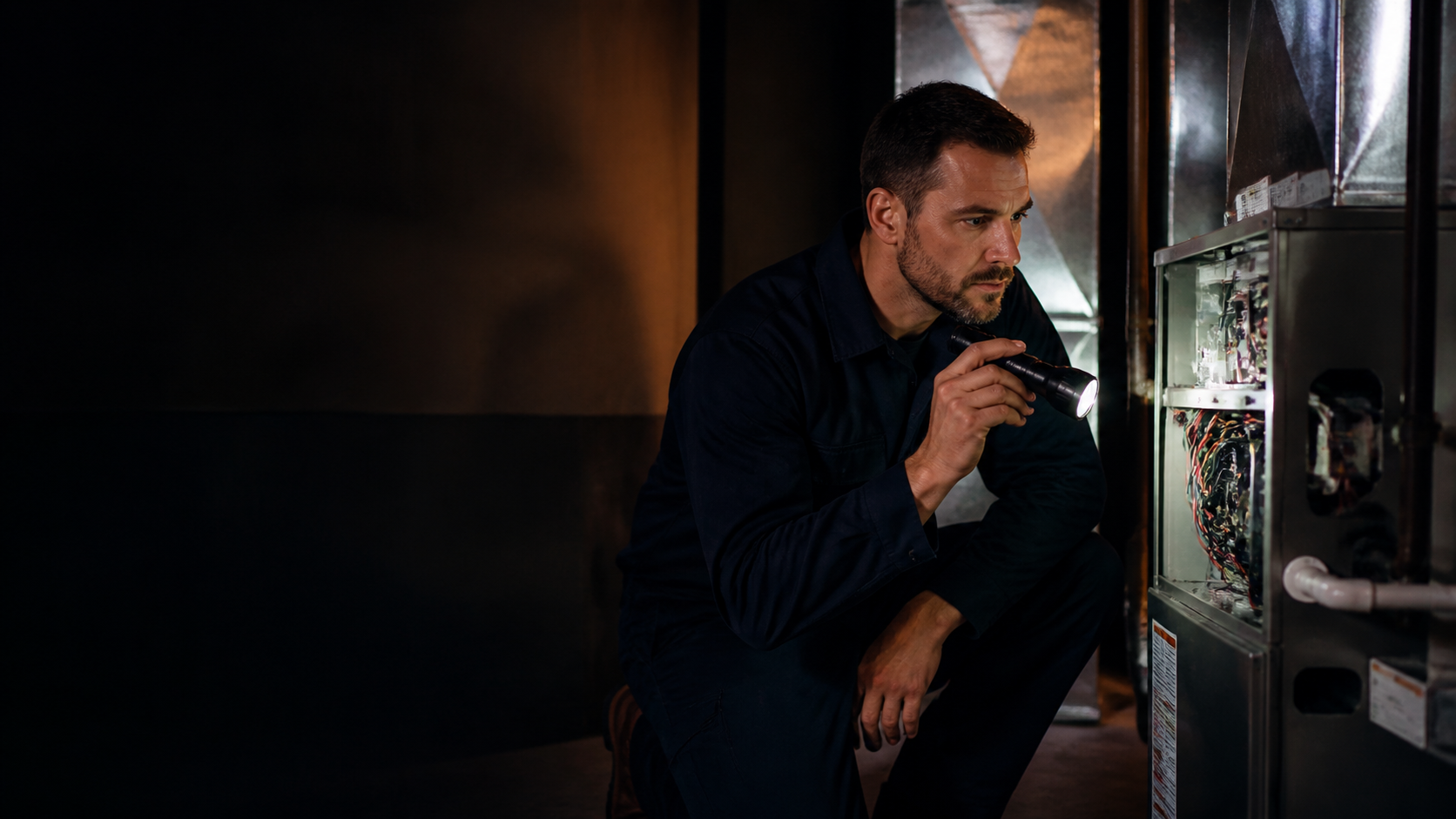
Check from safety
Wait until the storm has passed. From a dry location, note whether the rest of the home has power, what the thermostat shows, and whether water, ice, or an unusual odor is visible near accessible areas.
Stop here
Do not touch the system for standing water, a downed line, smoke, a gas odor, burning electrical smell, repeated breaker trips, a carbon monoxide alarm, or damaged equipment.
What to record
Write down when the storm began, whether there was lightning or an outage, what the system did afterward, and any water, ice, odor, noise, or blank thermostat display.
Start with safety, not the thermostat
If thunder or lightning is still close, stay inside. Wait until the storm has passed before checking anything outside.
Do not walk across a wet yard to inspect the condenser, move a fallen branch that may be touching a wire, or step into floodwater to reach a disconnect or electrical panel.
Downed lines should be treated as energized, and flooded areas may be electrified. If you smell gas, leave the area and contact emergency authorities.
Do not turn on lights, use a match, or do anything that could create a spark.
A fuel-burning furnace can be one source of carbon monoxide, an odorless and colorless gas that can cause sudden illness and death. Leave the home and call from outside if a carbon monoxide alarm sounds or anyone has headache, dizziness, weakness, nausea, confusion, or unusual fatigue.
- Stay inside while thunder or lightning is still close.
- Treat downed lines as energized and stay away from flooded areas.
- Leave for a gas odor, carbon monoxide alarm, smoke, or a medical emergency.
- Do not flip switches, light a flame, or open HVAC equipment in a gas or electrical emergency.
When you should not touch the system
Some post-storm HVAC symptoms are also electrical or water-safety symptoms. Keep your hands off the equipment and call for the right help if water has reached the furnace, air handler, outdoor disconnect, wiring, or controls.
Stop if you are standing on a wet surface or would need to enter standing water to reach the breaker. A breaker that trips again after a reset, or equipment that is arcing, buzzing, or crackling, needs professional diagnosis.
Do not use equipment that is damaged, shifted, full of debris, near a downed line, or showing smoke or a burning electrical odor. If you suspect mold or contaminated water reached the air handler, ductwork, or return-air path, keep the system off.
- Water has reached the HVAC equipment or electrical components.
- The outdoor unit is damaged, shifted, full of debris, or near a downed line.
- A breaker trips again, or you hear arcing, buzzing, or crackling.
- You smell gas or burning electrical odor, see smoke, or hear a carbon monoxide alarm.
- Mold or contaminated water may have reached the air handler, ducts, or return-air path.
Safe checks you can make from inside the house
Only continue if the storm has passed, the home is dry where you are standing, and there are no signs of electrical, gas, or structural danger. These checks are observations, not repairs.
First, check whether the outage is wider than the HVAC system. Look at other lights and appliances from a dry location.
If the neighborhood or home is still without power, the HVAC may simply be waiting for utility service. Avoid repeatedly cycling equipment while power is unstable.
Look at the thermostat without removing it. Record whether the display is blank, whether the mode is set to heating or cooling, and whether the indoor temperature is rising.
A blank display is useful information for a technician, but it does not identify a failed part.
Check the filter and supply registers. If the filter is visibly clogged, replace it only with the size and efficiency recommended for your system.
Do not install a restrictive filter as a guess at a storm repair.
Look for water, ice, or an unusual odor near accessible areas. Do not remove panels or reach into the equipment.
A picture taken from a safe, dry distance can help document the condition. If a breaker is visibly in a tripped position, pause before resetting it.
A reset may be appropriate only when the area is dry, there is no smell, smoke, water, or visible damage, and you can follow the equipment and electrical safety instructions for your home. If the breaker trips again, leave it off and arrange diagnosis.
- Check other lights and appliances to see whether the outage is wider than the HVAC.
- Record the thermostat display, mode, and indoor temperature without removing the thermostat.
- Replace a visibly clogged filter only with the manufacturer-recommended size and efficiency.
- Observe water, ice, odor, and equipment condition from a safe, dry distance.
- Reset a visibly tripped breaker only when the area is dry and hazard-free, and only once.
What the symptom can tell you
The timing and exact behavior matter more than a guessed part name. Tell the technician what changed during the storm and what happened when you tried to use the system.
If the thermostat is blank, record whether other parts of the home have power and whether the thermostat went blank during the storm or afterward. That detail helps separate a wider power issue from an HVAC control problem without asking you to work on wiring.
If the system has power but does not start, note whether you hear a click, hum, or nothing at all. A power surge is a brief overvoltage event that can damage electrical devices, so a system that was normal before the storm and silent afterward deserves a diagnosis rather than repeated resets.
If the blower runs but the air is warm or airflow is weak, check the filter and registers from the living space, then write down which rooms feel different. Do not assume that a storm damaged one specific component.
If the system runs briefly, cycles oddly, or makes a new noise, record how long it runs, when the sound occurs, and whether the outdoor unit starts. Stop if you smell burning, hear arcing, see smoke, or notice water.
If you see ice or water, turn the system off if you can do so safely and keep people away from wet electrical areas. Do not chip ice, pour water on the unit, or open the cabinet.
- Blank thermostat: record whether the rest of the home has power and when the display changed.
- Power but no start: note whether there is a click, hum, or silence instead of guessing a failed part.
- Blower but warm air or weak airflow: note the filter, registers, and rooms affected.
- Odd cycling or new noise: record the timing and stop for burning odor, arcing, smoke, or water.
- Ice or water: shut the system off safely and keep away from wet electrical areas.
If water or flooding reached the HVAC system
Rain blowing into an outdoor unit, a roof leak above an air handler, a backed-up condensate line, and floodwater are not the same event. The important question is whether moisture reached electrical parts, insulation, ductwork, or the air path.
If you know or suspect the HVAC system is contaminated with mold, do not run it. Operation could spread mold through the building.
Fix the water problem and arrange appropriate cleaning, remediation, and HVAC evaluation.
After flooding, do not turn on the HVAC system until the home has been cleaned and dried and needed repairs or remediation have been addressed. Cleaning and drying air ducts and other HVAC parts can be complicated.
- Keep the system off when floodwater or suspected mold reached the HVAC or air path.
- Do not enter standing water to reach a unit, disconnect, or breaker.
- Arrange water-damage or mold help when contaminated water reached the system or building materials.
- Have the HVAC evaluated after the home is cleaned, dried, and safe.
Who to call and how quickly
Use the hazard to choose the first call. Call 911 or emergency authorities for fire, smoke, a gas odor, a carbon monoxide alarm, a medical emergency, or a downed line that threatens people or the home.
Contact the electric utility or a qualified electrician for a service problem, wet electrical equipment, damaged wiring, a flooded panel area, repeated breaker trips, or a generator connection question.
Arrange HVAC diagnosis when the home is safe and dry but the thermostat, indoor blower, outdoor unit, heat pump, air conditioner, or furnace still does not operate normally. Arrange water-damage or mold help when contaminated water or suspected mold reached the HVAC system or building materials.
If you use a portable generator while the power is out, keep it outside and more than 20 feet from windows, doors, and vents. Never run it inside a home or garage.
- Emergency authorities: fire, smoke, gas odor, carbon monoxide, medical emergency, or threatening downed line.
- Electric utility or qualified electrician: service outage, wet electrical equipment, wiring, panel, repeated trips, or generator connection.
- HVAC technician: safe and dry equipment that still will not operate normally.
- Water-damage or mold professional: contaminated water or suspected mold in the system or building materials.
What to record before storm HVAC repair in Frederick
You do not need to diagnose the system before asking for help. Write down when the storm or outage began and whether there was lightning, wind, hail, flooding, or a nearby utility event.
Record whether the HVAC worked before the storm and what it did afterward. Note the thermostat display, indoor temperature, selected mode, breaker behavior, warm air, weak airflow, ice, water, odor, noise, or blank display.
Add the equipment brand and model number if visible without opening anything, plus photos from a safe distance. Those details give the technician a useful timeline without asking you to guess whether a capacitor, board, or compressor failed.
The goal after a storm is to get the home safe, preserve what changed, and make the next call based on the actual condition.
- When the storm or outage began and whether there was lightning, wind, hail, flooding, or a utility event.
- Whether the HVAC worked before the storm and what it did afterward.
- Thermostat display, indoor temperature, selected mode, and breaker behavior.
- Warm air, weak airflow, ice, water, odor, noise, or a blank display.
- Brand, model number, and safe-distance photos when visible without opening equipment.
What to note: Check from safety
Wait until the storm has passed. From a dry location, note whether the rest of the home has power, what the thermostat shows, and whether water, ice, or an unusual odor is visible near accessible areas.
Keep that detail with the rest of the service history so the next decision stays tied to the system's actual behavior.
- Check from safety
What comes after the first answer?
Can a power surge stop an HVAC system, and should I reset the breaker?
Surges can damage electrical devices, but the symptom alone does not prove HVAC damage. Only consider a reset when the area is dry and there is no water, smoke, odor, visible damage, or other hazard. If it trips again, leave it off. Never touch a breaker with wet hands or from a wet surface.
Is storm HVAC repair an emergency?
It is when there is fire, gas, carbon monoxide, a downed line, flooding, or exposed electrical damage. A safe but non-working system needs timely diagnosis when indoor temperatures are becoming unsafe or the equipment makes abnormal sounds.
What should I know about start with safety, not the thermostat?
If thunder or lightning is still close, stay inside. Wait until the storm has passed before checking anything outside. Do not walk across a wet yard to inspect the condenser, move a fallen branch that may be touching a wire, or step into floodwater to reach a disconnect or electrical panel.
What should I know about when you should not touch the system?
Some post-storm HVAC symptoms are also electrical or water-safety symptoms. Keep your hands off the equipment and call for the right help if water has reached the furnace, air handler, outdoor disconnect, wiring, or controls.
What should I know about safe checks you can make from inside the house?
Only continue if the storm has passed, the home is dry where you are standing, and there are no signs of electrical, gas, or structural danger. These checks are observations, not repairs.