Gas, carbon monoxide, smoke, or fire
Leave immediately and call 911 from outside. Do not stay inside to find the source or test the furnace.
Emergency HVAC repair in Frederick, MD
If the heat or air conditioning stops, first decide whether the home is safe. Gas odor, smoke, fire, sparking, a carbon monoxide alarm, or serious symptoms mean leave the property and call 911 from a safe location before anyone touches the HVAC equipment.
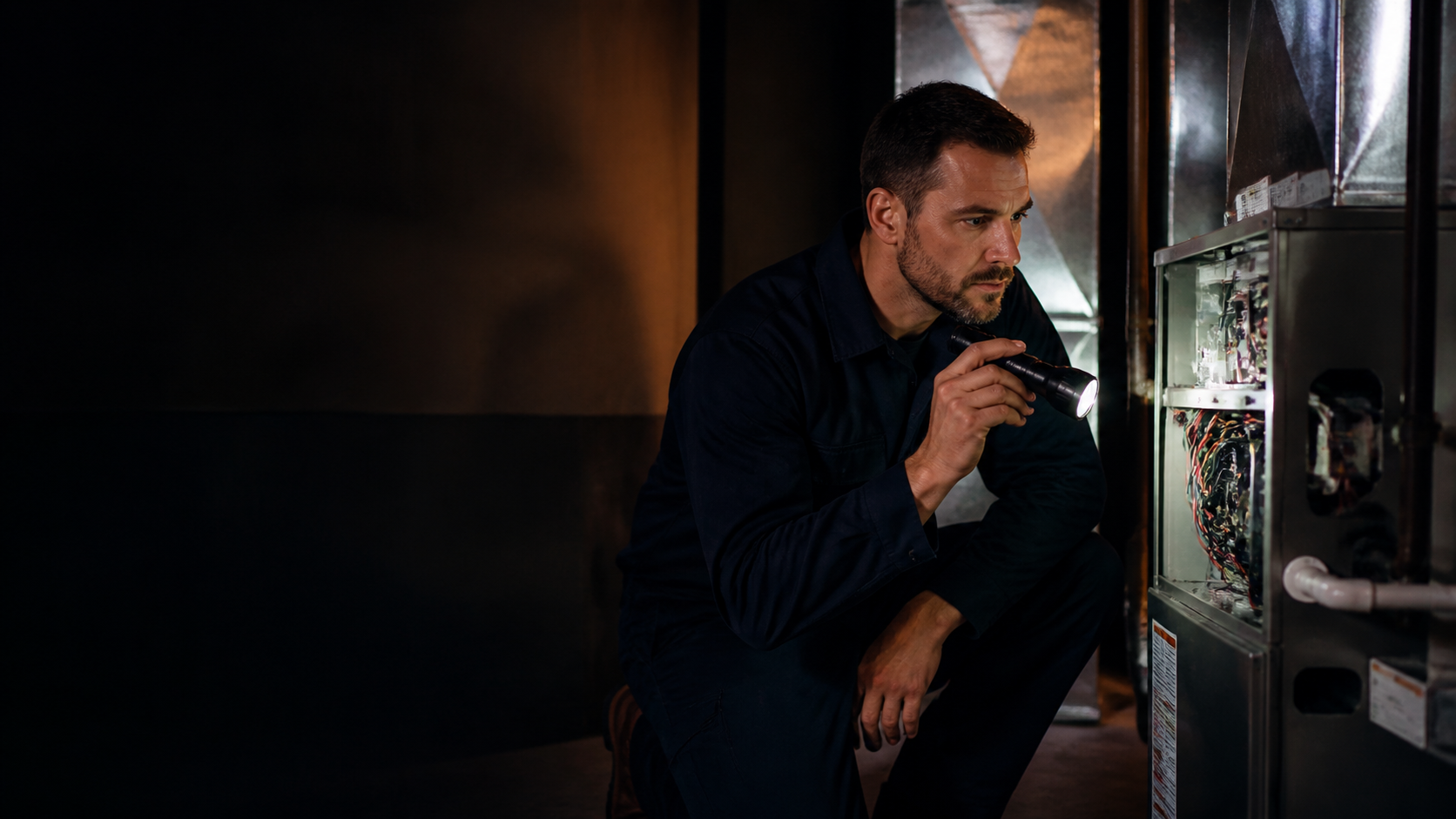
If there is gas odor, smoke, fire, sparking, a carbon monoxide alarm, or a medical emergency, leave the home and call 911 from a safe location. Do not reset equipment or open the furnace. HVAC service starts after emergency responders or the gas utility clear the property.
Sort the problem
The symptom, the weather, and the people in the home decide what happens next. Start with safety, then gather only what you can safely observe. We'll take it from there.
Leave immediately and call 911 from outside. Do not stay inside to find the source or test the furnace.
Protect the home and anyone vulnerable to cold. Arrange a warmer place to stay if the house can't hold a safe temperature.
Move children, older adults, and people with chronic health conditions to an air conditioned location if the home is becoming unsafe.
Smoke, sparking, a hot electrical smell, water spreading near the equipment, ice, or a breaker that trips again needs professional testing.
When the weather is the risk
Comfort loss can become a health problem before it's fixed. The safest choice may be leaving the home, not waiting beside the thermostat.
Move people at higher risk to an air conditioned location when the house is becoming unsafe. A fan may feel better. It doesn't stop heat illness. Watch for signs of heat exhaustion or heat stroke and use Ready.gov heat guidance.
Dress in layers, close off unused rooms, and arrange a warmer place to stay if the home cannot hold a safe temperature. Never use a gas range or oven for heat. Keep a portable electric heater at least three feet from bedding, drapes, furniture, and other material that can burn. See the CDC winter safety guidance.
Only when the home is safe
Do these only when there's no gas odor, carbon monoxide alarm, smoke, sparking, flooding, or medical emergency. Stop if anything smells burned, looks damaged, or trips electrical protection again.
Confirm that it has power, is set to heat or cool, and is set beyond the current room temperature. If the screen is blank, replace the batteries with the type listed by the manufacturer.
Find the labeled HVAC, furnace, air handler, heat pump, or air conditioning breaker. Reset one tripped breaker once only if there is no burning smell or visible damage. Leave it off if it trips again.
Replace a filter packed with dust only if you know the correct size and normal procedure for your system. A restricted filter can reduce airflow and make equipment work harder.
Move furniture, rugs, boxes, or closed dampers that block airflow. Check several rooms so you can report whether the problem affects the whole house or one area.
Note whether the outdoor unit runs, the indoor blower moves air, or water or ice is visible. Listen for the exact sound and photograph an error code only if you can do so without touching the equipment.
The diagnosis
You don't need to identify the failed part. Just tell us when the problem began and what the system is doing now, and we'll take it from there.
Share whether the system stopped, runs without heating or cooling, cycles on and off, leaks, smells unusual, or shows an error.
We check whatever the symptom points at - the thermostat signal, the power, the airflow, the drain - and keep going until the cause shows itself.
Equipment age, the failed component, prior breakdowns, and the condition of the rest of the system can change whether repair or replacement makes sense. We'll walk you through it.
Repair isn't the finish line. We check the system against the problem you reported before we call the visit complete.
Call preparation
You don't need to know technical part names to make the call clear for us. Safety information comes first, and the property address helps us start in the right place.
Before you call
These answers cover the safety questions that matter before an HVAC diagnosis.
Gas odor, smoke, fire, sparking, a carbon monoxide alarm, or a medical emergency comes before HVAC service. No heat in freezing weather, no cooling in dangerous heat, repeated breaker trips, flooding, or equipment that cannot hold a safe temperature also need prompt attention.
No. Leave the house, don't flip switches or reset equipment, and call 911 and the gas utility from a safe location. We can inspect the HVAC equipment after emergency responders or the gas utility says the property is safe.
If there's no safety concern, check the thermostat mode and set point, inspect the filter, look for one tripped HVAC breaker, and observe the equipment without opening it. Reset a breaker only once, and leave it off if it trips again.
Have the property address, the equipment type, and the thermostat message ready. Start time, recent outages or storms, and anything you safely noticed - air, heat, water, ice, noise, a breaker - all help. You don't need to identify the failed part, just tell us what you saw and we'll take it from there.
If the home is safe to occupy, tell us what changed and what you observed. If there is gas odor, a carbon monoxide alarm, smoke, fire, or a medical emergency, leave first and call 911.