HVAC Breaker Keeps Tripping? Causes and Safe Next Steps
If your HVAC breaker keeps tripping, the system is losing power because the circuit is detecting a condition it cannot safely carry. A breaker protects the wiring by stopping current when it exceeds a safe level, which helps prevent overheating and fire.
The important distinction is whether the breaker tripped once or trips again when the air conditioner, furnace, or heat pump starts. A one-time trip can follow a temporary power event. A repeat trip is a fault clue, not a reset routine.
You can make a few safe observations without opening the equipment. If the breaker trips again, leave it off and arrange diagnosis instead of trying to force the system back on.
One reset is the limit
If there are no warning signs and you are comfortable doing so, move the breaker fully to OFF and back to ON once. A second trip means leave it off.
Look, do not open
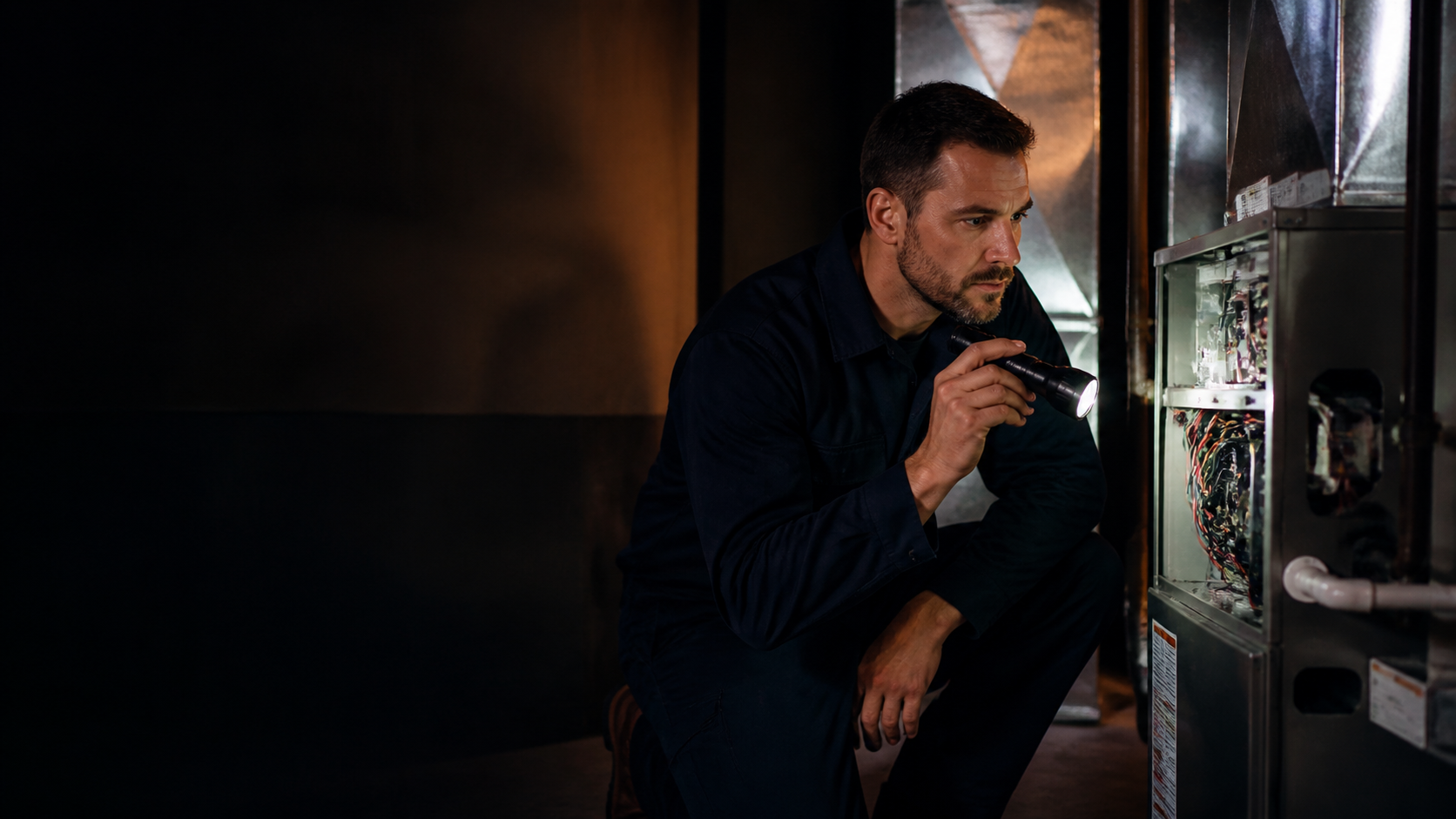
Note the thermostat, filter, airflow, timing, ice, water, and sounds. Do not remove a panel, test voltage, handle refrigerant, change wiring, or open the disconnect.
Smoke or heat means stop
A burning odor, buzzing, sizzling, sparks, smoke, flickering lights, or a hot or damaged panel makes this an electrical safety concern. Stop using the system and get help.
What to check once, without opening the equipment
Start with observations you can make safely. Note whether the thermostat is calling for cooling, heat, or fan operation, and record whether its display is blank.
A blank thermostat and a tripped HVAC breaker can be related, but the display alone does not identify the fault.
Look at the filter and visible airflow. If an accessible filter is packed with dust, replace it with the correct size and airflow direction.
Make sure return grilles and supply registers are not blocked by furniture, rugs, or stored items. A dirty filter can contribute to airflow problems and system strain, but a new filter is not a complete diagnosis.
If you are comfortable and there is no burning odor, smoke, buzzing, visible damage, or other warning sign, a tripped breaker can be moved fully to OFF and then back to ON one time. If it trips immediately or again when the system runs, do not try again.
Look only at an outdoor disconnect; do not open it or the equipment.
Write down the timing. Did the trip happen at startup or after the system ran for a while?
Did the indoor or outdoor fan run? Those details give a technician a better starting point than guessing which part failed.
- Check the thermostat mode and whether its display is blank.
- Replace an accessible, visibly dirty filter with the correct size.
- Clear furniture and stored items from return grilles and supply registers.
- Do not remove panels, test voltage, handle refrigerant, or change wiring.
Why an HVAC breaker keeps tripping
Several different problems can look the same at the electrical panel. A clogged filter, blocked return, or closed supply register can reduce airflow.
In an air conditioner, restricted airflow can contribute to short cycling or a frozen coil. In a furnace, it can make the equipment work harder and run longer.
If the AC breaker trips when cooling starts, the problem may involve the outdoor unit, compressor circuit, motor, capacitor, contactor, or wiring. These include high-voltage components, so do not open the condenser cabinet or replace a part based on a symptom list.
If ice is visible on the copper lines or outdoor unit, turn the cooling system off and arrange diagnosis; the ice may thaw, but its cause still needs attention.
A gas furnace still needs electricity for the control board, blower motor, fan, and gas valve. Restricted airflow, a shared circuit, worn blower wiring, another failed component, or a panel problem can all be involved.
Note whether the breaker trips when the blower starts, during ignition, or after the furnace has heated for a while.
The issue may be in the home's electrical system rather than the HVAC equipment. An overloaded or shared circuit, damaged wiring, a failing breaker, or a panel problem can trip the circuit.
If the breaker serves more than the HVAC equipment, turn off or unplug other loads only when you can do so safely. Never add a larger breaker to stop the trips.
- Airflow restrictions can make an AC or furnace work harder.
- Startup trips can point toward a compressor, motor, capacitor, contactor, or wiring problem.
- Furnace trips can involve the blower, controls, shared circuit, or panel.
- An overloaded circuit, damaged wiring, or failing breaker may be the real source.
Stop resetting if you see electrical warning signs
Repeated trips deserve attention on their own. The concern is higher if you also notice a burning or hot-plastic odor, buzzing, sizzling, crackling, popping, flickering or dimming lights, or a hot, discolored, damaged, or wet panel or disconnect.
Stop using the equipment and do not touch a hot or damaged panel. Do not keep testing the breaker.
If there is smoke or fire, leave the area and contact emergency services. A breaker is there to stop unsafe current before wiring overheats; defeating that protection removes the safety check.
Do not keep an uncomfortable home running with an extension cord connected to an air conditioner or heater. Extension cords are not a substitute for a properly diagnosed circuit, and overloading outlets or power strips can create another hazard.
- Burning odor, buzzing, sizzling, crackling, or popping.
- Flickering or dimming lights when the system starts.
- A hot, discolored, wet, or damaged panel or disconnect.
- Smoke, sparks, or visible damage around the equipment or wiring.
What to tell the HVAC technician or electrician
Before you call, write down whether the equipment is an AC, furnace, or heat pump; which breaker or disconnect moved; whether the trip happens at startup or later in the cycle; whether the indoor or outdoor fan runs; and what the thermostat displayed.
Also report ice, water, weak airflow, smoke, an unusual smell, buzzing, flickering lights, or other high-current appliances that were running. That description helps decide whether to start with the HVAC equipment, the branch circuit, or the electrical panel.
For a Frederick County home, ask for the cause to be identified before discussing repair or replacement. If the equipment is the clear trigger and the panel shows no warning signs, begin with HVAC diagnosis.
If the panel, wiring, shared load, or electrical odor appears involved, a licensed electrician may need to evaluate it. A larger breaker is not a shortcut.
- Identify the equipment and which breaker or disconnect moved.
- Say whether the trip happens at startup or after the system runs.
- Describe the thermostat, fans, ice, water, airflow, smells, sounds, and lights.
- Mention other high-current appliances and ask for the cause in plain language.
Quick answers about a tripping HVAC breaker
A reset restores power for a moment; it does not repair the condition that caused the trip. When the breaker trips again, the safest useful step is to leave it off and give the service provider the timing and warning signs you observed.
The right trade depends on what the symptoms show. Equipment that is the clear trigger with no panel or wiring warning signs usually starts with HVAC diagnosis.
A suspect breaker, panel, wiring, shared circuit, or electrical odor calls for a licensed electrician. When you are unsure, describe the symptoms and ask which evaluation should come first.
- A repeat trip needs prompt diagnosis, even without smoke or sparks.
- A dirty filter can contribute to strain but does not prove the electrical fault is fixed.
- Startup timing helps narrow the cause but does not make high-voltage repairs safe to DIY.
- Never replace the breaker with a larger one to keep the system running.
What to note: One reset is the limit
If there are no warning signs and you are comfortable doing so, move the breaker fully to OFF and back to ON once. A second trip means leave it off.
Keep that detail with the rest of the service history so the next decision stays tied to the system's actual behavior.
- One reset is the limit
What to note: Look, do not open
Note the thermostat, filter, airflow, timing, ice, water, and sounds. Do not remove a panel, test voltage, handle refrigerant, change wiring, or open the disconnect.
Keep that detail with the rest of the service history so the next decision stays tied to the system's actual behavior.
- Look, do not open
What to note: Smoke or heat means stop
A burning odor, buzzing, sizzling, sparks, smoke, flickering lights, or a hot or damaged panel makes this an electrical safety concern. Stop using the system and get help.
Keep that detail with the rest of the service history so the next decision stays tied to the system's actual behavior.
- Smoke or heat means stop
What comes after the first answer?
Can I reset the HVAC breaker?
If you are comfortable doing so and there are no warning signs, one reset may restore power after a temporary interruption. Move it fully to OFF, then back to ON. If it trips immediately or again when the system runs, leave it off and arrange diagnosis.
Can a dirty filter make the breaker trip?
A dirty filter can contribute to airflow problems and system strain, especially in a furnace or AC that is short cycling. Replace an accessible dirty filter, but do not treat a new filter as proof that the electrical fault is fixed. Continued trips need professional diagnosis.
Why does the AC breaker trip when cooling starts?
Startup timing can point toward the outdoor unit, compressor circuit, motor, capacitor, contactor, or wiring. Do not open the condenser cabinet or replace a part based on a symptom list. A technician needs to test the cause.
Why does the furnace breaker keep tripping?
Possibilities include restricted airflow, a shared circuit, worn blower wiring, another component, or a panel problem. Note whether the breaker trips when the blower starts, during ignition, or after the furnace has been heating for a while.
Is a tripping HVAC breaker an emergency?
A repeat trip needs quick attention. It becomes an electrical safety concern when it comes with smoke, sparks, burning odor, heat, visible damage, buzzing, sizzling, or flickering lights. Stop using the system. If there is fire or smoke, leave the area and contact emergency services.
Should I call an HVAC technician or an electrician?
Call an HVAC technician when the equipment is the clear trigger and the panel and wiring show no warning signs. Call a licensed electrician when the breaker, panel, wiring, shared circuit, or electrical odor appears involved. When you are unsure, describe the symptoms and ask which trade should evaluate the problem first.