Heat Pump Short Cycling
What It Means and What to Do
A heat pump that runs in short bursts, shuts off, and starts again before the house is comfortable is short cycling. The pattern is annoying, it wears components, and it refuses to name its own cause.
A dirty filter, a blocked return, a thermostat problem, low refrigerant, an oversized system, or an electrical fault can all produce the same rhythm. That is why the safe basics come first and the meters come later.
Here is how to read the pattern, what to check with the panels closed, and the point where a Frederick County technician takes over.
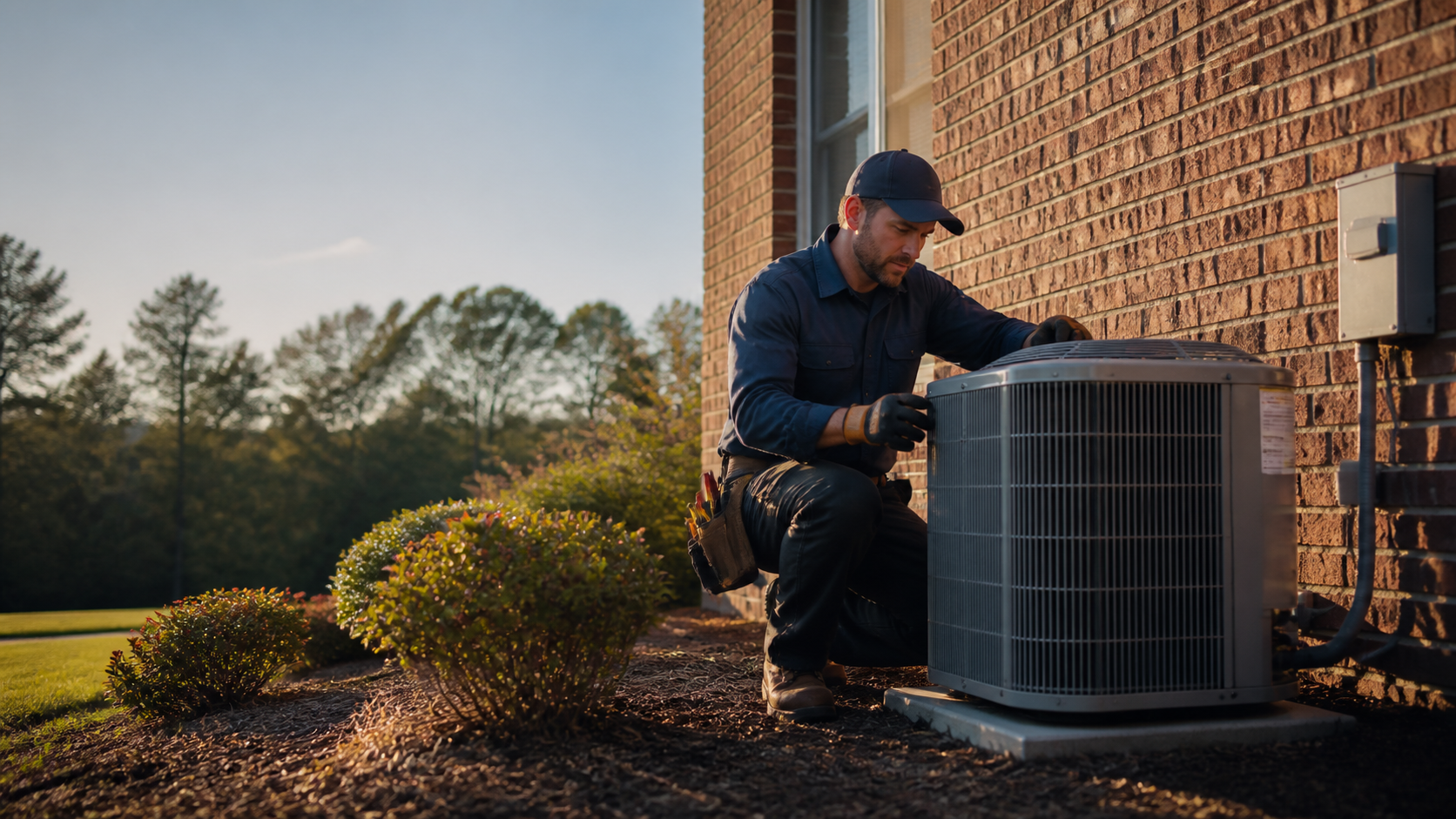
Check first
Confirm the thermostat mode, look at a visibly dirty filter, and make sure supply vents, return grilles, and the outdoor unit are clear. None of it requires opening the equipment.
Stop here
Shut the system off for spreading ice, water near electrical parts, a strong burning smell, smoke, sparking, or a breaker that trips again. No repeated resets, no removed panels.
What to tell us
Whether it happens in heating, cooling, or both; how long it runs and stays off; the thermostat setting; unusual sounds; ice, water, or an error message; and when the change began.
Could it be normal defrost?
Before diagnosing anything, rule out defrost. In cold, damp weather a brief pause or change in operation is the system clearing frost off the outdoor coil.
Defrost ends, and heating returns; that is the signature of normal. Repeated starts and stops every few minutes, with the house never settling, is not that.
Write down the mode, the run time, the off time, the weather, and any visible ice. Those five facts separate a defrost story from a cycling story better than anything else.
If the bursts continue across mild weather and both modes, the defrost explanation is off the table.
- A brief defrost pause can be normal in cold, damp weather.
- The system should return to heating after defrost ends.
- Repeated starts and stops every few minutes deserve attention.
- Record the mode, run time, off time, weather, and visible ice.
Why does a heat pump keep turning on and off?
Start at the thermostat. A signal or placement problem can end a cycle before the house is satisfied, especially a thermostat sitting in sun, in a draft, or near a supply register.
Airflow is the next suspect. Dirty filters, blocked returns, and closed vents restrict the air the system needs, and the controls respond by cycling.
Deeper causes need testing: low refrigerant, outdoor-unit problems, and defrost faults all mimic each other from the hallway.
Sizing is the quiet one. An oversized system blasts the thermostat area to the set point and shuts off before the far rooms feel anything.
Any of those can be the story, which is why the pattern notes matter more than a guessed part.
- Thermostat signal or placement can end a cycle too soon.
- Dirty filters, blocked returns, and closed vents can restrict airflow.
- Low refrigerant, outdoor-unit problems, and defrost faults need testing.
- An oversized system may reach the setting before a full cycle completes.
What can I safely check?
Confirm the thermostat mode and set point. Then replace or clean a dirty filter according to its instructions, and open supply vents and return grilles.
From a safe distance, clear loose debris from around the outdoor cabinet. Leaves and snow change how the unit behaves.
That is the whole list. Wiring, refrigerant, panels, compressors, and gas controls are not homeowner territory, no matter how helpful the internet feels.
Then watch one full on-off-on sequence and time it. Numbers beat adjectives when you call.
- Confirm the thermostat mode and set point.
- Replace or clean a dirty filter according to its instructions.
- Open supply vents and clear return grilles.
- Clear loose debris around the outdoor cabinet from a safe distance.
- Stop before touching wiring, refrigerant, panels, compressors, or gas controls.
How short cycling affects comfort and humidity
Short cycles do a poor job of both. Rooms end up uneven, and in cooling season the air turns clammy because the system never runs long enough to dry it.
Measure the humidity rather than trusting how the air feels; a number makes the complaint concrete.
Remember that home load, insulation, ductwork, and equipment selection all shape comfort. A clean filter fixes a lot, but it does not rule out every cause of short cycling.
Treat the humidity and the uneven rooms as data. Together they tell a technician whether the system is cycling wrong or simply sized wrong.
- Short cycles can leave rooms uneven and cooling clammy.
- Measure humidity instead of relying only on how the air feels.
- Home load, insulation, ductwork, and equipment selection affect comfort.
- A clean filter does not rule out every cause of short cycling.
When should I stop troubleshooting?
Leave first for a carbon monoxide alarm, gas odor, smoke, or fire. Those outrank every other instruction on this page.
Shut the system off for spreading ice, water near electrical equipment, or a burning smell that is getting worse. A breaker gets one reset; a second trip means it stays off.
Treat unsafe heat or cold as urgent when vulnerable people are in the house. The cycle pattern can wait; people cannot.
Short of those lines, a stubborn cycling pattern is a prompt-diagnosis problem rather than an emergency. Call the same day, not the same hour.
- Leave first for a carbon monoxide alarm, gas odor, smoke, or fire.
- Turn the system off for spreading ice, water near electrical equipment, or a worsening burning smell.
- Reset a breaker no more than once; leave it off if it trips again.
- Treat unsafe heat or cold as urgent for vulnerable people.
When to schedule heat pump repair in Frederick County
Bring the thermostat setting and the approximate run-and-rest pattern, the affected rooms, the operating mode, and when the change began.
Add the extras: ice, water, unusual sounds, breaker trips, or error messages. Every one of them narrows the diagnosis.
Then ask for the test results and the repair-versus-replacement reasoning. You should leave the conversation knowing what was measured and why the recommendation follows from it.
- Bring the thermostat setting and approximate run/off pattern.
- Share the affected rooms, operating mode, and when the change began.
- Mention ice, water, unusual sounds, breaker trips, or error messages.
- Ask for the test results and the repair-versus-replacement reasoning.
The clock is the clue
How long it runs, how long it rests, and whether the house ever reaches the setting: those three numbers are the short-cycling diagnosis in miniature.
Keep them with your service notes. Patterns that survive a filter change are exactly what a technician needs to hear about.
- Time the cycles before you call.
And the hard stops
Spreading ice, water near anything electrical, smoke, sparking, or a second breaker trip ends the observation phase with the system off.
Those are the boundaries. Everything else on this page is optional; these are not.
- Off means off.
Answers to the usual follow-up questions
Why does my heat pump keep turning on and off?
Usually one of a handful of causes: a thermostat ending the call early, restricted airflow from a filter or blocked return, low refrigerant, an outdoor-unit or defrost fault, or an oversized system. The pattern plus testing separates them.
How do I tell short cycling from a normal defrost cycle?
Defrost is brief, tied to cold damp weather, and ends with heating restored. Short cycling is repeated on-off bursts across conditions, with the house never settling. Timing and weather tell them apart.
Can a dirty filter cause short cycling?
Yes. A dirty filter restricts airflow, and the system responds by cycling. Replace or clean it and watch whether the pattern survives; if it does, the cause lives elsewhere.
Can an oversized heat pump cause short cycling?
Yes. An oversized heat pump satisfies the thermostat quickly and shuts off before the rest of the house catches up, producing exactly this rhythm. A sizing review that looks at the load and the ducts can confirm it.
Is short cycling an emergency?
By itself, no. It becomes urgent with a CO alarm, gas odor, smoke, fire, unsafe indoor temperatures for vulnerable people, or electrical trouble like repeated breaker trips. Otherwise it deserves prompt diagnosis, not an emergency call.
What should I tell a heat pump technician?
The mode it happens in, the run and rest times, the thermostat setting, any unusual sounds, ice or water, error messages, and when the change began. That package is worth more than any part name.