How Often Should You Schedule Heat Pump Maintenance?
A heat pump earns its twice-a-year reputation honestly: it is one machine doing two jobs. Most systems should see professional maintenance at least once a year, and for a system that heats and cools, a spring cooling check and a fall heating check are the practical rhythm.
The equipment manual and the system's condition get the final word on interval. And if the heat pump is currently showing ice, weak airflow, water, unusual noise, or repeated short cycles, skip the waiting and book a diagnosis.
Here is what the seasonal visits cover, what stays on your side of the line between them, and when the calendar stops mattering.
Plan around the seasons
If the heat pump handles both heating and cooling, put a spring cooling check and a fall heating check on the calendar. Follow the equipment manual if it calls for a different interval.
Watch for changes
Weak airflow, heavy or persistent ice, water, unusual sounds, short cycles, or a home that no longer reaches the set point are reasons to request diagnosis sooner.
Keep the safe tasks yours
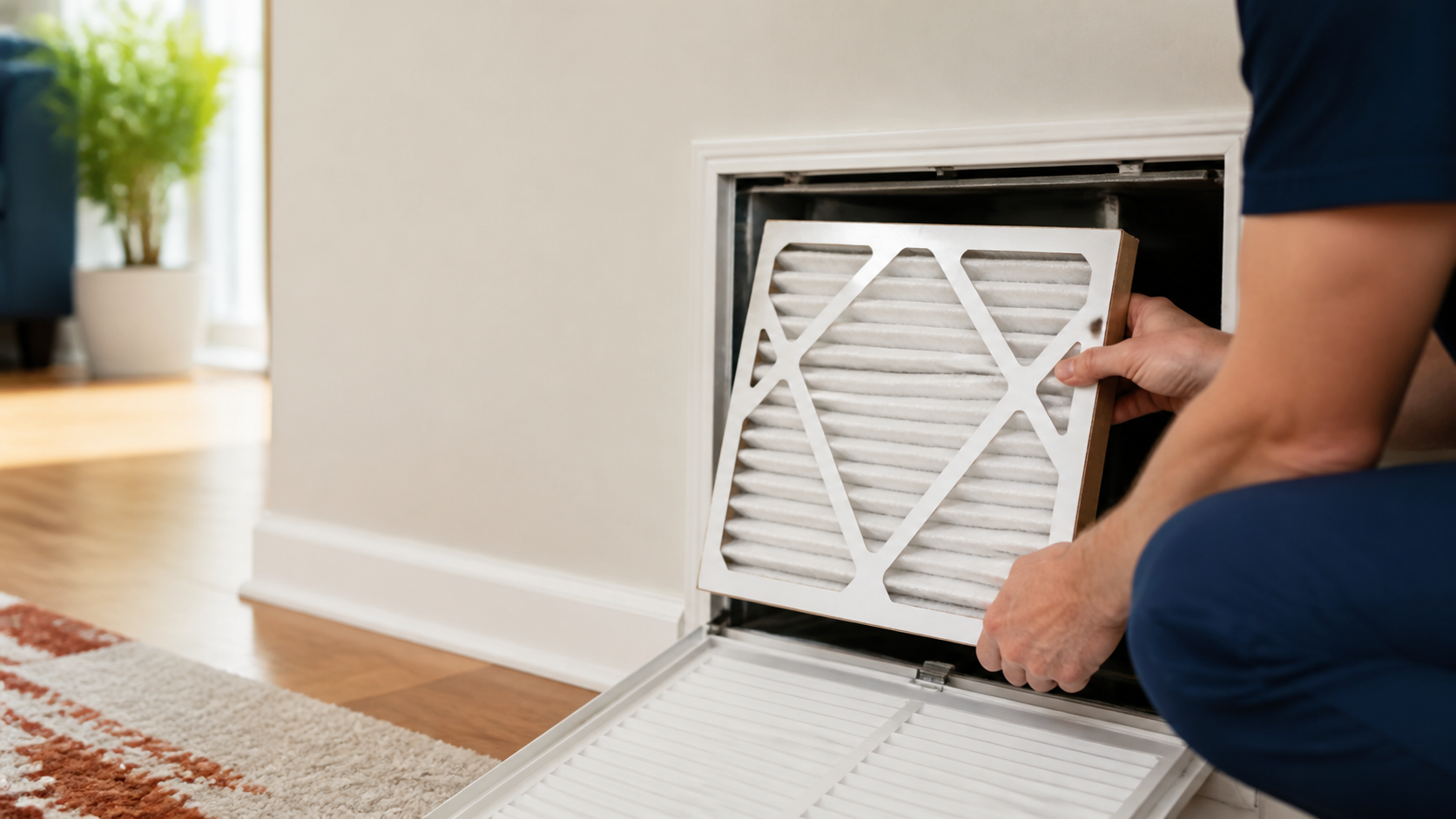
Check the filter, keep the outdoor unit clear, and make sure registers and returns are open. Refrigerant, electrical components, controls, and deep coil work belong to a professional.
Why spring and fall visits make sense
A heat pump uses the same compressor, coils, and refrigerant circuit to heat in winter and cool in summer. One machine, two seasons of hard work.
The spring visit checks readiness for cooling: charge, coils, drainage, and controls before the first hot stretch. The fall visit does the same for heating, including defrost behavior before the first cold snap.
Two short checks a year beat one long recovery in January or July. The equipment manual and the system's condition set the final interval, but the seasonal logic holds for most homes.
Skipping a season means the system enters its hardest weather unexamined, which is exactly when small problems grow teeth.
- A heat pump uses the same system for heating and cooling.
- Spring service checks readiness for the cooling season.
- Fall service checks readiness for the heating season.
- The equipment manual and system condition set the final interval.
What changes the right frequency
Heavy use shortens every maintenance interval. A system that runs nearly year-round in Frederick County weather earns closer attention than one used gently.
Pets, dust, leaves, snow, airflow, and drainage history all matter. So does system type: ductless, ducted, and ground-source systems each need their own kind of care.
Filter care is yours, and it matters, but it does not replace professional maintenance; it just makes the professional visits easier.
- Heavy use can make a seasonal check more practical.
- Pets, dust, leaves, snow, airflow, and drainage history all matter.
- Ductless, ducted, and ground-source systems need system-specific care.
- Filter care does not replace professional maintenance.
What a professional tune-up should cover
The visit should read the whole system: thermostat operation, controls, and electrical connections first, then the indoor and outdoor coils, the blower, the fan, and the airflow.
The drain line that carries the system's water away in cooling season, plus the refrigerant condition, belongs on the list. So do the reversing valve and defrost operation, the two parts that make a heat pump a heat pump.
Ask what was checked and what the readings showed. A tune-up that cannot describe itself is a receipt, not a service.
- Thermostat operation, controls, and electrical connections.
- Indoor and outdoor coils, blower, fan, and airflow.
- Drainage for the water the system produces, and refrigerant condition.
- Reversing valve and defrost operation.
What you can do between visits
Check the filter monthly and follow the equipment instructions for cleaning or replacing it. On a ductless system that means the small washable screens too.
Keep the outdoor unit clear of debris, snow, and storage items, and keep supply registers and return grilles open inside. Airflow is the cheapest maintenance there is.
Write down when any new sound, airflow change, or run-time change began. Dates make patterns, and patterns make diagnoses.
None of this opens the equipment. Panels stay closed; refrigerant, electrical parts, and controls stay professional.
- Check the filter monthly and follow the equipment instructions.
- Keep the outdoor unit clear of debris, snow, and storage items.
- Keep supply registers and return grilles open.
- Record when a new sound, airflow change, or run-time change began.
When to schedule service sooner
The calendar loses to symptoms. If the home no longer reaches the thermostat setting, book now rather than at the next seasonal window.
Heavy ice, weak airflow, water, or repeated short cycles are the same instruction in different clothes.
A new sound, a new smell, or unusual auxiliary-heat use also moves the date up. And a CO alarm or gas odor is not a maintenance question at all: leave first and get emergency help.
Fifteen honest minutes a month of your own checks is a fair trade; dragging a real symptom to the next scheduled visit is not.
- The home no longer reaches the thermostat setting.
- Heavy ice, weak airflow, water, or repeated short cycles appear.
- A new sound, smell, or unusual auxiliary-heat use develops.
- A CO alarm or gas odor means leave first and get emergency help.
How to prepare for a clearer visit
Bring the system type, the symptom, the timing, and any recent events to the call. Note visible ice, water, filter condition, and thermostat information.
Clear access to both the indoor and outdoor equipment before the technician arrives; a buried unit costs visit time.
Request diagnosis for a symptom and maintenance for healthy equipment, and you will get the right visit either way.
- Bring the system type, symptom, timing, and recent-event details.
- Note visible ice, water, filter condition, and thermostat information.
- Clear access to indoor and outdoor equipment.
- Request diagnosis for a symptom and maintenance for healthy equipment.
The calendar version
Spring for cooling, fall for heating, once a year at minimum: that is the whole schedule in one sentence.
Put both visits on the calendar now, while thinking about it is free. Remembering in July is not.
- Two short visits beat one long recovery.
The exception to the calendar
Ice, weak airflow, water, new noise, or short cycles cancel the schedule and become a diagnosis.
Write down what you saw and when. The pattern decides how fast the visit needs to happen.
- Symptoms outrank seasons.
Answers to the usual follow-up questions
How often should a heat pump be serviced?
At least once a year, and twice if it heats and cools, which most do. A spring cooling check and a fall heating check before each hard season is the practical schedule, with the equipment manual controlling the final interval.
When should I schedule heat pump tune-ups in Frederick?
Book the cooling check in spring and the heating check in fall, before the hardest weather arrives. Timing the visits before the season means small findings stay small.
Is heavy ice on my heat pump normal in winter?
Light frost during cold, damp operation can be normal and should clear during defrost. Heavy or persistent ice that does not clear is not normal and deserves a diagnosis.
Is heavy ice on my heat pump normal in winter?Can I skip one of the two seasonal visits?
You can, but you lose the pre-season check for half the system's workload. If you skip one, keep the fall heating visit in Frederick County winters and watch the system closely in summer.
What can I safely do between maintenance visits?
Check the filter monthly, keep the outdoor unit clear of debris and snow, keep registers and returns open, and write down when anything new starts. Leave refrigerant, electrical, controls, and deep coil work to a professional.
Is a maintenance plan worth it for a heat pump?
For a heat pump that works year-round, a plan covering both seasonal visits usually pays for itself in fewer urgent calls and a running record of the equipment. Compare what a plan includes against what you would book anyway.