Heat Pump Not Heating in Frederick? What to Check Before Calling for Repair
Start with one honest question: is the air truly too cold, or does it just feel different from furnace heat? A heat pump moves heat in from outdoors, so its supply air runs warm and steady rather than furnace-hot, and that difference fools plenty of Frederick homeowners in January.
If the room temperature keeps falling, the system runs without catching up, or the outdoor unit wears a suit of thick ice, something is actually wrong. The low-risk checks rule out settings and airflow; refrigerant, electrical, compressor, and reversing-valve problems belong to diagnosis.
This guide walks the safe checks, explains what a defrost cycle can account for, and marks the line where heat pump repair in Frederick takes over.
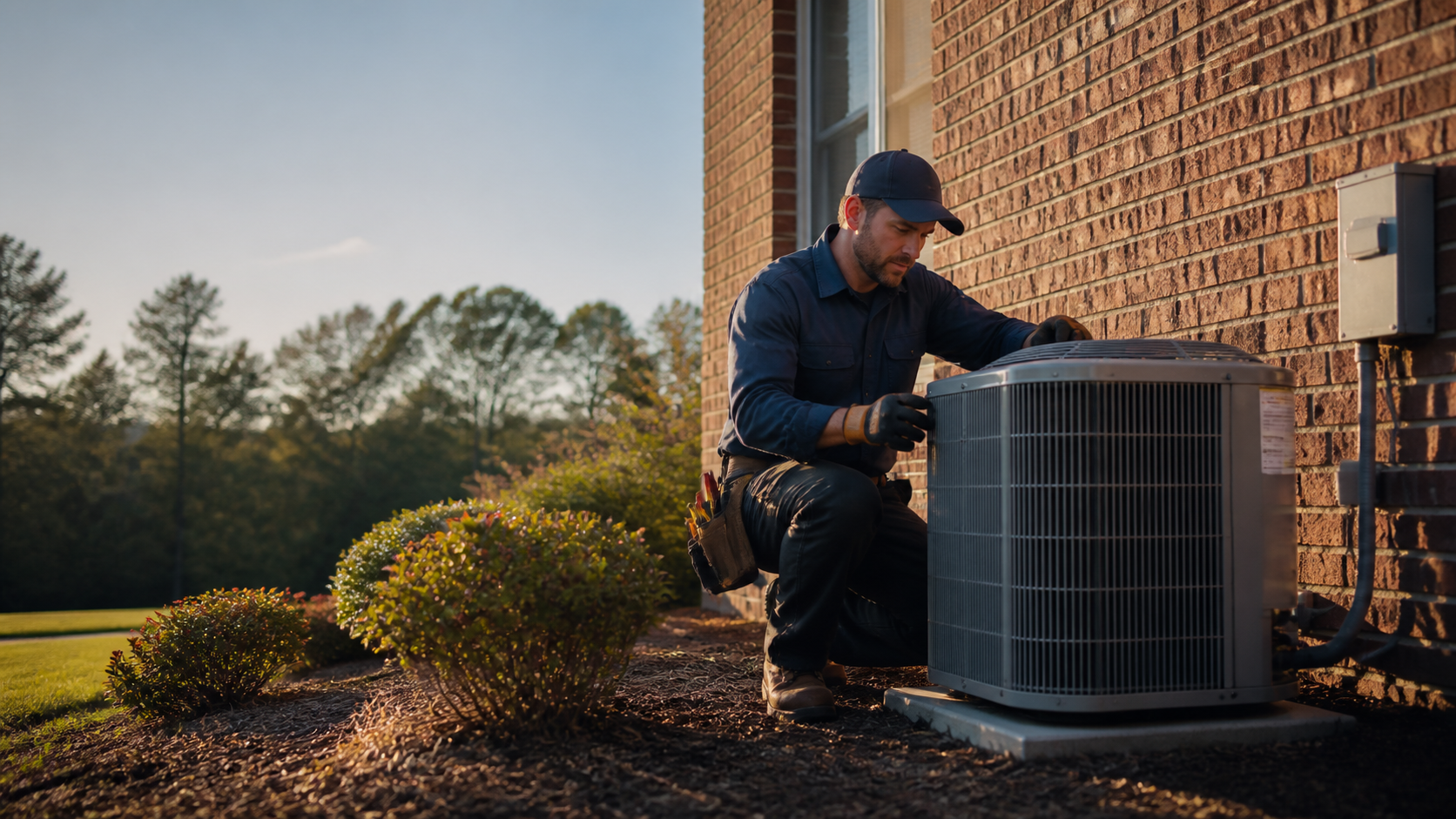
Check first
Set the thermostat to Heat, confirm the fan setting, swap a loaded filter, and look for leaves, snow, or heavy ice around the outdoor unit.
Watch the pattern
Brief cool air can be defrost. A falling indoor temperature, continuous cool air, or ice that keeps growing is a problem.
Stop here
No opening panels, handling refrigerant, chipping ice, or repeatedly resetting a tripped breaker. Note what you see and call for testing.
First, decide whether the air is actually too cold
Stand at a supply register while the thermostat asks for heat. Warm air that feels less intense than furnace air can be completely normal; what you are watching for is a change in the house, not air that scorches your hand.
The pattern decides. A house that is slowly warming means the equipment is doing its job.
A falling indoor temperature or air that stays cool after a defrost cycle keeps the investigation open.
- Warm, steady air is normal for a heat pump even when it feels cooler than furnace air.
- A falling room temperature means the system is not keeping up.
- Cool air continuing past a defrost cycle needs more attention.
Common reasons a heat pump stops warming the house
From inside, several problems look identical. The thermostat, fan setting, filter, outdoor airflow, frost, refrigerant circuit, reversing valve, defrost controls, blower, compressor, or electrical components can all be involved, and separating a control problem from equipment trouble takes measurements.
The cheap causes come first: a thermostat left in Cool, a fan parked on On, or a set point that never calls for heat chills a house without breaking anything, and a clogged filter, blocked register, or restricted duct cuts the airflow that carries the heat. Outdoors, leaves and snow smother the unit while light frost gives way to thick, growing ice that interferes with heat transfer.
Deeper in, a refrigerant or reversing-valve problem stops heat from moving correctly, and a worn defrost control, blower, compressor, or electrical part stops normal operation. None of that is sort-able from the couch; the checks below clear the simple causes and the rest needs meters.
- The thermostat is in Cool, the fan is on On, or the set point never calls for heat.
- A dirty filter, blocked register, or restricted duct cuts indoor airflow.
- Leaves, snow, or debris restrict outdoor airflow.
- Light frost is normal; thick or growing ice interferes with heat transfer.
- A refrigerant or reversing-valve problem stops heat from moving correctly.
- A worn defrost control, blower, compressor, or electrical part prevents normal operation.
Safe checks before scheduling service
Keep it visible and simple: no electrical panels, no refrigerant, no removed covers, no chipping ice off the outdoor coil. Set the thermostat to Heat with the set point above the room temperature, and put the fan on Auto if that is your system's normal, since a fan on On moves room-temperature air between cycles and muddies every judgment afterward.
Swap a loaded or collapsing filter for the correct size and type, one that fits without bending, and pull furniture and storage away from registers and returns. Clear loose leaves and surface debris from around the outdoor unit without reaching through the grille.
A breaker that trips again after one normal reset stays off, and the next step is a professional; the single-reset rule exists because a second trip usually means the fault is still live.
- Thermostat to Heat, set point above the room temperature.
- Fan to Auto when that is normal for the system; fan On moves room-temperature air between cycles.
- Replace a loaded or collapsed filter with the correct size and type, fitted without bending.
- Move furniture and stored items away from supply registers and return grilles.
- Clear loose leaves and surface debris from around the outdoor unit, no reaching through the grille.
- One breaker reset only; a second trip means leave it off and call a professional.
When cold air or frost is just defrost
In heating mode the outdoor coil collects frost, and the heat pump periodically reverses to remove it. During the cycle, heat temporarily moves the other way, and the air at the registers can feel cool.
That short stretch is not a failing heat pump. Watch for heating to return afterward, and expect timing to vary with the equipment, conditions, and controls, so a fixed minute-by-minute rule helps nobody.
Persistent cold air is the other thing entirely. Call for diagnosis if the thermostat keeps showing a defrost condition, the coil stays heavily iced, the ice grows, or the house never recovers.
And never take a tool to the ice.
- Brief cool air during defrost can be normal.
- Light frost may clear on its own as the system defrosts.
- Thick ice that remains or returns quickly is not normal.
- No hot water and no chipping at the coil.
Cold outdoor temperatures and backup heat
A heat pump has no single outdoor temperature where it quits. Equipment design, sizing, controls, insulation, ductwork, and heating demand all matter, and two systems can behave differently in the same Frederick County weather.
Auxiliary heat, the backup that runs alongside the heat pump when the thermostat wants more, is normal on many systems. Emergency Heat is different: it locks out the heat pump and runs the backup alone on compatible controls, so it uses more energy.
Use Emergency Heat only as your equipment instructions or an HVAC professional direct. It can hold the house temporarily, but it does not repair the outdoor unit, and it is not a substitute for diagnosis.
- Cold weather can slow heating without proving a failure.
- Auxiliary heat supports the heat pump when more capacity is needed.
- Emergency Heat is a temporary operating mode, not a repair.
- A house that cannot recover at a reasonable set point needs diagnosis.
When to stop troubleshooting and call for repair
Schedule diagnosis when the home temperature keeps dropping, the heat pump blows cool air continuously, the outdoor coil carries thick ice, the outdoor fan will not run, the compressor makes a new noise, the system will not start, or a breaker trips after one reset.
The technician may need to test the refrigerant circuit, reversing valve, defrost controls, blower, compressor, or electrical components. Adding refrigerant or diagnosing live wiring from a checklist is not a homeowner activity.
Repair is not automatically replacement. The right call depends on the equipment's condition, the diagnosed fault, its age, and its failure history, and it starts with a clear diagnosis.
- The indoor temperature keeps falling while the thermostat asks for heat.
- Cool air continues beyond a temporary defrost cycle.
- Heavy ice returns, the fan will not run, or the system makes a new sound.
- The unit cools fine in summer but will not switch into heating.
- Airflow stays weak after a clean filter and open registers.
What a useful diagnosis checks
A technician ties the symptom to a real test. Expect the thermostat signal, the refrigerant circuit, the reversing valve, the defrost controls, the blower, the compressor, and the electrical components to come under scrutiny.
A weak electrical part and a refrigerant problem can both leave you cold, and only the tests separate them. Ask what the measurements showed before approving parts or entertaining a replacement decision.
- The thermostat's request for heat, and the electrical supply.
- Refrigerant operation and the reversing valve.
- Defrost controls, outdoor fan, blower, and compressor.
- The diagnosed fault, equipment condition, and the repair-versus-replacement reasoning.
Where Frederick County homeowners go from here
Write down the thermostat mode, the indoor temperature trend, whether the outdoor unit runs, the filter condition, any visible ice, any new sounds, and whether cooling worked fine last season. That record hands a technician the symptom instead of a vibe.
If the safe checks do not bring the heat back, request a heat-pump diagnosis. A plain explanation of the fault makes the repair-or-replacement decision easier, and the house gets to feel normal again sooner.
- Record the thermostat mode and indoor temperature trend.
- Note outdoor-unit operation, visible ice, and whether cooling worked recently.
- Hand those observations over when you request service.
Answers to the usual follow-up questions
Why is my heat pump blowing cool air in Heat mode?
It may be in a temporary defrost cycle, or the fan may be moving room-temperature air between heating cycles. Check the thermostat mode and fan setting first. Cool air that continues after normal operation should resume, or an indoor temperature that keeps falling, means diagnosis.
Why is my heat pump blowing cool air in Heat mode?How can I tell if my heat pump is defrosting normally?
A heat pump can send cooler air indoors temporarily while it clears frost from the outdoor coil, and warm air should return when the cycle ends. Heavy ice that remains, grows, or returns quickly is different and needs professional troubleshooting.
Should I turn on Emergency Heat?
Only if your system supports it and the equipment instructions or a professional direct you to use it. Emergency Heat runs the backup and locks out the heat pump on compatible controls. It can hold temperature temporarily, but it does not repair the outdoor unit.
Can I fix a frozen heat pump myself?
You can check the filter and the visible airflow around the unit, but do not chip ice, handle refrigerant, or remove panels. Thick ice that remains or returns needs professional troubleshooting, because airflow, refrigerant, fan, and defrost problems look alike from outside.
Can cold outdoor temperatures make a healthy heat pump fall behind?
Yes. Equipment design, sizing, controls, insulation, ductwork, and heating demand all shape cold-weather performance, and auxiliary heat may help on a compatible system. If the house keeps losing temperature or cannot recover at a reasonable set point, schedule diagnosis.
Can cold outdoor temperatures make a healthy heat pump fall behind?What details help most when I call about a heat pump that will not heat?
The thermostat mode, the indoor temperature trend, the filter condition, whether the outdoor fan runs, any visible ice or unusual sounds, and whether cooling worked recently. You do not need to identify the failed part.
When should I repair a heat pump instead of replacing it?
Start with a clear diagnosis. The right decision depends on the equipment's condition, the diagnosed fault, its age, and its failure history. A repair recommendation should explain what failed and why replacement is or is not reasonable.