Heat Pump Outdoor Fan Not Spinning
What to Check
A still outdoor fan is not automatically a broken heat pump. In heating mode, the fan pauses during defrost while the system clears frost off the coil, and a few minutes later everything resumes.
The trouble signs are different: the fan stays stopped well past a short cycle, thick ice keeps building, the unit makes a sound you have not heard before, or the house is losing the comfort fight. Those move this from observation to diagnosis.
Check the thermostat, the filter, visible debris, and the labeled breaker once. Beyond that, keep your hands out of the cabinet and away from the blade, and let a technician take it from there.
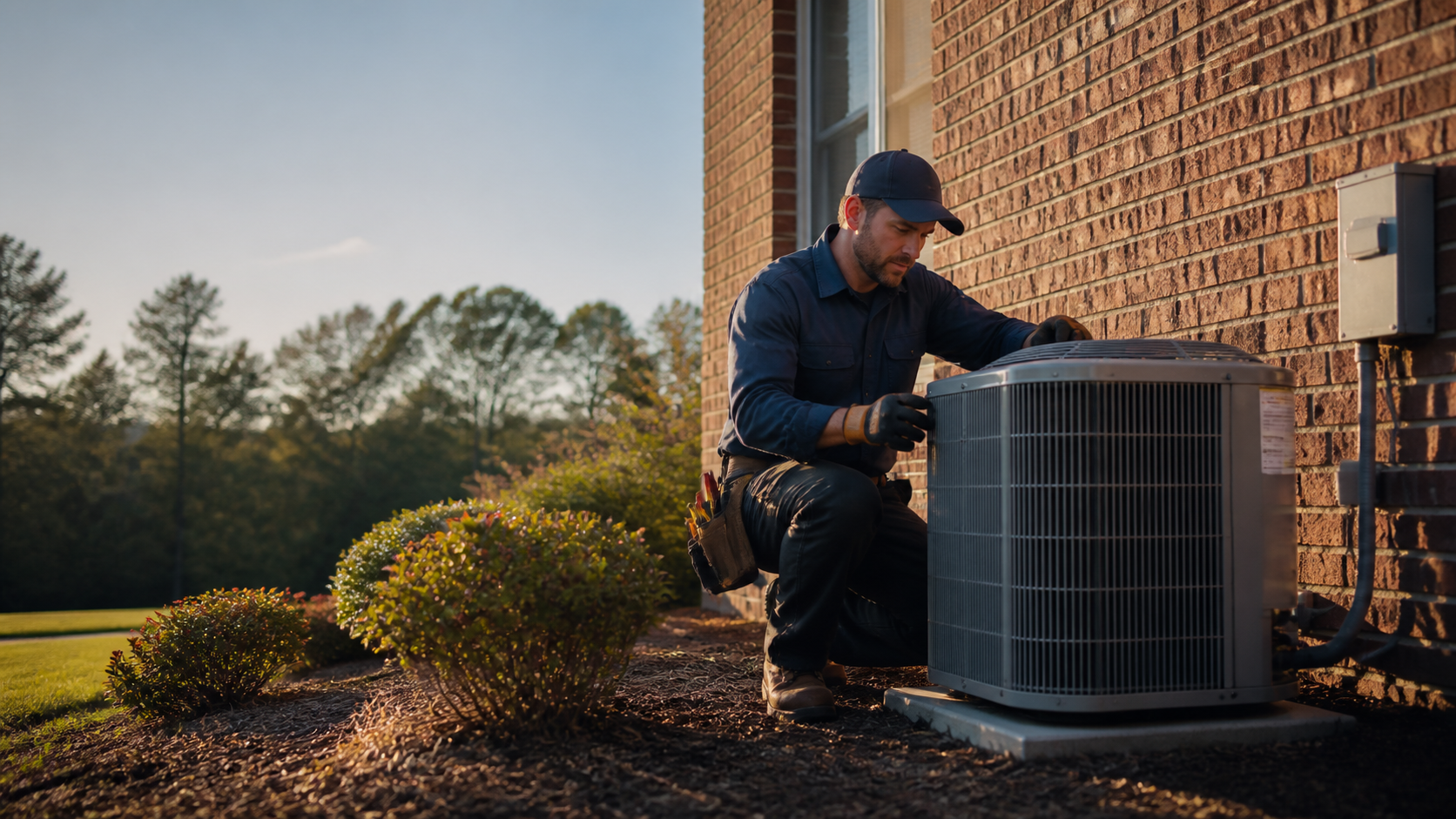
Watch first
In heating mode the outdoor fan may pause or slow during defrost. A brief cycle should end and heating should return. A fan that stays stopped or ice that keeps building graduates from watching to diagnosing.
Safe checks
Confirm the thermostat mode and set point, listen without touching, check the filter, clear loose material from around the unit, and reset the labeled breaker once, only if it is safe to do so.
Stop here
No reaching through the grille, no push-starting the blade, no chipping ice, no hot water, no opened panels, no handling refrigerant lines, and no resetting a breaker that trips again.
A brief defrost stop can be normal
In heating mode, the outdoor fan pausing or slowing for a few minutes is classic defrost behavior. The system is clearing frost off the coil, and when it finishes, the fan and the heating both come back.
Light frost on the coil is part of that picture; a thick shell of ice is not. The difference between those two is most of this diagnosis.
A fan that never restarts has left the normal category. That is the point where observation becomes a service call.
- A short fan pause during heating defrost can be normal.
- Defrost should end and normal heating should return.
- Light frost is different from a thick layer of ice.
- A fan that never restarts needs diagnosis.
What to check before calling for repair
Confirm what the thermostat is asking for: mode, set point, heating or cooling. Then listen to the equipment without laying a hand on it, indoors and out.
Classify what the fan is doing: completely still, trying to start, or restarting after defrost. Each of those points somewhere different.
Write down the time, the indoor temperature, any ice or water, and any error code showing on the thermostat or unit. Ten minutes of notes is worth an hour of guessing.
- Check the thermostat mode, set point, and what it is calling for.
- Listen for the indoor blower and the outdoor unit without touching either.
- Record whether the fan is still, trying to start, or restarting after defrost.
- Write down the time, indoor temperature, ice, water, and any error code.
Airflow, the filter, and the space around the unit
Indoor airflow and outdoor airflow are connected. Replace a dirty filter using the normal procedure, and give the outdoor unit room to breathe by clearing loose leaves and debris from around it.
Leave the coil fins straight and the cabinet shut. Spraying into the cabinet or removing panels trades a small mystery for a real hazard.
If thick ice remains or keeps coming back, shut the system down rather than letting it strain against its own frost.
- Replace a dirty filter only with the correct normal procedure.
- Clear loose debris and give the outdoor unit room to breathe.
- Do not bend coil fins, spray into the cabinet, or remove panels.
- Turn the system off when thick ice remains or keeps returning.
The breaker: once, then hands off
If the whole unit is dead, look at the labeled breaker, and only if the panel area is safe. A tripped breaker gets one reset, performed normally.
A second trip ends the resets. Whatever tripped it is still in there, and the breaker is doing its job by saying so.
Smoke, sparking, or a hot electrical smell around the equipment stops everything immediately. That is no longer a fan question.
- Look only at the labeled breaker if the area is safe.
- Reset a tripped breaker once, not repeatedly.
- Leave it off if it trips again.
- Smoke, sparking, or a hot electrical smell means stop immediately.
What can make the outdoor fan stop
A failed fan motor leaves the unit with little or no outdoor airflow, and it is one of the straightforward answers. Defrost controls or sensors can also fail to bring the fan back after a cycle.
Airflow trouble, water, icing, and refrigerant problems produce overlapping symptoms from outside the cabinet, which is why nobody names the part from the driveway.
Refrigerant work, in particular, belongs to a properly trained technician with the right equipment, always.
- A failed fan motor can leave little or no outdoor airflow.
- Defrost controls or sensors can keep the fan from restarting.
- Airflow, water, icing, and refrigerant problems can look similar from outside.
- Refrigerant work belongs to a properly trained technician.
When should you turn the heat pump off?
Shut the system down when the fan stays stopped after a defrost cycle or when the outdoor unit wears thick ice. Running normally under those conditions strains components that were not designed for it.
Never chip ice, bypass a control, or handle wiring that looks damaged. Those are three separate ways to turn a repair into an incident.
A gas odor or a carbon monoxide alarm is the emergency version of off: leave the house and call from outside.
- Shut the system down for a fan that stays stopped after defrost.
- Do not run normally with a thickly iced outdoor unit.
- Never chip ice, bypass a control, or handle damaged wiring.
- Treat gas odor or a carbon monoxide alarm as an emergency.
Waiting, maintenance, or repair
Watching is only for the good version: the fan restarts and the system returns to normal. Anything else gets a call.
Maintenance fits equipment that runs normally and just needs its seasonal attention. Diagnosis fits a persistent stop, a noise, a trip, ice, or comfort that is slipping away.
Remember that comfort also depends on ducts, registers, insulation, and the equipment's overall condition, so a fan fix does not automatically solve every cold room.
- Watch only when the fan restarts and the system returns to normal.
- Use maintenance for normally operating equipment.
- Schedule diagnosis for a persistent stop, noise, trip, ice, or comfort loss.
- Comfort can also be affected by ducts, registers, insulation, and equipment condition.
What a technician checks during repair
Expect tests of power, the fan circuit, and the motor itself. If defrost behavior is part of the story, the sequence and the outdoor airflow get inspected too.
Ice and refrigerant-related conditions need professional diagnosis, full stop. The meter decides, not the eyeball.
Bring what you recorded: timing, mode, sounds, and the symptoms you could see. It shortens the visit and sharpens it.
- Expect tests of power, the fan circuit, and the motor.
- The defrost sequence and outdoor airflow may need inspection.
- Ice and refrigerant-related conditions require professional diagnosis.
- Bring the timing, mode, sounds, and visible symptoms you recorded.
While you wait for service
Leave the system off rather than letting it strain without normal airflow. The few degrees you might hold onto are not worth the wear.
Manage the house with blinds, fans, layers, or safe supplemental heat as appropriate, and keep the unit accessible with its panels closed.
When we arrive, hand over the timeline. The sequence of events tells us more than any single observation.
- Turn the system off instead of letting it strain without normal airflow.
- Use blinds, fans, layers, or safe supplemental heat as appropriate.
- Keep the unit accessible and the panels closed.
- Share the symptom timeline rather than guessing at the failed part.
Answers to the usual follow-up questions
Is it normal for a heat pump outdoor fan to stop?
Yes, briefly. During a heating defrost cycle the outdoor fan commonly pauses while the system clears frost, and it should restart within a few minutes with heating restored.
How long should I wait during heat pump defrost?
Give it several minutes, not hours. Defrost length varies with equipment and conditions, but a fan that stays stopped long after the cycle should have ended, or ice that keeps building, has earned a service call.
Why is my heat pump outdoor fan not spinning?
Common causes include a failed fan motor, defrost controls or sensors that fail to restart it, and icing conditions. Several faults look alike from outside, so the answer comes from testing, not from the driveway.
Can I push the heat pump fan blade to start it?
No. Reaching through the grille or nudging the blade risks fingers and equipment alike, and it tells you nothing reliable. If the motor will not start on its own, that is the diagnosis talking.
Should I keep my heat pump running if the outdoor fan stopped?
Not for long. A stopped fan means little or no outdoor airflow, which strains the system and can build ice. Shut it down, keep the panels closed, and arrange diagnosis.
Is a heat pump outdoor fan that stopped an emergency?
It can be. Burning smells, sparking, damaged wiring, or repeated breaker trips make it urgent, and dangerous indoor temperatures raise the stakes further. A gas smell or CO alarm means leave the house and call from outside.