Heat Pump Covered in Ice? What Is Normal and What Needs Repair
A heat pump wearing a coat of ice looks like a system on the edge of failure — and in a Frederick winter, it's often just a system doing its job with winter working against it. Some frost on the outdoor coil is completely normal in cold, damp weather. What separates routine from trouble is whether the unit sheds that frost during its defrost cycle or keeps collecting a thicker and thicker shell.
Here's why frost happens at all: in heating mode, an air-source heat pump pulls warmth out of outdoor air, which leaves the coil colder than the air around it — cold enough that moisture freezes onto it. So the system carries its own defrost cycle, periodically sending heat back out to melt the accumulation.
Thick ice, ice that never leaves, or ice that returns within hours of clearing is a repair question. Your contribution to the answer is observation — not a screwdriver and certainly not an ice pick.
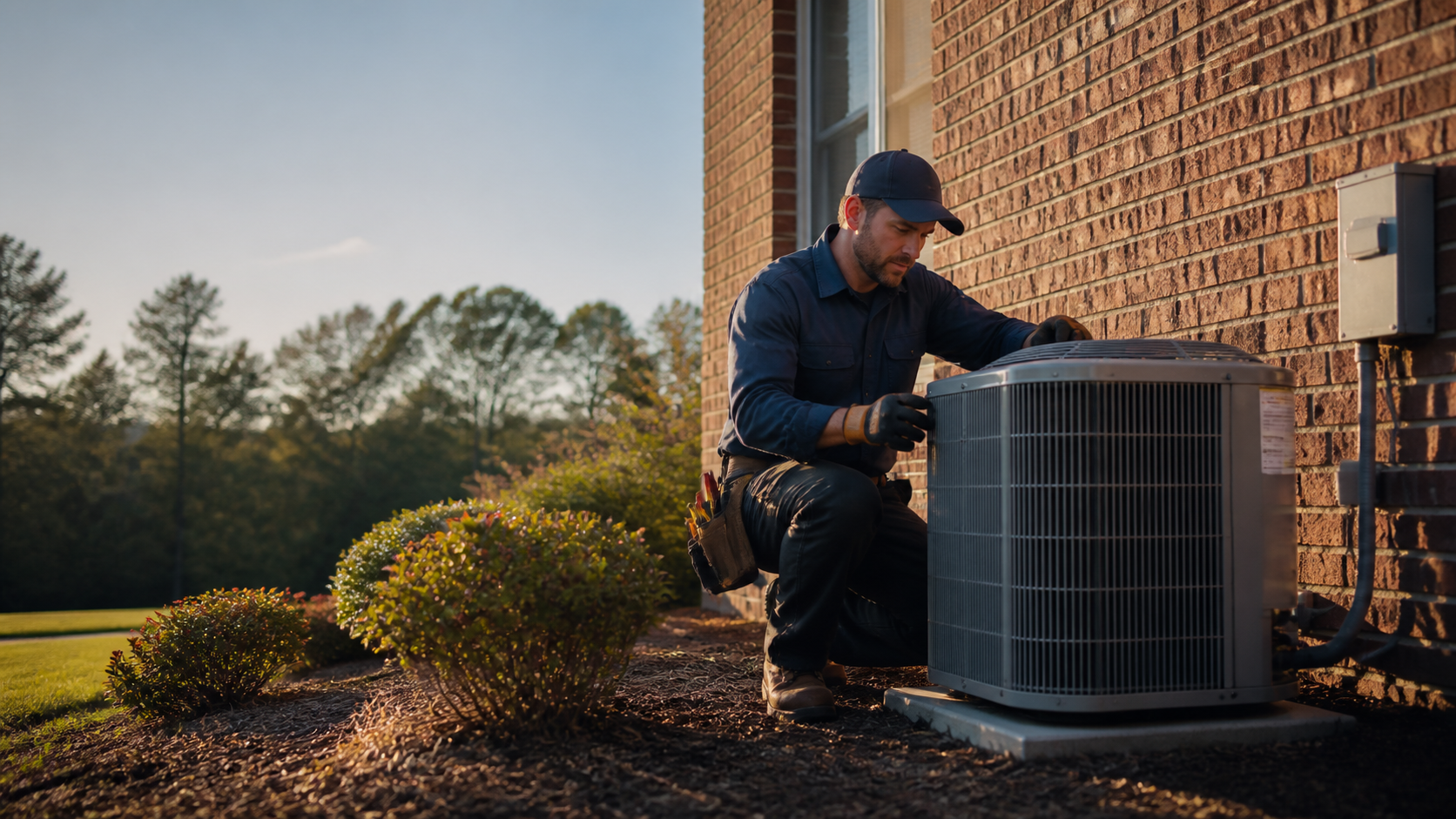
Light frost
A thin layer on the outdoor coil in cold, humid weather is expected. Watch for the unit to run defrost and shed it — not every crystal of ice is a failure announcement.
Safe checks
Confirm the thermostat is asking for heat, swap a visibly dirty filter, clear loose leaves and snow without reaching into the cabinet, and check for roof or gutter runoff landing on the unit.
Call sooner
Diagnosis time when the ice keeps growing, the house isn't heating, the outdoor fan isn't running, or the unit refreezes right after every thaw. Gas odor or a CO alarm: leave first.
Is some frost on a heat pump normal?
Usually, yes — a light frost layer is part of ordinary winter operation. The coil runs colder than the surrounding air, moisture freezes onto it, and cold-plus-humid is the recipe.
The system's own defrost cycle is supposed to wipe the slate clean.
Defrost changes the machine's voice for a few minutes: the outdoor unit shifts its sound, water drains away beneath it, and the air from your vents may briefly feel less warm. None of that means the thermostat or compressor has quit.
Give light frost a few hours and keep an eye on it. Frost that melts and stays gone is one thing.
Ice that lingers, creeps across the coil, crowds the fan, or re-forms every time the system runs is the other thing.
- Light frost in cold, damp weather is common.
- Defrost should clear it on the system's own schedule.
- A short change in outdoor sound or indoor air temperature during defrost is normal.
- Ice that stays, spreads, blocks the fan, or keeps coming back needs attention.
Why is the outdoor heat pump iced over?
More than one path leads to an iced-up cabinet, and the ice is the visible endpoint rather than the diagnosis. Airflow faults lead the list: a dirty indoor filter, a blocked return, leaves piled at the outdoor coil, or snow shoved against the unit all starve the system of the air it moves.
Water is the other accomplice. A defrosting unit releases water all winter, and if roof runoff, a dripping gutter, or melt with nowhere to drain keeps feeding the coil, it refreezes overnight — a different mechanism than operational frost, and one that grows regardless of how healthy the system is.
Deeper causes sit behind those: low refrigerant, a fan motor moving too little air, a failed sensor, or a defrost control that never fires. Sorting those takes tools and training — refrigerant, capacitors, electrical compartments, and defrost controls are technician territory, full stop.
- Airflow restrictions: dirty filter, blocked return, leaves, packed snow.
- Roof or gutter runoff freezing on the coil, adding layer after layer.
- Low refrigerant, a weak fan, a sensor, or a defrost control behind it all.
- Refrigerant, electrical, fan, sensor, and control tests belong to a technician.
What can you safely check before calling?
Keep it modest: you're clearing obvious obstacles and documenting the symptom, not servicing a heat pump.
Confirm Heat mode, your usual fan setting, and a temperature that actually asks for warmth. If the filter is visibly dirty, clean or replace it per the instructions — and skip the upgrade to a higher rating the system can't breathe through.
From a distance, survey the outdoor unit for leaves, grass, loose snow, or a water source feeding it. Keep the air path open without bending fins, dismantling covers, climbing anything, or working near live equipment.
Photograph the ice and write down the essentials: light or thick, clearing or not, how the house feels, any new sound, anything on the thermostat's display. That's the whole visit-prep package.
- Thermostat on Heat and genuinely asking for warmth.
- Visibly dirty filter replaced or cleaned per instructions.
- Loose leaves and snow cleared — hands outside the cabinet.
- Roof runoff, gutter leaks, or melting snow checked as water sources.
- Ice pattern, indoor comfort, sounds, and any thermostat message recorded.
When should an iced-over heat pump be repaired?
Book the diagnosis when ice survives a full defrost cycle, keeps growing, or keeps coming back. Move quickly if the house is losing heat, the system runs without warming the rooms, the outdoor fan won't operate, or the thermostat shows a fault.
You don't need the failed component's name before asking for help — you need the story. What changed, where the ice sits, whether the unit ever defrosts, and what you've already checked.
Fold in weak airflow, a dirty filter, water runoff, new noises, or a tripped breaker if any of those apply.
Refrigerant, electrical, fan, sensor, and control testing stay with the technician. A useful diagnosis begins from what the system is doing — not from a replacement hunch.
- Call when ice outlasts defrost, grows, or repeatedly returns.
- Call quickly for lost heat, an idle outdoor fan, or a thermostat fault.
- Share the ice's location, whether it clears, and your completed checks.
- Leave refrigerant and electrical work to the visit.
Handle these safety signs first
An iced heat pump is usually an equipment story — but plenty of Frederick homes also run a gas or oil furnace, a water heater, or a fireplace, and those bring carbon monoxide into the conversation. CO is odorless and colorless, so an alarm or a possible exposure symptom jumps to the front of the line.
If a CO alarm sounds, or anyone shows symptoms that could point to exposure, the HVAC troubleshooting is over: get people and pets to fresh air and contact emergency help. Nobody goes back inside to inspect a heat pump until the all-clear.
A gas odor, smoke, an electrical smell, or a breaker that keeps tripping also gets immediate safety action — not another thermostat experiment.
- Leave for a CO alarm, gas odor, smoke, or exposure symptoms.
- People and pets to fresh air; emergency help from a safe location.
- System off for smoke, burning smells, or repeat breaker trips.
- A house losing heat in freezing weather is urgent when someone vulnerable lives there.
Know what a healthy frost looks like
A thin, patchy layer on the coil during cold, humid weather — thin enough that you can still see the coil through it, gone after the next defrost — is a heat pump breathing normally. Watch it instead of worrying it, and note when it clears.
A photo of the baseline frost makes a useful before-picture if the pattern ever changes.
- Thin, see-through, self-clearing: normal. Log it and move on.
The walk-around, not the takedown
Thermostat asking for heat, dirty filter swapped, loose snow and leaves pulled back, roof and gutter runoff noted — that's the entire safe checklist. Everything else on this unit — the coil, the fan, the controls — waits for the visit.
Keep the checklist with the system's records so the call, if it comes, starts from what you observed rather than what you fear.
- Four checks from the ground; zero contact with the machine.
Escalate on the trend, not the photo
One icy morning is weather. Ice that grows, refreezes after every defrost, silences the outdoor fan, or arrives with a cold house is a trend — and trends get a diagnosis, not another day of watching.
Gas odor or a CO alarm never waits for a trend at all.
Write down when the pattern turned. The date the frost stopped clearing is often the single most useful fact in the file.
- Growing, refreezing, or heat-losing ice: call. Danger signs: call from outside.
Answers to the usual follow-up questions
Should I turn off a heat pump covered in ice?
It depends on the ice. Thick or growing ice, no heating, or an outdoor fan that won't run: stop normal operation and arrange a diagnosis. Light frost the system is actively shedding during defrost deserves watching, not interrupting. Unsure? Stop it at the thermostat and ask an HVAC professional about your specific model — and never reach into the unit.
Can I remove the ice myself?
Only the loose leaves and snow around the outside. No chipping or scraping the coil, no hot water poured over it. The ice may be shielding a fan, coil, sensor, or airflow fault, and forcing it off can damage the equipment underneath.
Why is my heat pump blowing cool air while it is defrosting?
That's defrost working as designed — the system reverses briefly so the outdoor coil warms and sheds frost, and indoor air feels cooler for those few minutes. Cool air that never ends, an outdoor unit that stays iced, or a dropping house temperature calls for diagnosis instead of thermostat resets.
Is a heat pump frozen outside an emergency?
Not every frost event qualifies. Persistent ice with no heat, an electrical smell, repeated breaker trips, or loud mechanical noise deserves prompt attention. A CO alarm, gas odor, smoke, or exposure symptoms is life-safety territory: drop the troubleshooting and follow emergency guidance.
What should I tell the repair company?
What you see and feel: where the ice sits, when it started, whether it clears, whether the house is getting heat, and whether the outdoor fan runs. Add the thermostat mode, filter condition, any water sources, noises, and error codes. That package sets up heat pump repair in Frederick County correctly from the first minute.