Why Does My Furnace Keep Shutting Off? Causes and Safe Next Steps
When a furnace keeps shutting off, the timing tells the story. A system that starts, runs briefly, and quits before the house warms may be short cycling, starting and stopping every few minutes. A system that lights and dies within seconds may be losing flame confirmation.
The pattern could sit behind a dirty filter or blocked airflow, and it could just as easily involve a safety control, the venting, or a combustion component. Start with the checks you can make safely. If the shutdowns keep repeating, or any gas or carbon monoxide warning appears, stop troubleshooting and get the right kind of help.
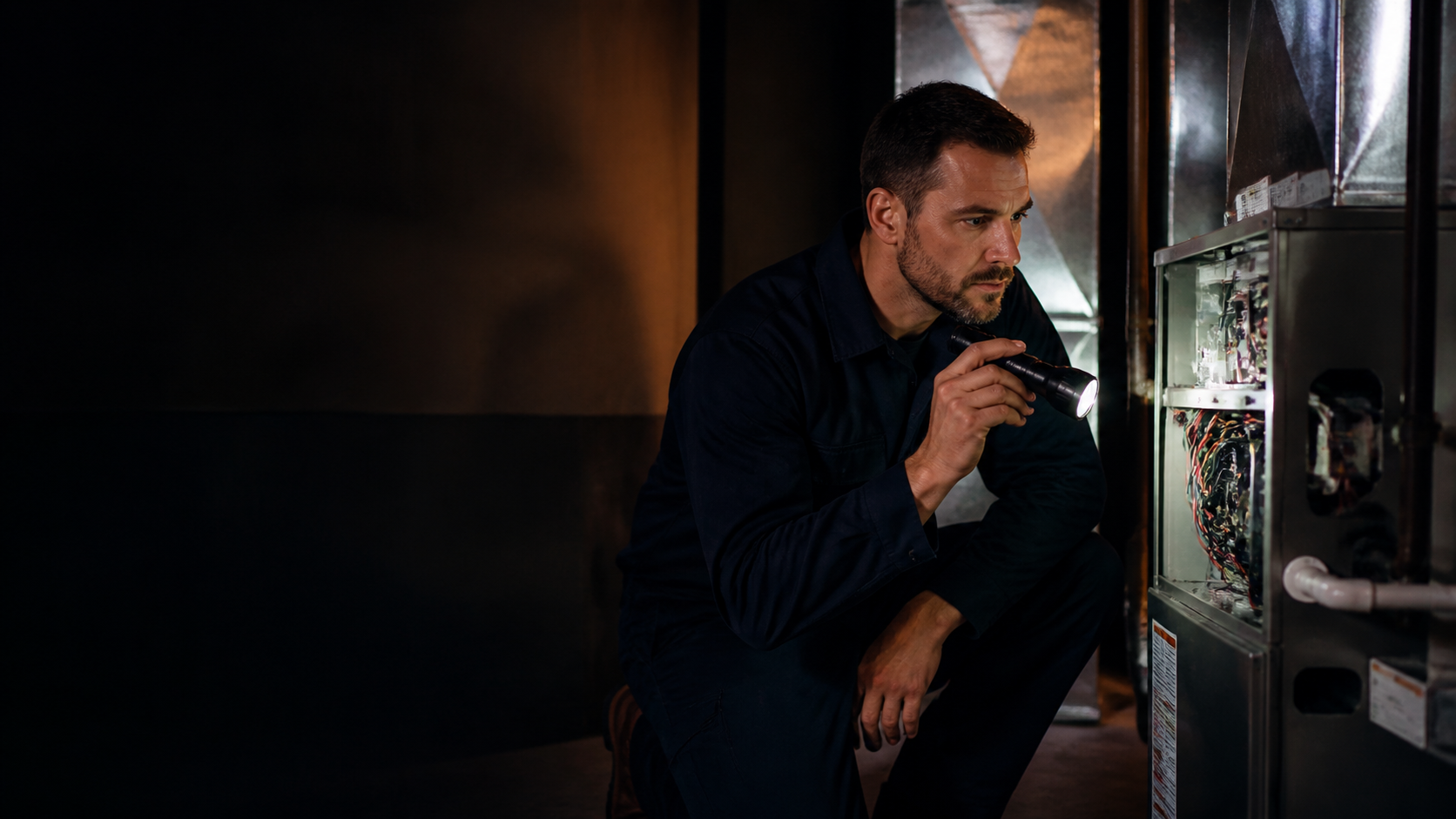
Watch the pattern
Note whether the furnace never starts, quits after a few seconds, or runs several minutes first. Note too whether the blower keeps going, the thermostat still asks for heat, or a control-board code flashes.
Safe first pass
Confirm Heat mode and the set point, check the filter, clear blocked returns and registers, check the switch and breaker, and eyeball the outdoor vent pipes from a safe spot.
Leave and call
A gas odor, a strong hissing sound, a carbon monoxide alarm, or poisoning symptoms changes the first move entirely: leave immediately and call 911 from a safe location.
What does it mean when a furnace keeps shutting off?
Short cycling means the furnace turns on and off before the thermostat reaches its set temperature, and it leaves rooms uncomfortable while adding wear to the system. A furnace that lights and dies after a few seconds is a different behavior: losing flame confirmation.
Watch one complete attempt with the cabinet closed. Does the blower start?
Do the burners light? Does it quit after seconds, or run for minutes first?
Is the thermostat still asking for heat? Write down what you see, along with any flashing control-board code.
The fan setting can muddy the picture. A thermostat fan set to On keeps the blower running whether or not the furnace is heating, which can look like a furnace that never finishes a cycle when it is really just air movement.
- Short cycling quits before the set temperature is reached.
- A start-then-stop-in-seconds pattern can mean lost flame confirmation.
- Shutdown timing and any control-board code aim the diagnosis.
- A fan set to On runs the blower without any heat behind it.
What common problems make a furnace shut off?
Restricted airflow is the most common homeowner-level cause. A clogged filter makes the system strain for air, which lengthens run time, wears the motor, and in some systems ends in overheating and a safety shutdown.
Blocked return grilles or supply vents do the same thing. Furniture, rugs, curtains, and storage all restrict the path, and a filter can look clean while a return is buried, so walk the whole air path instead of stopping at the filter.
Burners that light and go dark seconds later point at the flame sensor, the part that confirms combustion once the gas valve opens. If the control board never receives that confirmation, it closes the valve and the furnace shuts down.
A limit switch is the other common safety control: it kills the burner when the furnace's internal temperature climbs too high. Restricted airflow, a blower problem, or a failed switch can all cause repeat shutdowns, and thermostat placement, a tripped breaker, ignition, fuel supply, venting, or the heat exchanger fill out the list.
The overlapping symptoms mean the shutdown alone never identifies the broken component.
- A dirty filter or blocked air path can end in overheating and a safety shutdown.
- A buried return grille restricts airflow even with a clean filter.
- A flame-sensing fault stops the burners seconds after they light.
- A limit switch guards against unsafe internal temperatures.
- The symptom alone does not identify one failed part.
What can I check safely before calling for furnace repair?
Keep the first pass external. Confirm the thermostat is in Heat with the set point above the room, and swap weak batteries if it uses them.
Check the filter and replace it with the correct size if it is visibly dirty, airflow arrow pointing the way the manual shows.
Open any return grilles and supply registers that furniture, rugs, or drapes have covered. Confirm the furnace switch and circuit breaker are on, and if a breaker trips again, stop resetting it.
Look at the outdoor intake and exhaust pipes from a safe position. Do not climb, dismantle venting, or reach into anything.
Snow, ice, leaves, and animal nests can matter on some systems. Before shutting anything down, record the shutdown timing, sounds, thermostat message, and any blinking code.
Leave the combustion components, the flame sensor, the gas valve, the limit switch, and the heat exchanger to people with fuel-burning training and tools. If a filter change settles the symptom and the furnace completes normal cycles, keep watching.
If it keeps shutting off, the filter was not the diagnosis.
- Confirm Heat mode, the set point, and thermostat power.
- Replace a visibly dirty filter, correct size and airflow direction.
- Clear blocked returns and registers without opening the furnace.
- Do not repeatedly reset a tripping breaker.
- View outdoor vent pipes only from a safe position.
- Never open combustion components or bypass a safety control.
When is a furnace shutdown an emergency?
Leave the house and call 911 from a safe location if you smell natural gas or hear a strong hissing or blowing sound associated with gas. Do not look for the leak.
Do not operate lights, switches, phones, vehicles, or anything else that could spark until you are well away from the suspected leak.
Treat a carbon monoxide alarm as an emergency. Carbon monoxide is odorless and colorless, fuel-burning furnaces can produce it, and headache, dizziness, weakness, upset stomach, vomiting, chest pain, and confusion are the recognized poisoning symptoms.
If the alarm sounds, leave immediately, call emergency services, and stay out until responders say it is safe. Do not keep restarting the furnace to test whether the problem was temporary.
- Gas odor or strong gas-related hissing: leave and call 911 from outside.
- CO alarm or poisoning symptoms: fresh air and emergency services.
- No switches, no leak-hunting, no restarts from inside.
- Stay out until responders clear the home.
What happens during a professional furnace diagnosis?
A useful diagnosis starts from the pattern you watched. The technician will want to know how long the burners ran, whether the blower continued, whether the thermostat kept asking for heat, and whether the system flashed an error code.
The inspection then follows the furnace's operating sequence and its safety controls: thermostat operation, electrical connections, airflow, ignition and flame sensing, limit-switch behavior, fuel connections, burner combustion, venting, and the heat exchanger.
The sequence matters because a new flame sensor will not fix a buried return grille, and a fresh filter will not repair a dying control board. The goal is to find what caused the shutdown, confirm the furnace can run safely, and explain the repair options in words that make sense.
- Bring the shutdown timing, blower behavior, thermostat status, and error code.
- The inspection follows the operating sequence and safety controls.
- The repair should address the cause, not just the part that complained.
- You should come away with options you actually understand.
Should I repair or replace a furnace that keeps shutting off?
Do not settle repair-versus-replacement off the shutdown alone. A filter, thermostat, flame-sensing, or limit-switch diagnosis usually means repair.
A damaged heat exchanger, repeated major failures, a sizing problem, or a system that cannot operate safely changes the conversation.
Age is context, not an answer. So are the repair history, the heat exchanger's condition, the availability of compatible parts, and how dependably the system has heated the house after past work.
A professional should explain the finding before any decision.
If the short cycling began after the furnace was installed, or after major insulation or air-sealing work, ask whether the system is now oversized for the house's heating load. The symptom still needs a real evaluation either way.
- Filter, thermostat, flame-sensing, and limit-switch issues usually favor repair.
- A damaged heat exchanger or repeated major failures change the decision.
- Weigh age, repair history, parts availability, and reliability.
- Ask for the finding to be explained before choosing.
No heat on a cold night in Frederick County
On a cold night in Frederick, Urbana, Walkersville, Middletown, or anywhere in the county, first separate comfort urgency from a gas or carbon-monoxide emergency. Gas odor, CO alarm, or a combustion warning means leave and call emergency services.
Plain no-heat means make the safe external checks, protect anyone vulnerable to the cold, and arrange qualified help without opening the combustion section.
Do not heat the house with a gas oven or range, and do not bring a generator, grill, or fuel-burning camping appliance inside. Any of them can fill an enclosed space with carbon monoxide.
If a hard freeze is coming and the heat cannot be restored, ask a qualified professional or the utility for situation-specific guidance rather than improvising repairs. Keep your notes ready so whoever helps starts from the actual shutdown pattern instead of a guess.
- Separate a no-heat problem from a gas or CO emergency.
- Protect people vulnerable to cold while help is arranged.
- Never heat with an oven, grill, generator, or camping appliance indoors.
- Keep the shutdown notes ready for the service call.
What details should I have ready when I request furnace repair?
Write down the behavior first: never starts, starts and stops within seconds, or runs several minutes before quitting. Then note whether the blower keeps running after the burners die, the thermostat mode and set point, the displayed message, the filter condition and change date, any blinking control-board code, unusual noise, odor, or visible vent blockage.
Add the fuel type, the approximate age if you know it, the model number, and the recent repair history. None of that replaces a diagnosis, but it makes the first conversation count.
From there a local professional can tell whether the next step is an inspection, a repair, a maintenance visit, or a repair-versus-replacement discussion. The right answer explains why the furnace shuts off and leaves a safe, dependable path back to heat.
- Never starts, stops in seconds, or runs minutes first.
- Whether the blower continues after the burners quit.
- Thermostat mode, set point, message, and any blinking code.
- Filter condition, vent blockage, unusual noise, or odor.
- Fuel type, approximate age, model number, and repair history.
Answers to the usual follow-up questions
Why does my furnace keep shutting off after a few minutes?
A dirty filter or blocked airflow can push the furnace into overheating and a safety shutdown. A furnace that lights and dies within seconds points more toward flame sensing, ignition, or a control fault. Note the timing and get repeated shutdowns diagnosed.
Can I bypass the safety switch to keep my furnace running?
No. Never bypass a limit switch or any other furnace safety control. Those controls exist to stop unsafe operation. Do not remove combustion parts, adjust a gas valve, or force the furnace to run through a shutdown.
Is a furnace that keeps shutting down dangerous?
The symptom often traces to a routine repair, but gas odor, a strong gas-related hiss, a CO alarm, or possible poisoning symptoms is an emergency. Leave and call 911 from a safe location, and do not restart the furnace or reenter until responders clear it.
Is a furnace that keeps shutting down dangerous?Why does my furnace shut down only on the coldest nights?
Long run times on the coldest nights can expose a restrictive filter, blocked airflow, or a weakening safety control that mild weather never stresses. The cold-night timing helps the technician, but it cannot identify the broken component by itself.
What can I check before calling for furnace repair?
Confirm Heat mode and set point, check batteries if applicable, replace a visibly dirty filter, clear blocked returns and registers, check the switch and breaker, and look at the outdoor vent pipes from a safe distance. Do not open the combustion section or keep resetting a tripping breaker.
What should I tell the HVAC technician?
Whether the furnace never starts, dies in seconds, or runs minutes first; blower behavior; thermostat status; filter condition; any control-board code; unusual sound or odor; visible vent blockage; fuel type; approximate age; model number; and recent repairs.