CO Alarm With Heating System Running
Safety Steps Before Calling HVAC
A carbon monoxide alarm is not a smoke alarm. When it sounds, treat it as the real thing. Carbon monoxide is a gas you cannot see or smell, and it can make you sick or worse before you know it is there.
If your CO alarm goes off while the furnace, boiler, or any gas appliance is running, that is a clear warning. The first step is not to find the cause. The first step is to get everyone out of the house.
Follow this order: leave, call, then deal with the heating system. Below, we cover what carbon monoxide does, who is most at risk, and what a tech checks once the air clears. Start with the first safety step.
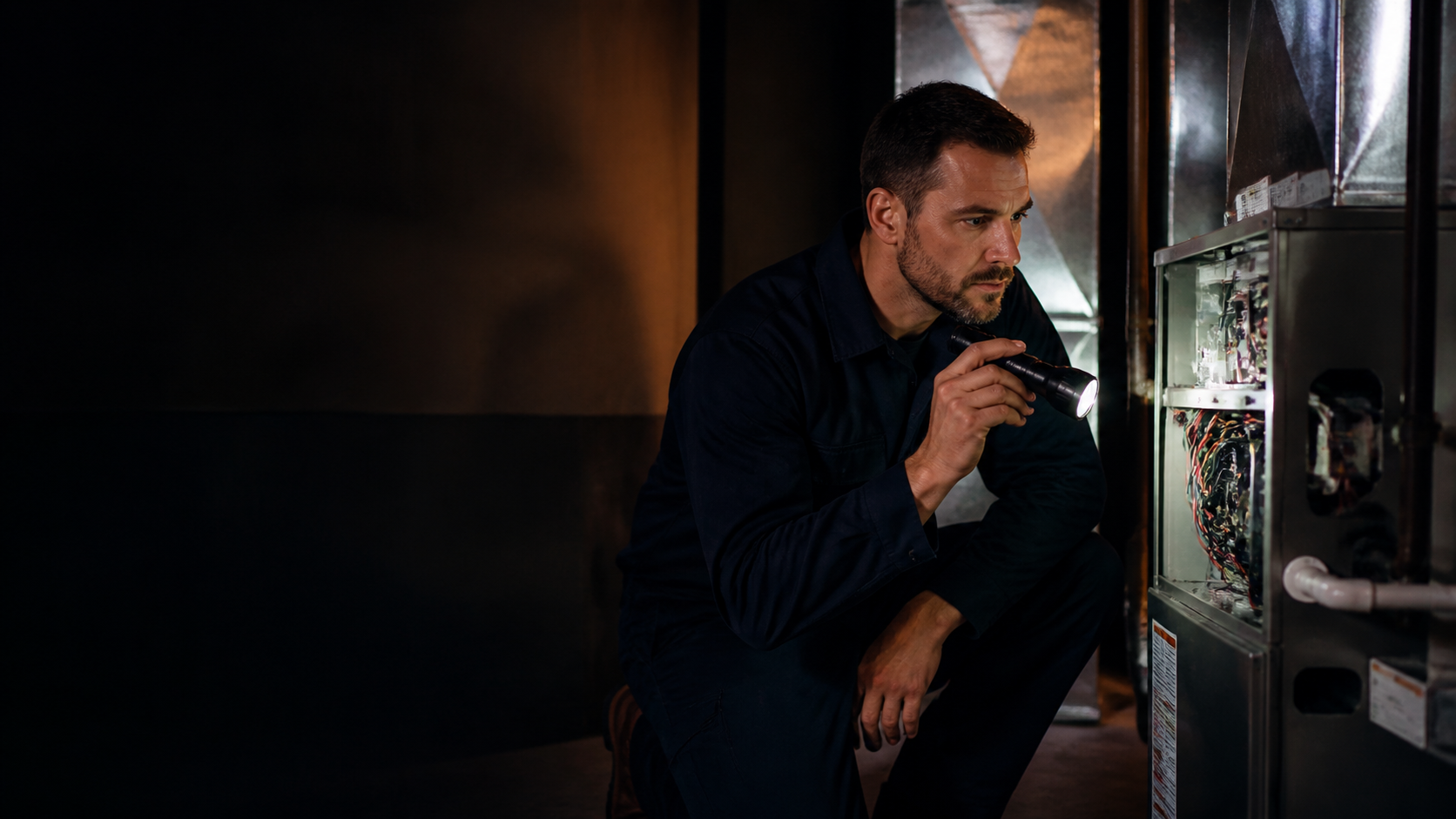
Get out now
Leave the house immediately with everyone inside, including pets. Do not stop to find the source or open windows. Carbon monoxide is invisible and has no smell, so trust the alarm.
Call from outside
Once outside, call 911 and tell them the CO alarm went off. Wait for the fire department. Do not go back in until they say the air is safe, even if the alarm stops.
Then call HVAC
After the fire department clears the home, have a tech inspect the furnace, boiler, and venting before you run heat again. A CO alarm with the heat on points to a combustion or venting fault.
Is a CO alarm an emergency?
Yes. Always treat a sounding carbon monoxide alarm as an emergency.
You cannot see, smell, or taste carbon monoxide, so the alarm is your only warning. Do not wait to feel sick before you act.
When the alarm goes off while the heat is running, the heating system is a likely source. A furnace, boiler, or water heater that burns gas can leak carbon monoxide if it is not venting right.
The safe move is the same no matter the cause. Get out, call 911, and let the fire department check the air.
Do not try to confirm the source yourself.
- A CO alarm is always an emergency. Trust it.
- Carbon monoxide has no color and no smell.
- The heating system is a likely source when the heat is on.
- Leave first; do not look for the source.
Do this now
Get everyone out of the house right away. Take children, older adults, and pets with you.
Do not stop to gather things or check rooms. Move to fresh air outside.
Do not open windows on your way out. Airing it out feels right, but it can clear the gas before the fire department can find the source.
It also wastes the seconds you need to get out.
Do not touch the furnace, the thermostat, or any switches. Do not go to the basement to shut anything off.
Leave the system exactly as it is and let the responders handle it.
Once outside, call 911 and say the carbon monoxide alarm is going off. Then count heads and pets to make sure everyone is out.
Stay outside until you are told it is safe.
- Get everyone out, including children and pets.
- Do not open windows to air it out.
- Do not touch the furnace, thermostat, or switches.
- Call 911 from outside and wait for responders.
What carbon monoxide does to you
Carbon monoxide replaces the oxygen in your blood. Even a low level over a few hours can make you feel sick.
A high level can knock you out fast and is deadly.
The early signs feel like the flu without a fever. You may get a dull headache, feel dizzy, feel sick to your stomach, or feel tired and foggy.
Many people blame a cold and ignore it.
Here is the tell. If two or more people in the house feel sick at the same time, or everyone feels better after going outside, suspect carbon monoxide.
That pattern is a strong warning.
If anyone seems confused, faint, or hard to wake, call 911 and say someone may have carbon monoxide poisoning. Get them into fresh air right away and do not let them go back inside.
- Carbon monoxide pushes oxygen out of your blood.
- Early signs: headache, dizziness, nausea, tiredness.
- Two or more people sick at once is a red flag.
- Confusion or fainting is a 911 medical emergency.
What makes it urgent versus a low battery
Learn the difference between a real alarm and a low battery. A low battery gives a single short chirp every minute or so.
A real CO alarm gives a loud, repeating pattern of beeps, usually four quick beeps over and over.
If you hear the loud repeating alarm, treat it as real and get out. Do not stop to read the manual or test the unit.
The loud pattern means the sensor detected gas.
A single chirp every minute usually means the battery is low or the unit has reached the end of its life. Replace the battery, or replace the alarm if it is more than seven to ten years old.
When you are not sure which sound you are hearing, get out and call. It is always safer to step outside for a false alarm than to stay in for a real one.
- Real alarm: loud, repeating beeps, often four at a time.
- Low battery: a single chirp about once a minute.
- Loud repeating pattern means leave the house now.
- Unsure of the sound? Leave and call anyway.
Frederick seasonal risk
Carbon monoxide calls climb in winter across Frederick County. Heat runs constantly during a January cold snap, so any combustion or venting fault gets more hours to leak gas into the house.
Closed-up houses make it worse. In winter, windows stay shut and homeowners seal up the house against the cold.
Gas that would slip outside in summer has nowhere to go.
Older homes near Frederick City often have older furnaces and boilers, plus older venting. Aged equipment and corroded vent pipes are more likely to leak combustion gas indoors.
Snow adds a risk many people miss. A snow drift or ice can block the outside vent pipe of a high-efficiency furnace.
A blocked vent sends combustion gas back into the house instead of outdoors. Keep the vent clear after a storm.
- Winter cold snaps mean long furnace runtimes and more risk.
- Sealed winter homes trap any leaking gas indoors.
- Older Frederick equipment and vents leak sooner.
- Keep snow and ice off the outdoor furnace vent.
Who is most at risk
Carbon monoxide hits some people harder and faster. Infants and young children breathe faster and feel it sooner.
Older adults and anyone with a heart or lung condition are at higher risk too.
Pregnant women face a double risk, because carbon monoxide affects the baby as well as the mother. Get a pregnant family member to fresh air first, then have a doctor check her.
Pets often show signs before people do. A dog or cat that seems sick, sluggish, or off at the same time the family feels unwell can be an early warning.
Take pets out with everyone else.
People who are asleep are at the highest risk of all, since they may never wake up as the gas builds. That is why working CO alarms outside every sleeping area matter so much.
- Infants and young children feel carbon monoxide sooner.
- Older adults and heart or lung patients are high risk.
- Pregnant women should get fresh air and see a doctor.
- Sleeping people are at the greatest risk; keep alarms working.
What to tell the dispatcher
Call 911 first for the emergency. Tell them the carbon monoxide alarm is sounding, how many people were inside, and whether anyone feels sick.
Say if anyone seems confused, faint, or hard to wake.
Tell them everyone is out of the house and where you are waiting. Mention if you have infants, older adults, a pregnant family member, or pets with you.
When you later call the HVAC company, give them the heating details. Tell them whether it's a furnace, boiler, or water heater, whether it runs on gas or oil, and roughly how old it is.
Note whether the alarm started soon after the heat kicked on.
Tell the HVAC dispatcher the fire department has cleared the home, or that you are still waiting on them. A tech should not enter until responders say the air is safe.
- Call 911 first; report the alarm and anyone feeling sick.
- Say everyone is out and where you are waiting.
- Give the HVAC company your heating-system details.
- Confirm the fire department has cleared the home before a tech enters.
After the fire department clears the home
Do not go back inside until the fire department or your gas utility says the air is safe. They use meters that read carbon monoxide levels you cannot sense on your own.
Even after they clear the air, do not run the heating system until a tech inspects it. The alarm sounded for a reason, and the cause may still be there.
Running the furnace again can refill the house with gas.
Have an HVAC tech check the furnace, boiler, water heater, and all venting before you turn the heat back on. They find the leak source and confirm the system burns and vents safely.
If your CO alarm is more than seven to ten years old, replace it. Sensors wear out.
Put fresh alarms outside every sleeping area and on every floor.
- Re-enter only when responders say the air is safe.
- Do not run the heat until a tech inspects it.
- Have the furnace, water heater, and venting checked.
- Replace CO alarms older than seven to ten years.
What a technician checks
A tech starts at the source of combustion. On a gas furnace, they inspect the heat exchanger for cracks.
A cracked heat exchanger can let combustion gas, including carbon monoxide, into the air you breathe.
They check the venting end to end. A disconnected, corroded, or blocked vent pipe sends exhaust back into the house instead of outdoors.
They look for a snow- or debris-blocked outdoor vent too.
They test the burners and combustion. Dirty or misadjusted burners can produce extra carbon monoxide.
The tech measures combustion to confirm the furnace burns cleanly.
Ask what they found before approving repairs. A cracked heat exchanger is serious and may favor replacement on an older furnace.
Get the cause named in plain words and ask about your options.
- Inspect the heat exchanger for cracks.
- Check venting for blockage, disconnection, or corrosion.
- Test burners and combustion for clean burning.
- Ask what they found before approving any repair.
What after-hours service costs
An emergency or after-hours visit usually carries a premium over a scheduled daytime call. You are paying for a tech to respond at night, on a weekend, or on a holiday.
Since the heat stays off until a CO call clears, ask what the after-hours diagnostic runs before the truck rolls.
The repair cost depends on what caused it. Clearing a blocked vent is one thing.
A cracked heat exchanger or a failed gas valve is another, and the tech can price it once they find what's wrong.
Do not let the urgency rush you into a decision in the moment. If a tech recommends replacing the whole system, ask why and consider a second opinion once the home is safe and the heat is off.
Whatever it costs, do not skip the inspection. Carbon monoxide is one of the few HVAC problems that can be deadly.
The visit that confirms your system is safe is worth it.
- After-hours visits cost more than daytime calls.
- Repair cost depends on the cause of the leak.
- Ask why before approving a full replacement.
- Do not skip the safety inspection over cost.
Answers to the usual follow-up questions
What should I do first when my CO alarm goes off?
Get everyone out of the house right away, including pets. Do not stop to open windows or find the source. Once you are outside, call 911 and report that the carbon monoxide alarm is sounding. Wait for the fire department and do not go back in until they say the air is safe.
Should I open windows when the carbon monoxide alarm sounds?
No. Airing out the house can clear the gas before responders can find the source, and it wastes the seconds you need to get out. Leave the house first, then call 911 from outside. Let the fire department handle the air and the source.
Can my furnace cause a carbon monoxide leak?
Yes. A furnace, boiler, or gas water heater can leak carbon monoxide if the heat exchanger cracks or something blocks or disconnects the venting. That is why a CO alarm with the heat running points to the heating system. Have a tech inspect it before you run the heat again.
Can my furnace cause a carbon monoxide leak?How do I know if it is a real CO alarm or just a low battery?
A real carbon monoxide alarm is a loud, repeating pattern, often four quick beeps over and over. A low battery is a single chirp about once a minute. If you hear the loud repeating pattern, leave the house and call. If you are not sure, leave anyway.
Is it safe to run my heat after the alarm stops on its own?
No. Do not run the heat until a tech inspects the system, even if the alarm stops. The cause may still be there, and running the furnace again can refill the house with gas. Wait for the fire department to clear the home and a tech to confirm the system is safe.
Who is most at risk from carbon monoxide?
Infants, young children, older adults, pregnant women, and anyone with a heart or lung condition feel carbon monoxide sooner and harder. Sleeping people are at the highest risk because they may not wake up. Keep working CO alarms outside every sleeping area and on every floor.