What Is the HVAC Maintenance Schedule?
For most homes, the HVAC maintenance schedule has four parts: check the air filter every month, have the cooling system checked in spring, have the heating system checked in fall, and arrange diagnosis sooner when the system develops a problem. ENERGY STAR recommends annual pre-season check-ups, but your equipment manual and the condition of your system still matter.
The goal is to make routine care predictable. You can handle simple observations such as the filter, while a qualified HVAC professional handles electrical measurements, combustion checks, refrigerant work, and other tasks that require equipment and training. Maintenance is a chance to inspect the system before seasonal demand exposes a weak part, not a promise that a component will never fail.
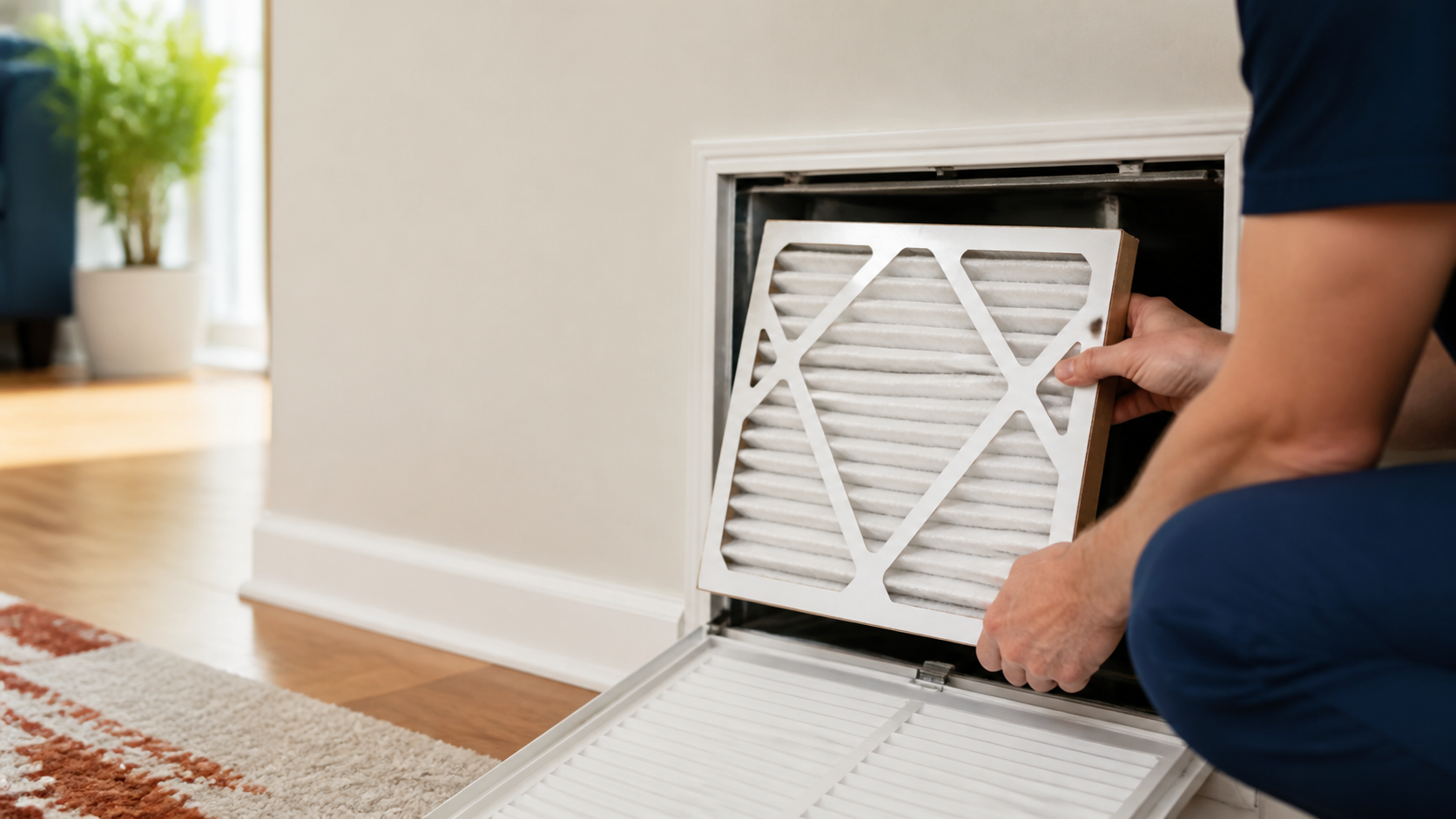
A simple HVAC maintenance calendar
| When | What to check or schedule |
|---|---|
| Monthly | Inspect the filter, vents, returns, thermostat, and changes in airflow or sound |
| Before cooling season | Have the AC or heat pump cooling side, coils, drain path, and controls checked |
| Before heating season | Have the furnace, boiler, or heat pump heating side and safety controls checked |
| During either season | Keep equipment accessible and watch for water, ice, weak output, or repeated cycling |
| When a symptom starts | Request diagnosis instead of waiting for the next routine maintenance date |
What should you do every month?
Start with the air filter, especially when the furnace or air conditioner runs often. ENERGY STAR says to change the filter when it looks dirty and, at a minimum, every 3 months. That isn't a universal interval: the filter, equipment, home, pets, renovation dust, and how quickly dust collects all matter, so follow the equipment instructions.
While checking the filter, look for a return grille or supply vent blocked by furniture, rugs, or stored items. Notice changes in airflow, temperature balance, or thermostat behavior. A dirty or clogged filter can increase furnace run time, motor wear, and energy consumption, according to the Department of Energy's Building Science Education guidance.
Keep this task narrow. Don't remove electrical panels, adjust gas connections, open the refrigerant circuit, or test combustion. If the filter is damp, heavily loaded, or difficult to remove, describe what you found when you request help.
- Use the correct filter size and keep return airflow open.
- Keep vents and the outdoor equipment area clear of stored items, leaves, and mulch.
- Write down water, ice, odor, noise, or thermostat changes with the date.
When should air conditioning be serviced?
Schedule the cooling check in spring, before the air conditioner carries the main cooling load. The exact appointment date depends on weather, the system's condition, and our schedule. The useful part of the calendar is the order: inspect before the first long run of hot weather rather than waiting for warm air from the vents.
Cooling maintenance can include the evaporator and condenser coils, refrigerant condition, blower operation and airflow, drain line, controls, and electrical components. A plugged drain can cause water damage and affect indoor humidity. Ask us what the visit covers, because a tune-up isn't automatically every repair, refrigerant service, part, or material.
Spring is the main pre-season checkpoint for a central air conditioner. If the equipment is already blowing warm air, icing, leaking, short cycling, or making a new noise, the job has changed from planned maintenance to diagnosis.
- Ask for a written distinction between inspected items and corrective work.
- Keep the outdoor unit accessible so we can inspect it safely.
- Move the appointment forward when a comfort or equipment symptom is present.
When should a furnace be serviced?
Schedule the heating check in fall, before the furnace works through the coldest part of the year. A furnace that ran normally last winter still benefits from a pre-season inspection, since a system can sit unused for 6 months and its operating condition can change in that time.
Heating-specific work can include fuel connections, gas pressure, burner combustion, the heat exchanger, venting, controls, and electrical operation. ENERGY STAR's heating guidance lists combustion-related checks that are not homeowner checklist items. Report unusual odors, soot, repeated ignition attempts, a carbon monoxide alarm, or unsafe operation promptly.
Don't let a fall maintenance appointment postpone an active no-heat problem. If the home is losing heat, explain what the thermostat is doing, whether the system starts, and what you hear or smell so the visit can be routed as diagnosis.
- Treat gas, oil, combustion, and venting checks as professional work.
- Report a carbon monoxide alarm, smoke, gas odor, or unsafe operation immediately.
- Describe an active no-heat problem instead of booking it as routine maintenance.
What does a professional maintenance visit include?
There isn't a single checklist that fits every air conditioner, furnace, and heat pump. We'll walk you through ours. The ANSI/ACCA 4 QM quality maintenance standard establishes minimum tasks for residential HVAC maintenance inspections and helps explain why seasonal tune-ups can differ from one provider to another.
A visit may address thermostat settings, system controls, electrical connections, lubrication where applicable, drainage, and the starting and stopping cycle. Cooling equipment adds coils, refrigerant condition, blower operation, and airflow. Fuel-burning heat adds combustion-related checks. A heat pump needs attention to both heating and cooling operation.
The inspection is different from corrective work recommended after a fault is found. Checking an electrical connection isn't replacing a failed component, and inspecting a drain isn't repairing a leak. Before agreeing to a maintenance plan, ask which equipment is covered, how many visits are included, what tasks are listed, and how separately quoted repairs are handled.
- Ask what was inspected and what needs correction.
- Get the included task list and extra charges in writing.
- Keep the service record for the next seasonal appointment.
Does a heat pump need more than one maintenance check?
A heat pump operates in both cooling and heating modes, so its schedule should account for both parts of the year. Spring confirms cooling. Fall confirms heating. One annual visit may fit some systems; two seasonal checks may make more sense when the equipment works hard in both modes.
The reversing valve, outdoor coil, defrost operation, controls, and airflow all affect heat-pump performance. The equipment instructions and the actual service scope should decide the interval rather than a generic plan name.
Move the appointment forward when the heat pump is icing, blowing the wrong temperature, running continuously, tripping a breaker, or producing a new noise. We'd rather see it sooner than later. Routine maintenance is planned care for an operating system; a current failure needs diagnosis.
- Confirm that both operating modes are included in the service scope.
- Ask whether one annual visit is enough for the system's workload.
- Treat ice, wrong-temperature air, and repeated trips as symptoms to diagnose.
When is HVAC maintenance not enough?
Maintenance is the right next step when the equipment is operating and due for seasonal care. Request diagnosis when the system will not start, the home cannot reach the thermostat setting, one area has weak airflow, water is appearing around the equipment, a breaker keeps tripping, or the system is making a new or worsening noise.
Safety changes the priority. Turn off equipment and seek appropriate help if you smell gas, see smoke, receive a carbon monoxide alarm, or suspect unsafe combustion. Leave the home and call 911 or the gas utility from a safe location when the situation may be dangerous. Don't open panels or attempt fuel, electrical, or refrigerant work to complete a checklist.
For a Frederick County home, we recommend using the calendar as a starting point: check the filter monthly, schedule cooling maintenance in spring, schedule heating maintenance in fall, and keep the equipment instructions with your service records. Ask us for a clear scope before deciding what kind of visit fits your system.
- Maintenance is for a system operating normally and due for routine care.
- Diagnosis is for a system showing a current performance or safety symptom.
- Ask what is included before buying a seasonal plan or membership.
Questions that come up next
What's a good HVAC maintenance schedule?
Check the filter monthly, schedule cooling maintenance before heavy summer use, and schedule heating maintenance before heavy winter use. A heat pump needs both sides checked, while a boiler, furnace, or AC has its own routine.
How often should I get HVAC serviced professionally?
Most homes use a seasonal rhythm that covers heating and cooling before their busy stretches. The right interval depends on your equipment and its condition. Move the visit up if you see water, ice, unusual noise, repeated cycling, or trouble holding the setpoint.
How often should I change my HVAC filter?
Check it monthly and change it when it looks dirty or when your equipment's instructions say it is due. Pets, renovation dust, occupancy, the filter type, and system runtime can shorten that interval.
Is HVAC maintenance the same as HVAC repair?
No. Maintenance inspects an operating system and identifies wear or needed corrections. Repair addresses a fault that is already affecting operation. A new noise, leak, ice problem, weak airflow, or no-heat condition calls for diagnosis instead of waiting for routine service.
Need HVAC help in Frederick?
Tell us what the system is doing and what you've checked already. If it needs a visit, we'll say so.