What Does a Furnace Tune-Up Include?
A furnace tune-up is a seasonal maintenance visit that checks how your system starts, heats, moves air, and shuts down. We review the controls, filter, airflow, electrical operation, and accessible heating components, then walk you through what we found in plain language.
The exact scope depends on your furnace type, its model instructions, its condition, and what we find once we're inside the cabinet. A filter change is useful homeowner care, but a real tune-up looks at the parts and controls that decide whether the furnace is actually running the way it should.
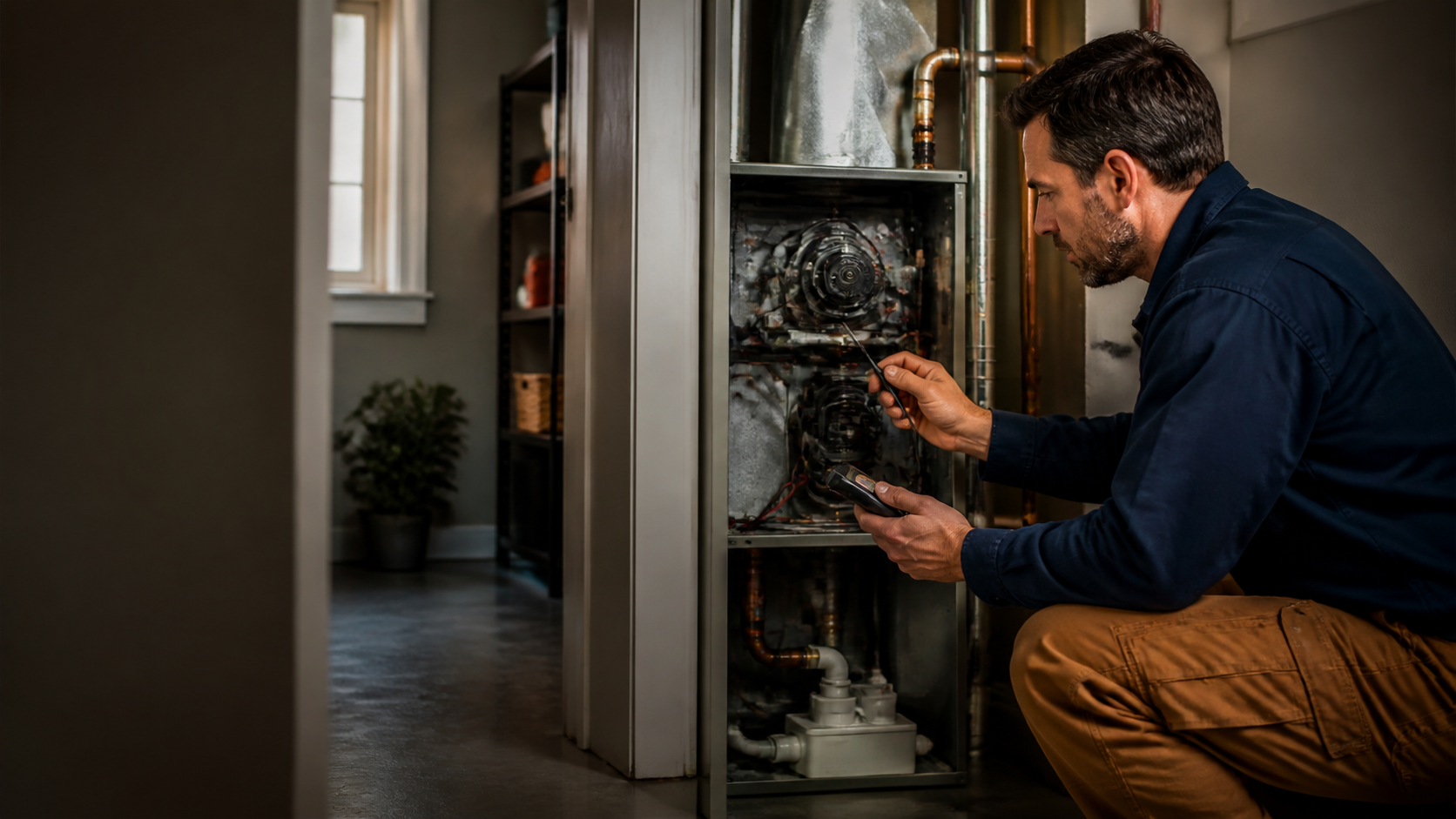
A furnace tune-up by system area
| Area | What we may check | Why it matters |
|---|---|---|
| Airflow | Filter, blower, return path, and supply temperature | Restricted air can hurt comfort and make the furnace work harder |
| Ignition and flame | Igniter, burners, flame sensor, and start-up sequence | A weak or dirty ignition path can cause delayed starts or shutdowns |
| Heat and combustion | Heat exchanger, burner condition, combustion, and venting | The furnace has to move heat safely and vent combustion products correctly |
| Controls and limits | Thermostat, electrical readings, limit controls, safeties, and wiring | Controls tell the furnace when to run and when to shut off to protect itself |
| Drainage and cabinet | Drain path where it applies, cabinet, and visible wear | Water or debris can turn into a separate repair or damage the cabinet |
What a furnace tune-up checks first
The visit usually starts with the call for heat. We bump the thermostat 5 degrees above room temperature and watch whether the furnace responds, runs through its full heating cycle, and shuts off correctly. A thermostat that's reading wrong, a furnace that starts slowly, or a system that cycles too often may need diagnosis rather than a routine check alone.
The electrical side is part of that same review. A typical visit includes tightening accessible connections and measuring voltage and current on the motors, often against a 24-volt control circuit. We also check controls and automatic safety devices for proper operation, because a furnace can look spotless while still hiding an electrical or control problem.
- Tell us about delayed starts, longer cycles, uneven heat, new odors, or unusual noise.
- Ask which measurement or check backs up each recommendation.
- We keep safety findings separate from optional efficiency improvements.
Filter, airflow, and blower care
We check whether the filter is dirty, damaged, installed correctly, or due for replacement. A clogged 1-inch filter restricts airflow and makes the equipment work harder, but airflow isn't only a filter issue. The visit also covers the blower, blower motor, return-air connection, registers, and any accessible duct connections.
Some furnaces have moving parts that need lubrication, while others use components that don't need the same service. The equipment design and manufacturer instructions decide what's appropriate. Duct sealing or bigger duct repairs are usually separate work, so ask us what airflow checks are included.
- A dirty filter is a finding, not the whole tune-up.
- Air entering and leaving the furnace gets measured against its design specifications.
- Your owner's manual controls filter and maintenance details for your equipment.
Combustion and safety checks
If your furnace burns natural gas, propane, or oil, the safety portion deserves a clear explanation, not a checkbox. We check fuel connections, gas pressure where it applies, burner condition, flame or ignition behavior, and the heat exchanger. That heat exchanger keeps combustion gases separate from the air moving through your home. Its condition matters a lot, and a crack there is never a wait-and-see item.
Venting is part of the same safety picture. We inspect the flue, vent connector, intake, exhaust, or chimney connection that applies to your equipment. Carbon monoxide is colorless and odorless, so a CO alarm is important protection, but it doesn't replace regular appliance upkeep.
- A fuel-burning furnace may need combustion, heat-exchanger, and venting checks.
- If a carbon monoxide alarm sounds, leave for fresh air and call emergency services from outside.
- Do not keep operating equipment with an unsafe fuel, venting, or combustion condition.
What gets cleaned, adjusted, and tested
Cleaning can cover the burner area, ignition or flame-sensing components, blower compartment, heat-exchanger surfaces, and other accessible parts. The goal is removing buildup that interferes with combustion or airflow. That's not a promise we'll disassemble, wash, or replace every part during every visit.
Testing is what turns a list of inspections into a real maintenance visit. We watch the furnace start, run, and shut down, and we check heating output, electrical readings, burner operation, safety controls, airflow, and the drain on equipment that has one.
- You should know what was normal, cleaned, adjusted, or still needs evaluation.
- A plugged drain line can contribute to water damage on equipment that has one.
- We test the system against the original symptom before calling the visit complete.
What a routine tune-up doesn't include
A tune-up is maintenance. It isn't automatically a repair, a full duct cleaning, a replacement estimate, or a guarantee the furnace won't fail later. A visit can turn up a worn part or an unsafe condition, but fixing or replacing that part is separate work we'll explain before you approve it.
If you already have no heat, a burning or fuel odor, unusual noise, repeated short cycling, a blank thermostat, or a carbon monoxide alarm, ask for diagnosis and tell us the symptom when you schedule. That conversation should leave you knowing whether routine maintenance covers it, a specific repair needs your approval, or the equipment needs a closer look.
- Ask what the standard visit covers for your furnace type.
- Ask which repairs or replacement parts would be separate.
- Ask for the findings and recommendations in writing or in a clear explanation.
When to schedule a furnace tune-up in Frederick County
For a furnace running normally, plan maintenance before the heating season, ideally in September or October while scheduling is still flexible. That gives the system attention before the first sustained cold stretch, not after it's already quit.
If the furnace is making a new noise, leaving rooms cold, giving off an unusual smell, cycling repeatedly, or failing to start, ask us for diagnosis instead of calling it routine maintenance. Safety concerns come before a seasonal tune-up every time.
- Annual preseason maintenance is the common starting point for a normally operating furnace.
- Follow the equipment manufacturer's instructions, especially for older or unusual systems.
- Bring the filter, airflow, odor, noise, or cycling change you noticed into the service conversation.
Questions that come up next
Does a furnace tune-up include cleaning?
It can, including the burner area, ignition or flame-sensing components, cabinet, blower compartment, heat-exchanger surfaces, or other accessible parts, depending on your equipment and its condition. Ask us what was cleaned and whether anything needs deeper cleaning or a separate repair.
Does a tune-up include checking for carbon monoxide?
We check combustion, venting, and carbon monoxide risk where it applies. Ask what we measured or inspected. If a CO alarm sounds or anyone feels unwell, get to fresh air and call emergency services from outside rather than waiting for a routine visit.
Can a tune-up fix a furnace that is not heating?
Sometimes, if the cause is something routine service catches. But a no-heat call usually needs a specific repair. We diagnose the failure first, then tell you plainly whether routine maintenance, a repair, or a bigger decision fits your situation.
Need HVAC help in Frederick?
Tell us what the system is doing and what you've checked already. If it needs a visit, we'll say so.