How Long Does Furnace Installation Take?
Plan on a full workday for a furnace replacement, even when the hands-on installation only takes a few hours. A straightforward swap with compatible ductwork and connections often fits between a few hours and one day. Lennox gives a typical range of 4 to 10 hours, while Carrier describes a standard replacement as a few hours to a full day.
That's a planning window, not a promise. A first-time installation, high-efficiency gas furnace, changed fuel source, tight access, or duct and electrical work can add time. The useful estimate comes after we see the furnace, the connections, and the path in and out of your home.
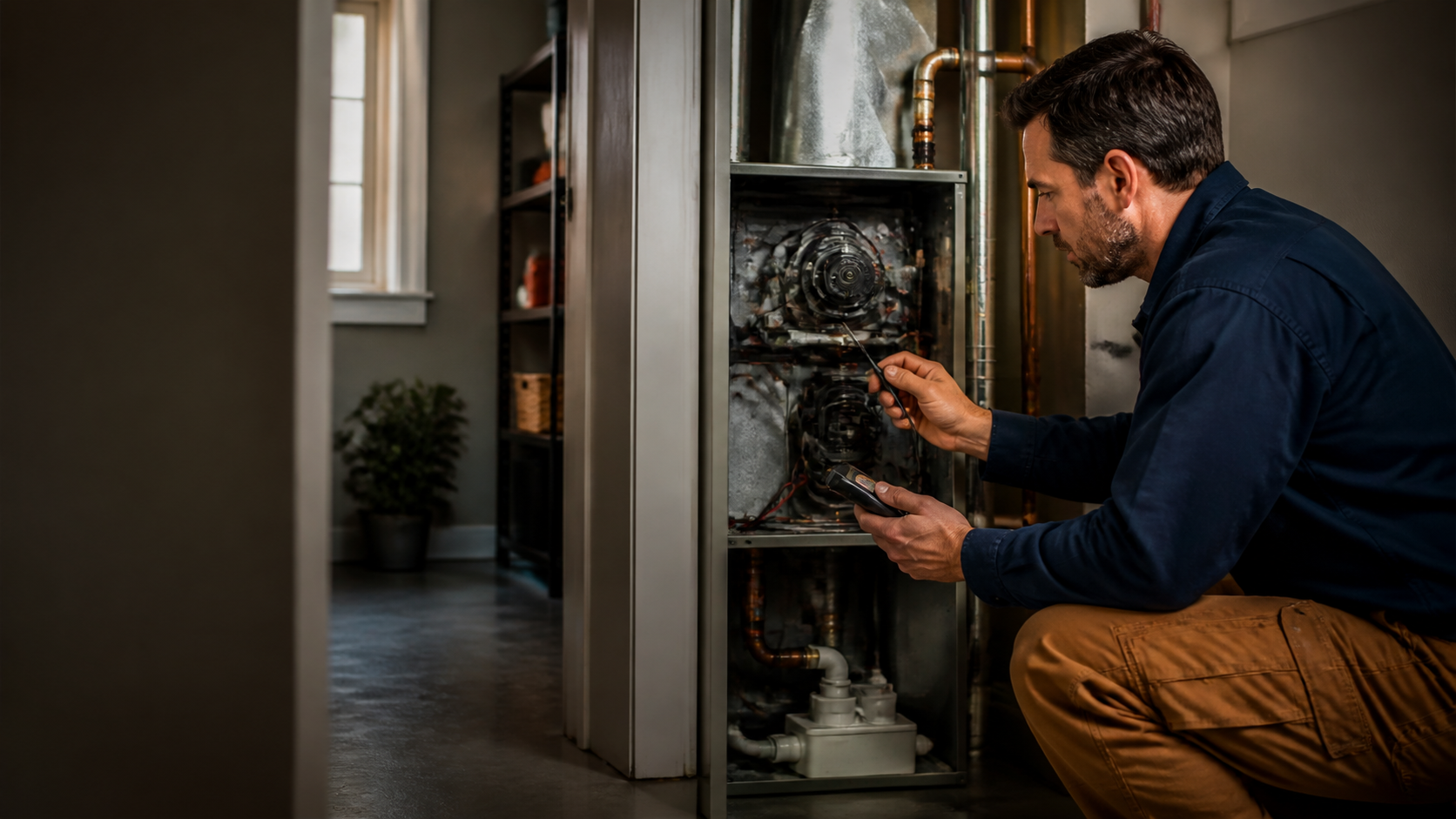
What changes a furnace installation schedule
| Project condition | Why it affects time | Question to ask before work |
|---|---|---|
| The new furnace stays where the old one was | Existing connections may be reusable after inspection | Which connections are you reusing and testing? |
| Ductwork needs repair, resizing, or a new route | Fabrication, sealing, and airflow testing add work | What duct changes are included in the scope? |
| Venting or drain arrangements change | The furnace can't start until the path is safe and complete | What venting and drainage work is required? |
| Fuel or electrical service changes | Piping, wiring, capacity, and inspections may need updates | Which connections, trades, and inspections are part of the schedule? |
| The equipment is in a tight attic, closet, or basement | Removal and placement require more preparation and carrying time | What access should I clear before the crew arrives? |
What happens during a furnace installation?
A professional replacement is more than setting a new cabinet in the old spot. We confirm the heating load, equipment location, duct connections, venting, fuel supply, electrical needs, access, and service clearance before we remove the old furnace.
Then we protect the path, remove the existing equipment, prep the site, place the new furnace, and make the required duct, gas or electrical, and venting connections, plus the thermostat, drain, and control tie-ins. Gas furnace work needs careful attention to the gas connection and vent path. Carrier's replacement guidance also emphasizes professional connections, code compliance, and final operation checks.
Startup is part of the job. We check airflow, ignition or heat operation, controls, temperature response, safety shutoffs, and the thermostat before we review basic operation with you.
- Ask whether the estimate includes removal and disposal of the old furnace.
- Confirm that startup testing and the final walkthrough are included.
- Keep children and pets away from the work area and don't assume the home has heat during the installation.
What can make the job take longer?
The schedule changes when the new furnace doesn't fit the existing design or when an inspection turns up a problem that needs attention before startup. Cabinet size, airflow requirements, damaged ductwork, poor insulation, or a changed equipment location can all add scope.
A high-efficiency condensing gas furnace may need different venting and drain arrangements than an older furnace. An electric furnace skips a gas line and combustion vent, but electrical capacity, wiring, equipment fit, and airflow still need checking. The fuel type changes the work. It doesn't remove the need for inspection and testing.
Access matters, too. Tight basements, crawl spaces, attics, closets, narrow stairs, and long paths through a finished home can slow removal and delivery before we connect the new furnace. Clear the area and the route so we can see the real working conditions.
- Duct changes, leaks, poor sizing, or airflow restrictions.
- New venting, fuel piping, electrical capacity, thermostat, drainage, or accessories.
- Difficult equipment access or a first-time installation with new supply and return paths.
Why a fast installation still needs careful checks
Speed matters when a home has lost heat, but it isn't the only measure of a good installation. An oversized furnace, poor airflow, or leaky ductwork can leave rooms uncomfortable and shorten equipment life even when the equipment went in fast. The ENERGY STAR quality-installation guidance recommends evaluating ducts and testing for leakage when needed.
Ask how we selected the furnace size for your home, whether the existing ducts support its airflow, and what changes in the venting, gas line, electrical connection, or the unit's drain. ACCA's Manual J, Manual D, and Manual S standards describe the load, duct, and equipment-selection questions behind a well-matched system.
A bare promise of one day tells you very little. A written sequence should show what happens before the furnace runs, what could add a second day, and which startup and safety checks happen before we hand the system back to you.
- What furnace size and model fit this home's heating load?
- Will the existing ductwork support the new equipment and airflow?
- Does the quoted time include modifications, permits, inspection, and final testing?
Do furnace installations require a permit in Frederick County?
Permit requirements depend on the work and the property's jurisdiction. Maryland OneStop's HVAC permit guidance lists HVAC work in residential occupancies and replacement HVAC equipment when it's gas or oil fired among the covered work. Confirm the current requirement before we schedule the project.
Frederick County's building-permit guidance explains that covered construction and alterations may require permits, while the City of Frederick and Mount Airy handle their own building permits. The correct application path depends on the property's exact municipal limits.
Permitting can affect the overall schedule even when the physical installation fits in one day. Ask who submits the permit, whether an inspection is expected, and how the timeline changes if the equipment, fuel source, location, or scope changes.
- Ask which jurisdiction handles the property and the permit.
- Confirm who submits the application and coordinates any inspection.
- Get permit or inspection timing included in the written project sequence.
How to get a more useful installation timeline
You can't remove every variable, but you can make the estimate clearer. Before the crew arrives, clear boxes and furniture from the furnace and ductwork area, open the path to the basement, closet, attic, or utility room, secure pets, and move fragile items away from the installation route.
Have the existing furnace model information ready if you have it. Write down comfort problems, repair history, unusual noises, and rooms that stay too hot or cold. During the planning visit, we'll separate equipment replacement from duct, venting, electrical, thermostat, drainage, accessory, and permit work.
If the furnace hasn't been diagnosed as beyond repair, ask us for a repair-versus-replacement explanation first. A failed part doesn't automatically mean the whole system needs replacement. Once we've reviewed the equipment and home, we can turn the general range into a project-specific plan.
- Ask what would extend the job into a second day.
- Confirm when heat should be available again and what happens if the scope changes.
- Don't touch gas controls, venting, wiring, or safety controls while the installation is in progress.
Questions that come up next
How long does a standard furnace installation take?
A straightforward replacement often takes a few hours to one day, but plan around a full workday. Ductwork, venting, fuel, electrical, access, permit, and inspection needs can extend the schedule.
Can a furnace installation take more than one day?
Yes. A first-time installation, changed equipment location, difficult access, duct or electrical work, new venting, added accessories, or inspection requirements can push the work beyond a same-day replacement.
What should be included in the installation estimate?
Ask for removal, equipment placement, connection changes, permits or inspections, startup and safety checks, thermostat review, disposal, and the conditions that would require more time or separate approval.
Can I run the furnace before the installation is finished?
No. Wait until the connections, venting, controls, safety checks, and startup test are complete. Don't touch gas, electrical, or safety controls yourself.
Need HVAC help in Frederick?
Tell us what the system is doing and what you've checked already. If it needs a visit, we'll say so.