Cold air or no heat
Thermostat calls, ignition parts, flame sensing, gas supply, venting, and blower operation all matter when heat drops out.
Before we pick equipment for a furnace installation, we account for heat loss, ductwork, venting, gas or electrical service, thermostat controls, access, and uneven rooms.
Furnaces, boilers, heat pumps, thermostats, airflow, and safety controls all fail in different ways. We figure out which one you're dealing with before we talk repair or replacement.
Thermostat calls, ignition parts, flame sensing, gas supply, venting, and blower operation all matter when heat drops out.
Short cycling can point to airflow restriction, overheating, control issues, or a safety shutdown.
New or louder sounds are worth checking before the system fails during colder weather.
Gas smell, burning odor, or a carbon monoxide alarm belongs in the safety lane, not the DIY lane.
Start from your equipment and what it's doing.
A furnace can fail at the thermostat call, ignitor, flame sensor, inducer, blower, filter, venting, or a safety switch - we test them in order.
View serviceA heat pump can struggle with defrost behavior, a reversing valve, airflow, refrigerant-side symptoms, or control settings - we sort out which it is.
View serviceIf the home is unsafe, the system keeps shutting down, or you notice odor, smoke, a CO alarm, or an electrical concern, treat it as urgent and call.
View serviceBoiler trouble can come from circulation, pressure, ignition, controls, zone valves, piping, or venting - we check the loop end to end.
View serviceGet heating maintenance in before the first hard cold spell - we check filters, airflow, ignition parts, burners, electrical, drains, and safety controls.
View serviceWhen we plan a heating installation, load, ductwork, venting, electrical, controls, access, and room comfort all go into the same conversation.
View serviceTrack what the system does before you touch panels or reset equipment again.
Check the mode, set point, schedule, batteries, and - on a heat pump - the emergency-heat setting before assuming the equipment failed.
Clicking, a flame that drops out, short cycles, or blower-only operation - tell us which, and we'll know whether to start at ignition, flame sensing, airflow, or a safety switch.
Constant AUX heat, heavy ice, steam patterns, or a weak outdoor unit help us separate normal defrost from a real repair.
Gas odor, smoke, a burning electrical smell, or a CO alarm comes before any comfort question - get safe first, then call.
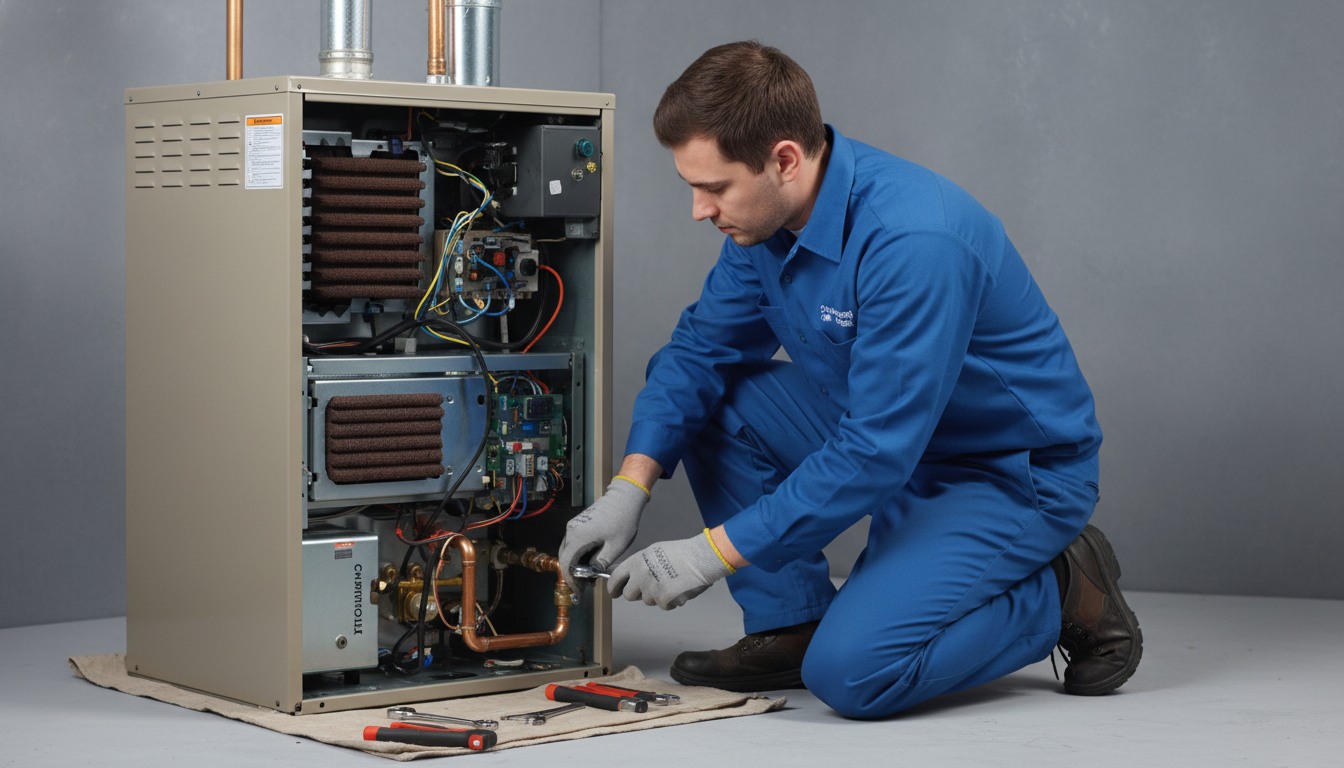
We start with your room comfort, ductwork, controls, access, and what the old system kept failing to do. The equipment choice comes after that - not before.
The goal is a system that fits your house, not just a box that fits the old space.
Hot rooms, cold rooms, long run times, humidity swings, and weak airflow tell us the real story.
Ductwork, returns, controls, drain routing, venting, and electrical access all shape what we recommend.
Equipment, labor access, removal, controls, and any duct or electrical work - all clear before you approve it.
The finished system matches your rooms, your schedule, and the comfort problem that started the call.
Age, major parts, comfort problems, and repeat breakdowns are when a new system actually pays off.
Ductwork, returns, controls, insulation, and zoning can matter as much as the equipment itself.
We give you a clear proposal - the equipment, access, controls, removal, and any supporting work.
Look for the thing that changed: temperature, airflow, water, ice, odor, noise, breaker trips, or an alarm. That keeps the conversation grounded when you call.
We repair first when one confirmed failure explains the problem. We'll bring up replacement when age, comfort issues, major parts, efficiency loss, or repeated repairs mean a new system is the smarter money.
Tell us what changed with a furnace installation: when it started, which rooms are affected, whether the system still runs, and any water, ice, odor, noise, alarm, or breaker issue.
Yes. Have the brand, model, and rough age handy if you can - but we go by what the system's actually doing, not the badge on the cabinet.
Your price comes down to equipment size, efficiency, ductwork, controls, access, drain routing, electrical needs, and hauling away the old system. We break those out so you can see where the number comes from.
Tell us what changed in the home and get help with heating, cooling, maintenance, installation, or indoor air service in Frederick County.