Cold air or no heat
Thermostat calls, ignition parts, flame sensing, gas supply, venting, and blower operation all matter when heat drops out.
Furnace, boiler, heat pump, thermostat, airflow, ignition, venting, safety controls - we sort out which one is behind the heating problem before we recommend anything.
Furnaces, boilers, heat pumps, thermostats, airflow, and safety controls all fail in different ways. We figure out which one you're dealing with before we talk repair or replacement.
Thermostat calls, ignition parts, flame sensing, gas supply, venting, and blower operation all matter when heat drops out.
Short cycling can point to airflow restriction, overheating, control issues, or a safety shutdown.
New or louder sounds are worth checking before the system fails during colder weather.
Gas smell, burning odor, or a carbon monoxide alarm belongs in the safety lane, not the DIY lane.
Start from your equipment and what it's doing.
A furnace can fail at the thermostat call, ignitor, flame sensor, inducer, blower, filter, venting, or a safety switch - we test them in order.
Ignition, flame sensing, airflow, and ventingA heat pump can struggle with defrost behavior, a reversing valve, airflow, refrigerant-side symptoms, or control settings - we sort out which it is.
Defrost, auxiliary heat, and outdoor-unit checksIf the home is unsafe, the system keeps shutting down, or you notice odor, smoke, a CO alarm, or an electrical concern, treat it as urgent and call.
Cold home or unsafe indoor temperatureBoiler trouble can come from circulation, pressure, ignition, controls, zone valves, piping, or venting - we check the loop end to end.
Heat delivery, pressure, piping, and zonesGet heating maintenance in before the first hard cold spell - we check filters, airflow, ignition parts, burners, electrical, drains, and safety controls.
Catch weak parts before winter loadWhen we plan a heating installation, load, ductwork, venting, electrical, controls, access, and room comfort all go into the same conversation.
Plan around the home, not only the unitTrack what the system does before you touch panels or reset equipment again.
Check the mode, set point, schedule, batteries, and - on a heat pump - the emergency-heat setting before assuming the equipment failed.
Clicking, a flame that drops out, short cycles, or blower-only operation - tell us which, and we'll know whether to start at ignition, flame sensing, airflow, or a safety switch.
Constant AUX heat, heavy ice, steam patterns, or a weak outdoor unit help us separate normal defrost from a real repair.
Gas odor, smoke, a burning electrical smell, or a CO alarm comes before any comfort question - get safe first, then call.
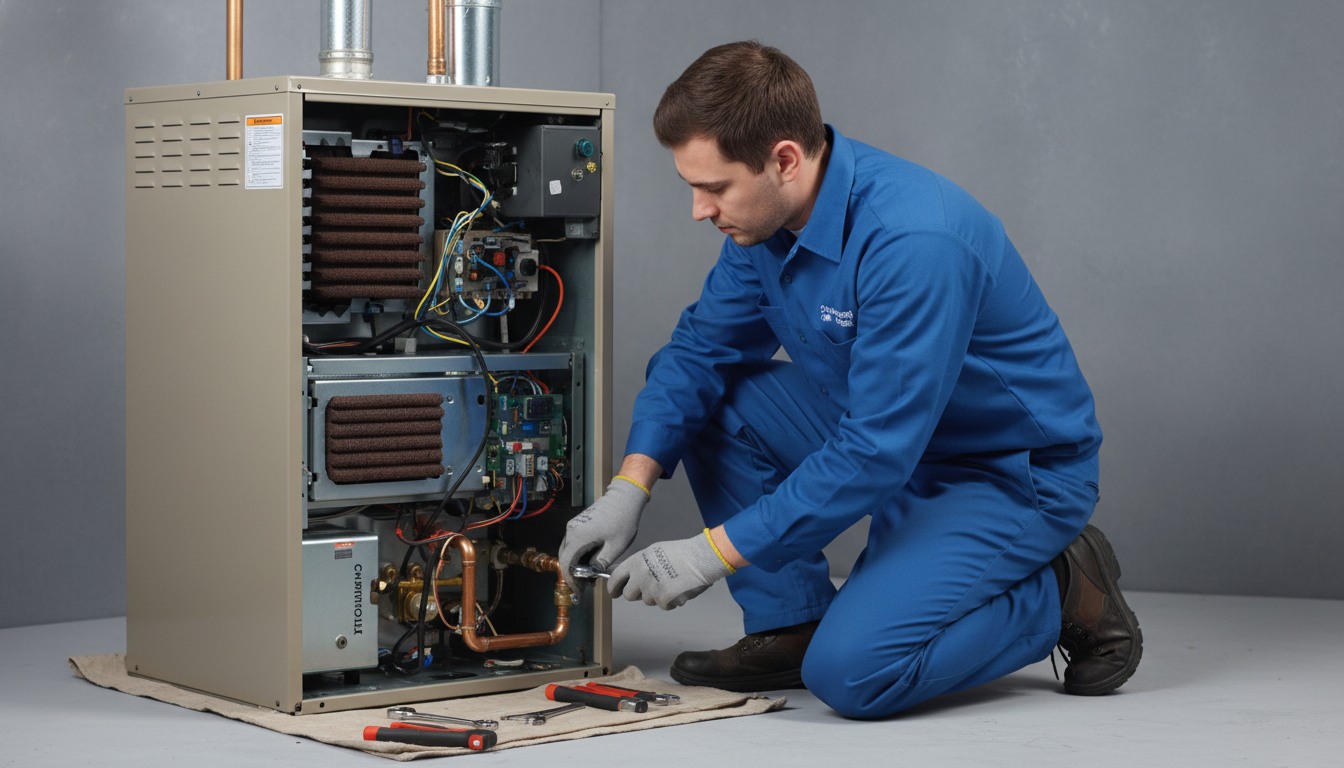
We'll show you what failed, what it takes to get your comfort back, and what can wait. If age, safety, or repeated breakdowns make a new system the smarter money, we'll say so plainly - and you decide before we do anything.
Here's how a heating services visit goes - so by the end you know what broke, what the fix costs, and whether it's worth doing.
Which system is acting up, when it started, and what you see, hear, smell, or feel in the home.
We work through thermostat setting, airflow, filters, drains, electrical symptoms, equipment age, and safety warnings until we find the failure.
The fix you need now, anything safety-related, and any maintenance or replacement worth knowing about.
Nothing happens until you've okayed it.
If one bad part or condition explains the problem, that's the repair - and that's where we start.
We check airflow, drainage, controls, ductwork, and maintenance history so the same fault doesn't return next week.
If your system's age, a safety issue, a major component, or a string of repairs tips the math toward replacement, we'll tell you why a new system is the smarter money than more heating services.
Look for the thing that changed: temperature, airflow, water, ice, odor, noise, breaker trips, or an alarm. That keeps the conversation grounded when you call.
Tell us what changed with a heating services: when it started, which rooms are affected, whether the system still runs, and any water, ice, odor, noise, alarm, or breaker issue.
Quick things you can check: thermostat setting, filter, breaker, that the vents are open, and whether there's ice or water around the unit. Leave the panels, wiring, refrigerant, and anything gas-related to us - that's where it gets unsafe.
Treat a gas smell, smoke, a burning electrical odor, a CO alarm, repeated breaker trips, or a furnace that keeps shutting itself down as a safety issue - call us, and for gas or CO, get out first.
Call us promptly when a heating services comes with no heat, no cooling, water near the equipment, repeated breaker trips, a burning electrical smell, a gas smell, or a CO alarm. A gas smell or CO alarm is an emergency first - get out and call for help before you call us.
Tell us what changed in the home and get help with heating, cooling, maintenance, installation, or indoor air service in Frederick County.