Can a Ductless AC Cool a Whole House?
Yes, a ductless AC can cool a whole house, but it usually takes more than one indoor unit and careful planning. A single wall-mounted unit is built for the room or open area where it's installed. Whole-home ductless cooling normally uses a multi-zone system, with indoor units placed in the main areas that need direct cooling.
That difference matters in a Frederick County home. A mini-split may fit a house without usable ductwork, an older home, an addition, or rooms that never match the thermostat. Open sightlines can make fewer heads practical, while a closed bedroom, finished basement, or room over a garage may need its own coverage.
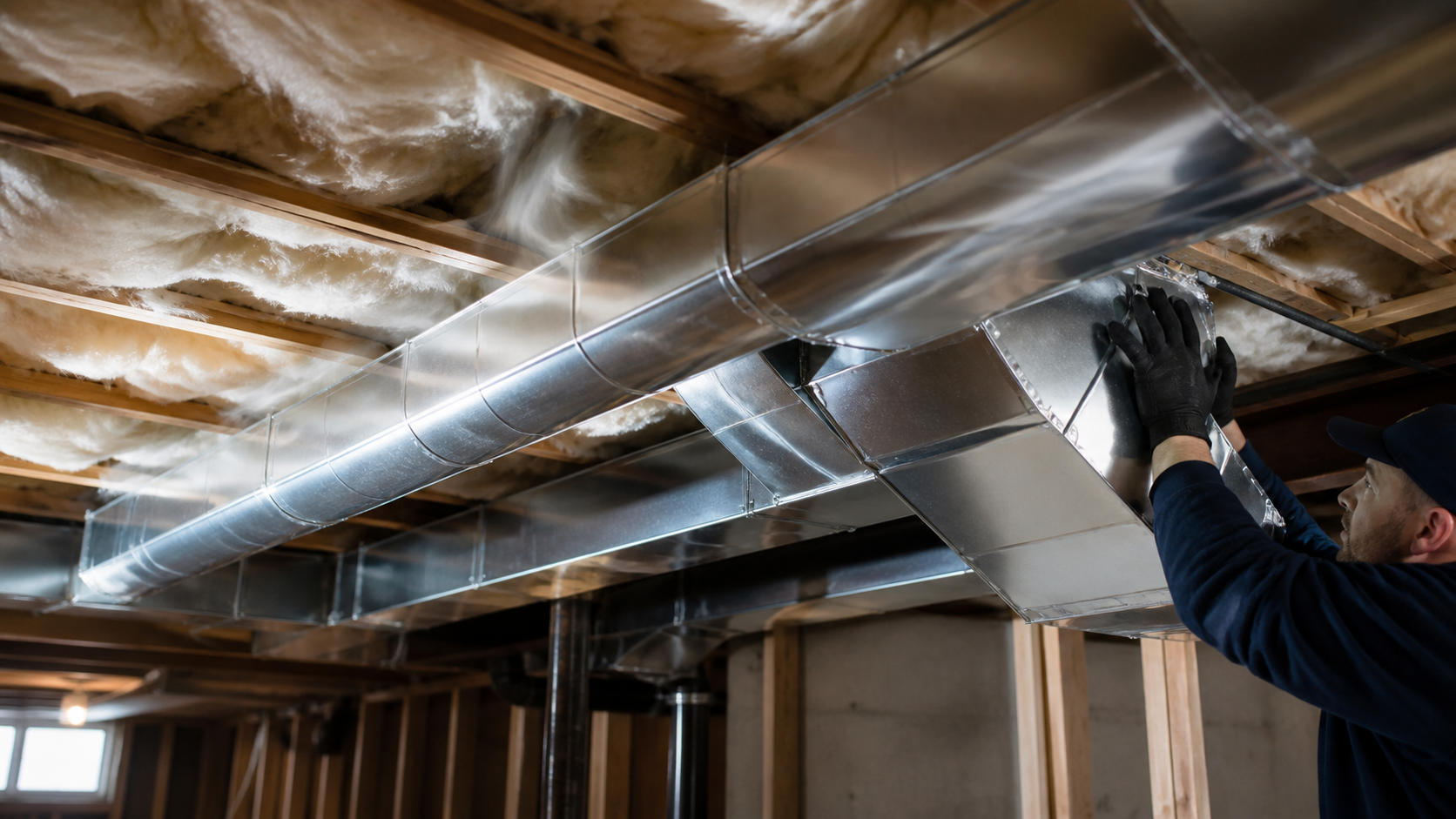
How the home changes a ductless cooling plan
| Home condition | What the design needs to answer |
|---|---|
| Open main living area | Can one head cover the space without leaving a distant room warm? |
| Closed bedrooms | Does each sleeping area need direct coverage and nighttime control? |
| Finished basement | Can the lower level run independently from the main floor? |
| Addition or converted room | Is there a separate load and a practical line-set route? |
| Existing usable ducts | Would a ducted system use the home's current distribution more simply? |
How can ductless AC cool more than one room?
A ductless system has an outdoor unit and one or more indoor units, often called heads. Refrigerant lines, wiring, and a small drain line connect the equipment. Each head sends cooled air directly into the room or zone where it's mounted instead of pushing air through a duct network. Carrier's mini-split explanation shows how that direct delivery differs from central air.
A single-zone system can be a good answer for a bedroom, office, finished attic, addition, or persistent hot spot. One head, one zone. It won't automatically cool every closed room in the house. A single head typically covers only one or two rooms well. Cool air doesn't move through walls, and it may not travel reliably through a hallway and several closed doors.
Some outdoor condensers connect to as many as 8 indoor heads on one refrigerant circuit, depending on the model. Bigger homes may need a second or third outdoor unit to cover every zone. A multi-zone system connects several indoor units to one outdoor condenser. Each head serves a defined area, and you can generally control the temperature in each zone separately. The right arrangement still depends on the floor plan and the cooling load. The Department of Energy's design guide describes a multi-split system as one outdoor unit connected to more than one indoor unit.
- A single head usually serves one room or open area.
- Several heads create separate zones for rooms with different needs.
- The head locations matter, because air can't pass through walls.
What makes a house a good fit for whole-home ductless cooling?
Ductless cooling is often worth considering when a home has no existing ductwork, or extending ducts would mean opening finished walls, lowering ceilings, or working around difficult framing. ENERGY STAR lists older homes without ductwork, additions, outbuildings, and hot or cold spots among the situations where mini-splits may help. ENERGY STAR's ductless heating and cooling guide also explains how a mini-split can supplement an existing system.
An open floor plan can make a smaller number of heads more practical, but furniture, a staircase, or a sharp change in ceiling height can still block circulation. Closed bedrooms, finished basements, bonus rooms over garages, and second-floor spaces may have different sun exposure, insulation, windows, and occupancy patterns. Treat every room as though it has the same load, and one area ends up cold while another stays warm.
The useful question isn't simply whether the house has enough square feet for a ductless system. It's whether the proposed head locations can reach the rooms you actually use, and whether the system can handle the home's real cooling load. DOE energy-efficiency guidance reinforces that equipment is only one part of summer comfort.
- Start with the rooms that are uncomfortable now.
- Include additions, basements, upper floors, and rooms over garages in the review.
- Check whether an existing duct system is usable before assuming it needs to be replaced.
How many indoor units does a whole house need?
Bedroom count won't tell you. There's no reliable answer based only on the number of bedrooms or the square footage on a listing. One home may need a head on each floor and a separate solution for a closed bedroom. Another may work with fewer heads because the layout's open. A third may be better served by a compact ducted indoor unit that distributes air through a short run of ducts.
The right starting point is a room-by-room look at the home. We consider window size and orientation, insulation, air leakage, ceiling height, room use, existing ductwork, and the temperature each area needs. ENERGY STAR recommends verifying equipment size with a Manual J calculation, and ACCA's Manual J overview explains the residential load-sizing standard.
Sizing affects comfort, not just the equipment invoice. A system that's too small may run for long periods and still fail to cool the home on a hot afternoon. One that's too large may cycle too often and pull out less humidity. A properly matched system should still deliver a 15 to 20 degree drop between the return air and the air coming out of the head. In Frederick's humid summer weather, a home can reach the thermostat setting and still feel clammy if the system isn't selected and run properly.
- Ask us what information we used to select the equipment.
- Make sure bedrooms, attic areas, basements, and sun-facing rooms were considered.
- Treat Manual J load calculations as part of the design, not an optional detail.
Is ductless better than central air?
Neither system wins in every house. Both have a place. Ductless may avoid the work of building a new duct network and can give you control over rooms used at different times. If existing ducts are accessible, appropriately sized, and in reasonable condition, a ducted distribution system may be simpler. DOE's heat-pump overview describes ductless systems as flexible for homes without ducts, while noting the advantages of an existing ducted layout.
A multi-zone system isn't automatically more efficient just because it has no ducts. Indoor heads connected to one outdoor unit may serve spaces with very different thermal characteristics, and that can create efficiency losses. Compare ductless AC versus central air by looking at distribution, room control, installation access, service needs, and the condition of the equipment already in the home.
- Single-zone ductless fits one room, addition, office, or persistent hot spot.
- Multi-zone ductless fits homes without useful ducts and rooms needing direct control.
- Central air or a ducted heat pump may fit better when usable ducts already distribute air evenly.
What should homeowners expect during installation?
Ductless installation changes the appearance and operation of a home. Wall-mounted heads are visible in the rooms they serve, though ceiling cassettes, floor consoles, and compact ducted units may offer other placement options. The outdoor unit needs a suitable location, and the line route needs to account for structure, drainage, service access, and appearance.
The connecting conduit may carry power, refrigerant tubing, and a drain line; most line sets run 25 to 50 feet before efficiency starts to suffer. Mounting locations, electrical requirements, line length, drainage, and access can all change the scope, so a site evaluation from us is more useful than a generic promise about how easy installation will be.
Daily operation works best when the doors, schedules, and room uses match the design. Keep indoor units and filters clean according to the equipment instructions; most mini-split control boards run on a 24-volt circuit that's sensitive to dust and moisture buildup. Don't open refrigerant circuits, alter wiring, or try to fix drainage problems without the right training and tools.
- Discuss indoor-head locations and the outdoor-unit placement before ordering equipment.
- Ask how line-set routing, drainage, electrical work, and future service access affect the installation.
- If one room is warm after installation, note the affected head, airflow change, outdoor operation, and any water or ice before asking us for a diagnosis.
What is the next step for a Frederick County home?
Start with the rooms that are uncomfortable, whether the home has useful ducts, which doors are usually closed, and whether the problem's a failing system, an undersized system, or a space the current system never served. Those details help us separate a targeted hot-spot solution from a multi-zone design or a repair to the existing distribution system.
A good evaluation should make the choice clearer before we select any equipment. It shows how the indoor heads cover the rooms, what capacity the home needs, where the lines and drains will run, and whether repair, supplemental cooling, replacement, or a different distribution method makes the most sense. Start with ductless AC service in Frederick if you need help connecting the comfort problem to the next step.
So, can a ductless AC cool a whole house? Yes, when the system has enough indoor coverage, the zones match the layout, and the equipment's sized for the actual home. The best result is a cooling plan that reaches the rooms you use and leaves you with a clear answer about what to repair, add, or replace.
- List the rooms that need reliable cooling or separate temperature control.
- Note closed bedrooms, high ceilings, large windows, additions, basements, and rooms over garages.
- Ask us how each proposed head will serve the room around it and how we sized the system.
Questions that come up next
Can a Ductless AC Cool a Whole House?
Yes, when the system has enough indoor heads, outdoor capacity, and coverage for the home's rooms and layout. A single head usually covers one open area, while a closed-off home needs a multi-zone plan.
How many ductless heads does a house need?
There's no fixed number. Room separation, windows, insulation, ceiling height, sun exposure, room use, and the zone controls you want all matter. Count the spaces that need reliable coverage, not just your total square footage.
Can one ductless head cool rooms with the doors closed?
Usually not reliably. A head can cool an open area, but closed bedrooms and separate floors often need their own coverage, because cool air doesn't move through walls or closed doors.
Is ductless AC better than central air for a whole house?
Not in every home. Ductless can fit a house without useful ducts or one with difficult hot spots, while central air or a ducted heat pump may be simpler when the existing ducts are accessible and in good condition.
Need HVAC help in Frederick?
Tell us what the system is doing and what you've checked already. If it needs a visit, we'll say so.