Central Air vs. Heat Pump: Which Is Better in Maryland?
For many Maryland homeowners, central air is the simpler choice when the furnace still works and the immediate problem is cooling. A heat pump deserves a closer look when you need heating and cooling from one system, want to move away from a combustion-based furnace, or you're replacing older equipment together.
Neither system wins by name alone. The right answer depends on your home's heat loss, ductwork, electrical service, fuel source, comfort pattern, and the condition of the equipment already there. We compare those pieces before recommending a system category.
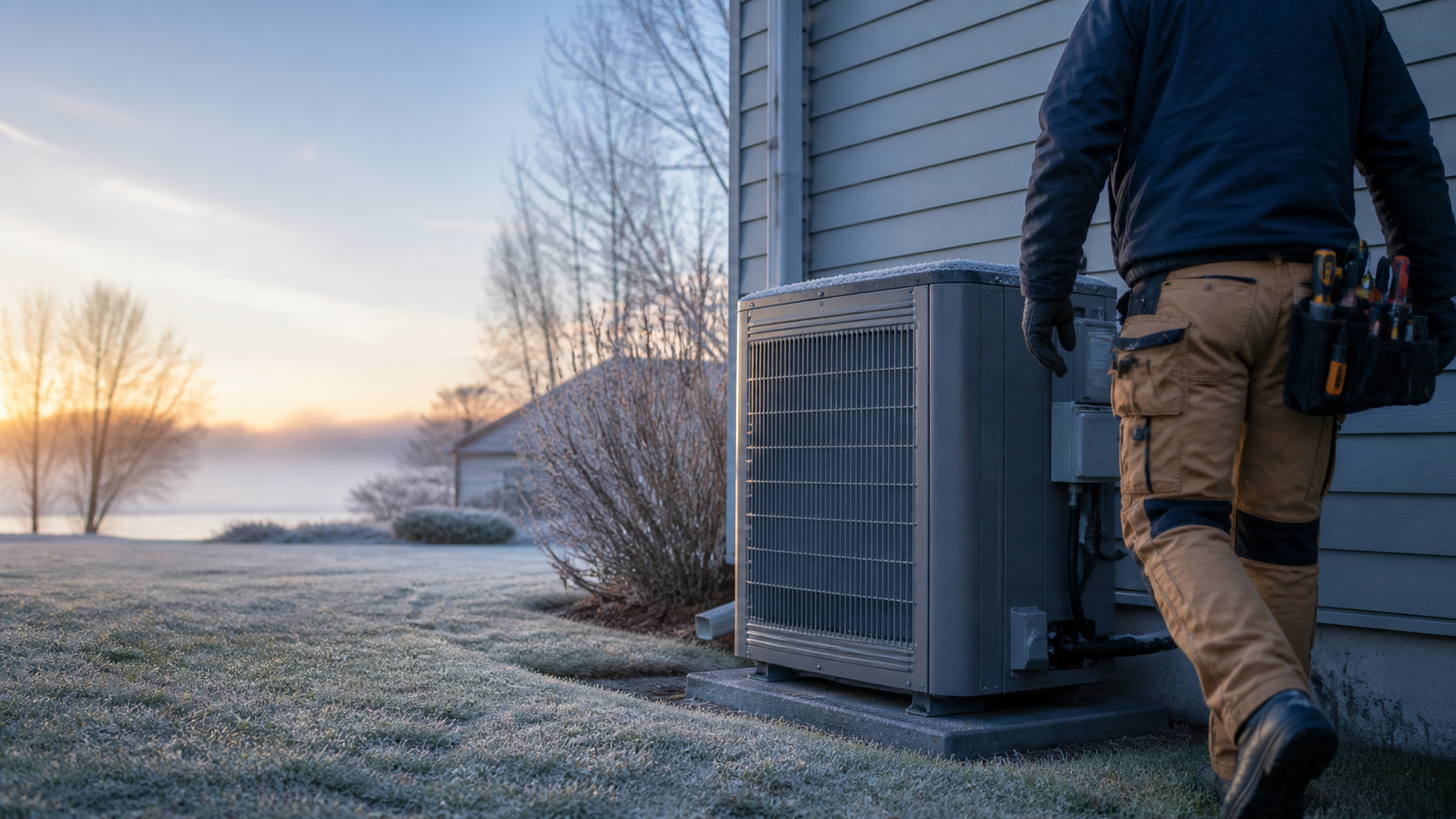
Central air and heat pump questions to compare
| Factor | Central AC plus furnace | Heat pump |
|---|---|---|
| Summer cooling | Uses a dedicated cooling system | Uses the same outdoor system in cooling mode |
| Winter heat | The furnace provides heat | The heat pump provides heat, sometimes with supplemental heat |
| Existing equipment | Can keep a suitable furnace | May replace or pair with the present heat source |
| Installation scope | Cooling equipment, coil, controls, and ducts | Heat-pump equipment, controls, electrical, and heat strategy |
| Operating comparison | Depends mainly on the AC, furnace, fuel, and house | Depends on equipment performance, electric rates, and backup heat |
| Best first question | Is the furnace worth keeping? | Is one heating and cooling system a good fit? |
How do central air and a heat pump work?
A central air conditioner pulls heat from the air inside your home and releases it outdoors. The blower then sends cooled air through the home's ducts and registers, so one properly matched system can cool multiple rooms. The U.S. Department of Energy explains the central cooling cycle in more detail.
An air-source heat pump uses a similar refrigeration cycle, but it runs in both directions. In summer it moves heat outside; in winter it pulls heat from outdoor air and moves it indoors. A ducted heat pump can feel a lot like central air during the cooling season while using the same forced-air distribution for heat. Maryland's Energy Administration describes common heat-pump configurations.
- Central air is a cooling system; it still needs a separate heat source.
- A heat pump can heat and cool, but it has to be matched to both loads.
- Ductless heat pumps are another option for additions, finished rooms, or homes without usable ducts.
Can a heat pump handle Maryland winters?
Yes, a properly selected heat pump can heat a Maryland home. The important word is properly. A standard heat pump, a cold-climate model, and a dual-fuel system don't perform the same way at low temperatures, and they don't run on the same operating plan either.
Cold-climate heat pumps are tested for useful heating performance at lower outdoor temperatures. ENERGY STAR's cold-climate designation includes third-party testing down to 5 degrees Fahrenheit, but that test isn't a promise that every model covers every home's entire heating load. See ENERGY STAR's cold-climate buying guidance.
A design may also need backup heat. That can be electric resistance heat, an existing furnace, or another source. In a dual-fuel arrangement, the heat pump handles most of the season while the furnace kicks in below the outdoor temperature we've set as the switchover point. The right setup depends on heat loss, equipment capacity, available fuel, and comfort priorities.
- Ask how much heat the equipment delivers at the outdoor temperatures that matter for your home.
- Confirm when supplemental or backup heat turns on and what it may cost to run.
- Have electrical service, wiring, ductwork, and equipment space checked before installation.
Which choice is better for comfort and operating cost?
There's no honest way to name the cheaper system for every Maryland home without looking at energy rates, insulation, ductwork, equipment, and operating habits. A heat pump moves heat instead of creating it directly, so it can deliver more heat energy than the electrical energy it consumes under the right conditions. That describes the technology, not a guaranteed utility bill. ENERGY STAR explains the heat-transfer principle.
SEER2 helps compare seasonal cooling efficiency and HSPF2 helps compare seasonal heating efficiency. Those ratings are useful, but they don't replace a review of the complete matched system. Comfort also depends on airflow: ENERGY STAR reports that 20 to 30 percent of the air moving through a typical duct system can be lost through leaks, holes, and poor connections. See the duct-sealing guidance.
Humidity's part of the decision too. An oversized cooling system may satisfy the thermostat quickly without running long enough to pull out moisture well. The EPA recommends source control and ventilation along with filtration, and keeping indoor humidity between 30 and 50 percent. Read the EPA indoor-air guidance.
- Compare the full system and expected controls, not one efficiency number.
- Treat uneven temperatures as a possible duct, return-air, insulation, or sizing problem.
- Plan filter, coil, drain, and annual professional maintenance for either system.
What should be checked before installation?
We choose the equipment only after evaluating the home. Start with what changed: Is the furnace healthy? Is the central AC failing? Are both systems old? Does one room stay uncomfortable? Are the ducts sitting in an attic, crawlspace, garage, or other unconditioned space? Those answers decide whether cooling-only replacement, a heat pump, or dual fuel deserves consideration.
Ask us for a heating and cooling load calculation. ACCA Manual J accounts for the home's size, insulation, windows, air leakage, orientation, and other conditions instead of relying on a square-foot rule. Heat-pump sizing is more involved because one system serves two loads. PNNL recommends calculating both loads and checking performance at design temperatures.
Our evaluation covers the airflow, the duct condition, the return-air paths, and the electrical capacity, plus refrigerant-line compatibility, the drain arrangement, and the match between indoor and outdoor equipment. We don't choose based on the outdoor unit's nameplate capacity alone; extended performance data shows what the equipment can actually deliver at the temperatures that matter.
- Ask what parts of the existing system can stay and what has to change.
- Compare capacity at the home's design temperatures, not just the cabinet label.
- Get the backup-heat and thermostat-control strategy in writing before approving the work.
When is central air the better fit?
Central air often makes sense when the home already has a dependable furnace and the main problem is failed or aging cooling equipment. It can be the straightforward path when the ductwork and indoor coil arrangement are usable, the home doesn't need a change in heating source, and you want a familiar cooling-only setup.
Keeping the furnace doesn't mean skipping the evaluation. We still verify the cooling load, equipment match, airflow, refrigerant requirements, drain, thermostat, and duct condition. If the ducts leak or the return side is restricted, a new outdoor unit may not fix uneven temperatures or high cooling bills.
- A sound furnace is a reason to compare central air before replacing both systems.
- Cooling-only replacement may avoid discarding heating equipment that still serves the home well.
- Fixing a distribution problem may matter as much as replacing the outdoor unit.
When is a heat pump the better fit?
A heat pump deserves a detailed comparison when you're replacing both heating and cooling equipment, want one system to handle both, or want to cut reliance on combustion equipment. It may also fit a home that needs a new central cooling system and has a homeowner willing to weigh winter performance, controls, and backup heat rather than automatically repeating the old furnace arrangement.
For a Frederick County home, the next step is a system-fit evaluation that starts with what changed and what the existing equipment's doing now. If the AC isn't cooling, the furnace's unreliable, or the system keeps losing comfort, write down the symptoms and ask us for a diagnosis before choosing a replacement category. That's how you get a clear answer instead of a generic winner.
- Request a heat-pump-specific design when the home has cold rooms, older ducts, weak insulation, or high heating demand.
- Compare equipment capacity, control strategy, backup heat, and electrical requirements together.
- Start with heat-pump installation guidance or furnace installation guidance based on the decision in front of you.
Questions that come up next
Central Air vs. Heat Pump: Which Is Better in Maryland?
Neither is always better. Central air may fit a home with a sound furnace that only needs cooling. A heat pump may fit a home that needs new heating and cooling equipment, if you'd rather have one system handling both seasons. We compare the equipment, ducts, electrical service, and heating plan together.
Can a heat pump replace my furnace?
Sometimes. It depends on your home's heat loss, how the heat pump performs in cold weather, your existing ductwork, and electrical service. A dual-fuel design can keep the furnace as backup when that's the better fit.
Is central air cheaper if my furnace still works?
It can avoid replacing heating equipment that's still good, but the real cost depends on the AC size, coil, controls, electrical work, and duct corrections needed. Compare the full written scope, not just the equipment names.
Does a heat pump work during a Maryland cold snap?
A properly selected heat pump can provide useful heat in Maryland, but its capacity changes with outdoor temperature. Ask what the system delivers at design conditions and when backup heat kicks in.
What should I ask before choosing either system?
Ask for the heating and cooling loads, equipment performance at relevant temperatures, duct and airflow findings, electrical requirements, thermostat controls, backup-heat plan, and the parts of the existing system that can stay.
Need HVAC help in Frederick?
Tell us what the system is doing and what you've checked already. If it needs a visit, we'll say so.