Do Whole-House Air Purifiers Work?
Yes, a whole-house air purifier can help, especially with particles that pass through a central HVAC system. The result depends on the filter's capture ability, how much air the system moves, how often the fan runs, and whether the filter fits and stays maintained. A central filter reaches the air moving through your home's ductwork, not just the room where a portable unit sits.
The useful question for your home is whether the equipment fits both your HVAC system and the problem you're trying to solve. A filter upgrade may help with dust or pollen, but it won't correct moisture, replace ventilation, or make an oversized or poorly maintained system work properly.
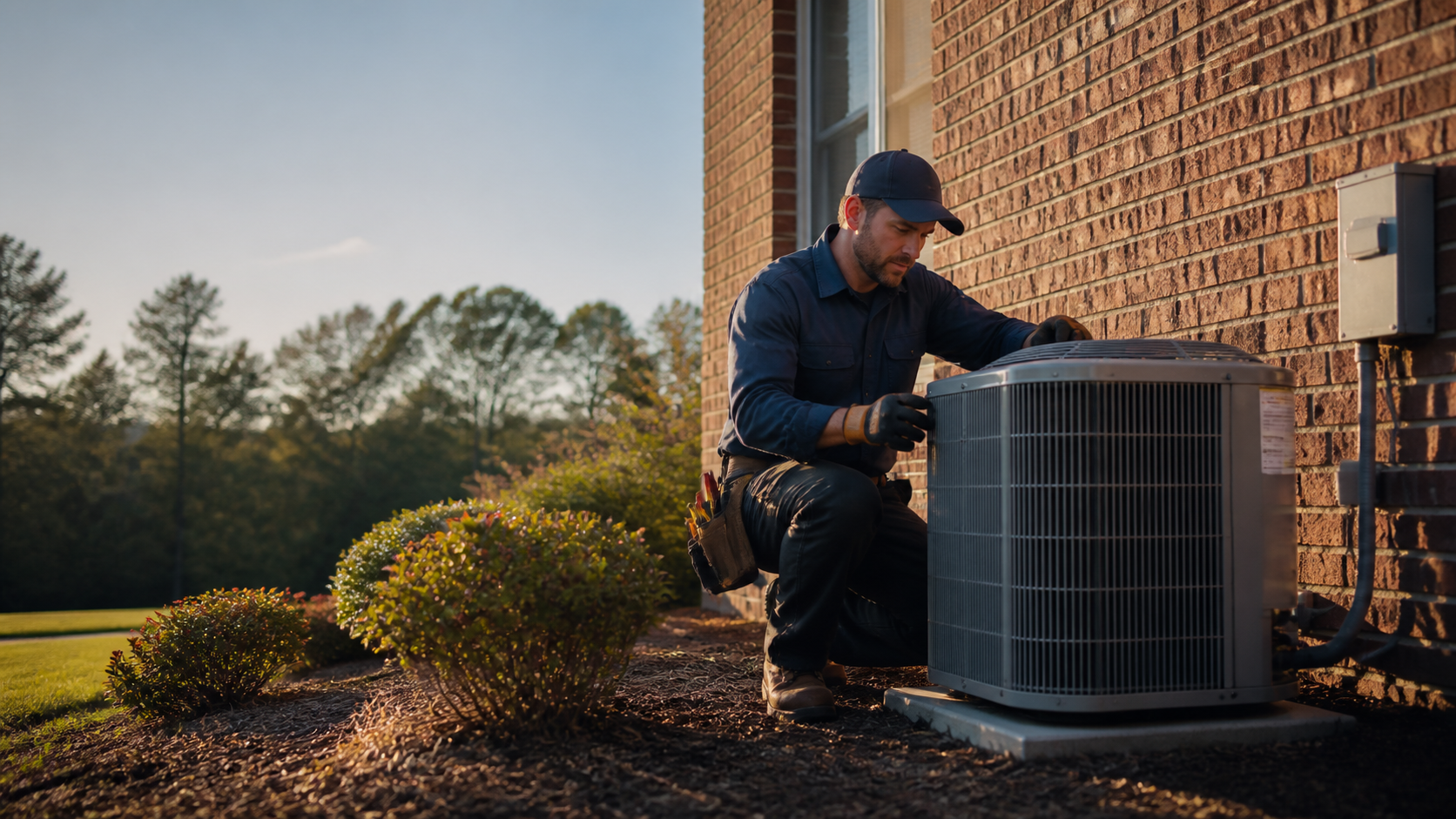
Match the air cleaner conversation to the actual problem
| What's bothering you | What the equipment can and cannot do |
|---|---|
| Dust, pollen, or pet dander | Particle filtration may help when the filter fits and the system can move enough air |
| Smoke or very fine particles | We'll check the cleaner's capture method, airflow, and realistic expectations for the system |
| Musty, chemical, or persistent odor | Find the gas, moisture, or other source first; a particle filter may not address it |
| One bedroom or office | A properly sized portable unit may give more focused filtration than changing the whole system |
How does a whole-house air purifier work?
A whole-house purifier sits in the air path of a central heating and cooling system. As the blower pulls return air through the equipment, the filter or cleaning element captures some particles before the air heads back to the rooms through the supply vents. The phrase whole-house describes the intended coverage, not instant cleaning in every room.
The system only filters while air is moving through the ductwork. A fan set to run longer can send more air through the cleaner, but it can also raise electricity use and affect humidity control during cooling. That's why we look at the fan setting, filter fit, and actual airflow together, not one at a time. EPA guidance on air cleaners explains the same operating limit.
- Central filtration can move cleaned air through connected ductwork.
- A portable air cleaner is sized for one room or a defined area.
- Neither option removes every pollutant, and neither replaces source correction or appropriate ventilation.
When does whole-house filtration help most?
Whole-house filtration works best when the concern involves particles that circulate through the HVAC system, such as some household dust, pollen, pet dander, smoke, or other fine particles. A filter's rating matters, but so do its capture efficiency and the amount of air passing through it. A strong filter with very little airflow may not deliver the result you expect.
Filtration is one part of indoor-air-quality control. Removing the pollutant source and bringing in clean outdoor air when appropriate still matter. Most residential forced-air systems don't mechanically bring outdoor air into the home, so an HVAC filter shouldn't be treated as a dedicated ventilation system. EPA indoor-air guidance covers that distinction.
- Dust, pollen, and pet dander are particle concerns that may respond to compatible filtration.
- Smoke and very fine particles need a closer look at the cleaner's capture method and airflow.
- Odor, moisture, mold, and ventilation concerns may need a different solution alongside filtration.
Does a higher MERV filter always work better?
MERV, or Minimum Efficiency Reporting Value, helps compare HVAC filter performance, but the number alone doesn't tell you whether a filter belongs in your furnace, air handler, or heat pump. A higher-rated filter can create more resistance to airflow. The EPA recommends MERV 13 or the highest rating the system can accommodate; CDC/NIOSH and ASHRAE likewise stress equipment compatibility and the manufacturer's recommended resistance.
The filter also has to fit the rack or housing. A wrong-size, bent, crushed, loose, dirty, or overloaded filter can restrict the system or let air travel around the filter. Before you upgrade, check the size printed on the existing filter and the equipment guidance, and don't assume every cabinet can take a MERV 13 without a fan and duct check first. Weak airflow, unusual noise, icing, or overheating are reasons to have us look at the system before adding resistance.
- Use the highest compatible rating, not simply the highest number on the shelf.
- Confirm the cabinet has enough depth and the filter seals correctly.
- Plan for the replacement interval and make sure the filter is reachable without damaging the housing.
What can a whole-house air purifier not fix?
A filter may capture some particles released by mold, but it won't remove the moisture that lets mold grow. Leaks, condensation, drainage trouble, and high indoor humidity need their own diagnosis. A persistent musty or chemical smell also deserves source investigation because a particle filter may not remove a gas. Activated carbon can help with some gases, but only when the medium and amount are right for the job.
Be cautious with ionizers, plasma devices, and any product that intentionally produces ozone. EPA warns that ozone is a lung irritant. Air cleaners aren't a radon mitigation system either; suspected radon calls for testing and the appropriate mitigation path. Worried about germs or surface growth? Compare particle filtration with our UV light service instead of treating them as the same fix.
- Find and correct moisture before relying on filtration for a musty smell.
- Don't use an ozone-generating air cleaner in an occupied home as an odor shortcut.
- Treat radon as a testing and mitigation issue, not a filter-upgrade issue.
Whole-house or portable: which purifier fits?
Choose whole-house filtration when you have a central forced-air system, want filtration tied to normal air circulation, and can install equipment the HVAC system can handle up to a MERV 13 rating. It's a reasonable fit when several rooms share the same ducted system and the concern involves particles moving through that system.
Choose a portable unit when one bedroom, office, or living area needs extra filtration, when the home lacks central ductwork, or when you want room-level help. CADR, or Clean Air Delivery Rate, helps compare how much particle-cleaned air a portable unit can deliver for a space. The two approaches can also work together: central filtration for the ducted air path and a portable HEPA unit where people spend the most time. Compare whole-house and portable options for the practical tradeoff.
- Whole-house filtration covers air that reaches the central HVAC filter.
- A portable cleaner gives more focused control in a selected room.
- The best choice depends on the layout, equipment, pollutant source, and how consistently the option will run.
What should you check before adding one?
Before buying or installing a whole-house air purifier, note the type of central system, existing filter size, available cabinet space, highest compatible rating, fan runtime, and maintenance plan. Also get specific about what you're trying to change: particles, gases, odors, moisture, mold, or a source that needs correction.
We connect those details to your actual equipment. Our review can cover the filter housing, return-air path, blower condition, cabinet fit, and what the added resistance will do to airflow. If the system has weak airflow, recurring odors, moisture, mold, or a performance change after a filter upgrade, call us before you spend money on a device that may not match the problem.
- Check the filter size and how tightly it sits in the rack or housing.
- Confirm the fan and duct system can handle the intended filter or cleaner.
- Ask what the device is designed to capture, how it's maintained, and what result would show it's helping.
Questions that come up next
Do Whole-House Air Purifiers Work?
They can reduce some airborne particles throughout a ducted home when the cleaner matches the problem, fits the HVAC system, and gets enough airflow and runtime. They won't remove every gas or odor, and they only filter while air is moving through the ductwork.
Is a higher MERV filter always better?
No. A higher MERV filter may capture more particles, but it can also add airflow resistance. The EPA points to MERV 13 or the highest rating your equipment can take, so use that as your ceiling, not a random higher number, and make sure the filter fits and stays maintained.
Will an air purifier remove a musty smell?
It might reduce some airborne particles, but a musty smell often comes from moisture, a drain, insulation, or another source entirely. We'd rather find and fix that source than have you count on particle filtration alone.
Is a whole-house purifier better than a portable unit?
Neither wins for every home. Whole-house filtration follows air moving through a central duct system, while a portable unit gives focused filtration in a selected room. The layout, equipment, pollutant source, and runtime decide which fits better.
What should I check before installing one?
Check the central system type, filter size, cabinet space, compatible filter rating, airflow, fan runtime, maintenance needs, and the actual pollutant concern. Weak airflow, icing, overheating, recurring odors, or moisture call for an HVAC assessment before an upgrade.
Need HVAC help in Frederick?
Tell us what the system is doing and what you've checked already. If it needs a visit, we'll say so.