Do Air Purifiers Help With Allergies?
Yes, an air purifier can help with allergies when it's sized for the room, uses effective particle filtration, and runs consistently. It can lower exposure to airborne pollen, dust, pet dander, and some mold spores. It can't remove allergens that have settled into carpet or bedding, fix a moisture problem behind mold, or replace medical care. If the concern touches several rooms, start with air purification service and we'll match the filtration approach to your home and equipment.
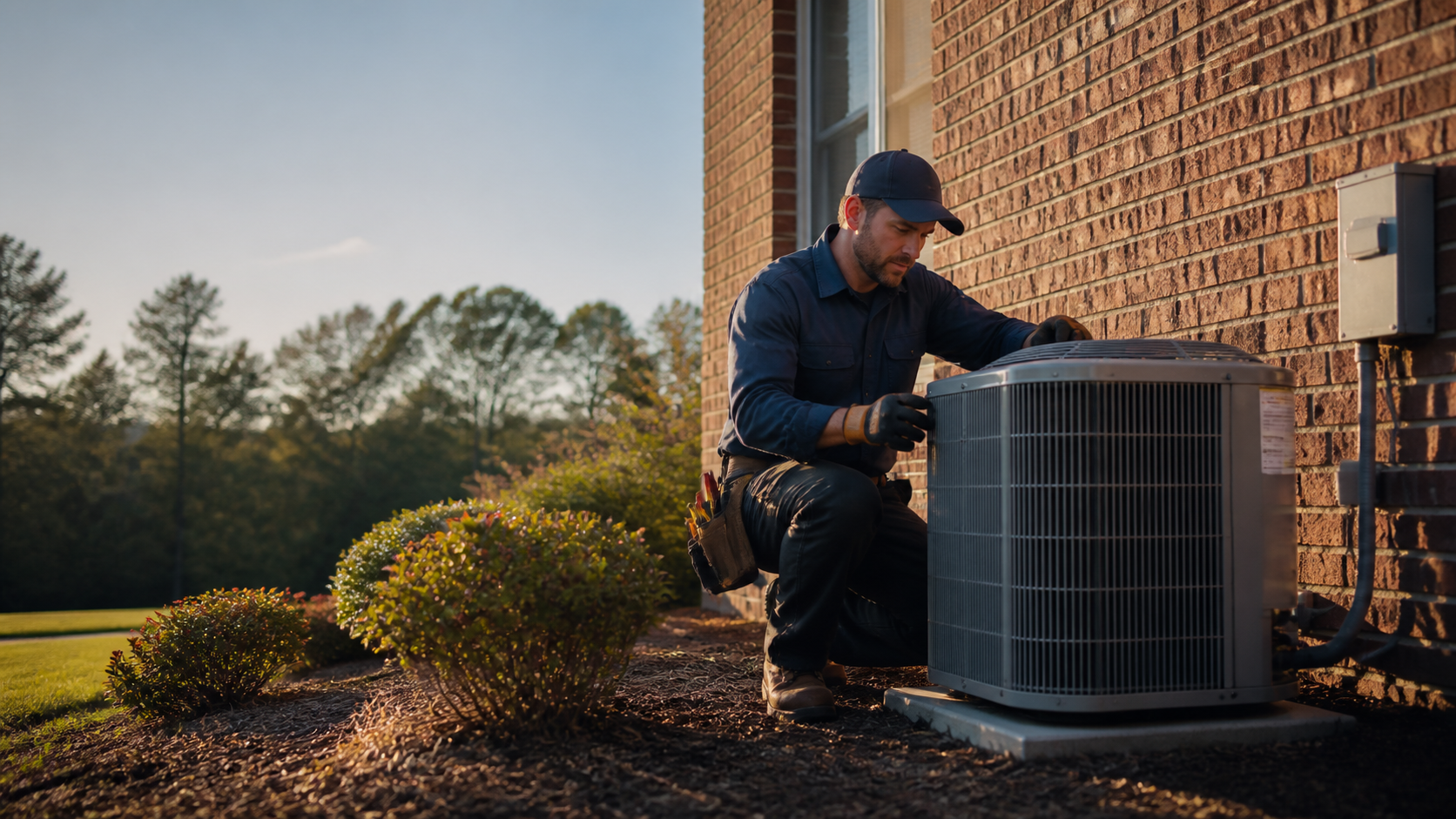
What an air purifier can and cannot do
| Situation | What to expect |
|---|---|
| Pollen or dander floating in a bedroom | A properly sized particle cleaner can reduce what remains airborne |
| Dust in carpet, bedding, or upholstery | Filtration can't reach settled particles; source cleaning still matters |
| A leak, condensation, or recurring musty odor | Correct the moisture source instead of treating the purifier as mold remediation |
| A finer filter in a small HVAC cabinet | We'll check blower capacity and airflow before choosing more restriction |
What does an air purifier actually help with?
A particle cleaner gives airborne pollen, dust, pet dander, and some mold spores another path out of the room. That can reduce exposure for some people. It helps most when the unit runs right in the bedroom or wherever symptoms hit hardest. The EPA explains that portable HEPA cleaners can improve some allergy or asthma symptoms, but results vary and a purifier isn't a cure.
The filter only works on air that passes through it. Allergens can settle into bedding, carpets, furniture, and other surfaces before the cleaner ever catches them. Regular cleaning and source reduction still matter, and persistent or unclear symptoms deserve a conversation with a healthcare provider or allergist.
- Portable coverage focuses on one room or area, not automatically the whole home.
- A particle filter isn't a complete solution for odors or gaseous pollutants.
- A purifier can't diagnose allergic rhinitis, asthma, infection, or another health condition.
How should you choose one for allergy relief?
Start with the room and its actual size. Then compare the unit's clean air delivery rate, or CADR, and check whether it uses a HEPA or other clearly identified particle filter. As a rough example for an eight-foot ceiling, the EPA estimates a minimum CADR of 65 cfm for 100 square feet, 130 cfm for 200 square feet, and 195 cfm for 300 square feet. An open floor plan or higher ceiling calls for a larger estimate.
Check replacement-filter cost and availability before you buy. Skip ozone-generating devices entirely. If an electronic feature seems unclear, we'd point you toward a straightforward mechanical particle filter or independent zero-ozone testing instead, because the right unit is one your household will actually keep running rather than the one with the biggest number on the box.
- Match CADR and rated room size to the space the cleaner will really serve.
- Keep the intake and discharge clear so the unit can move air.
- Plan for filter replacement instead of letting a loaded filter drag down performance.
Is portable filtration better than the HVAC filter?
They do different jobs. A portable cleaner gives focused coverage in one room. A central HVAC filter works across the area your system serves, but only while the heating or cooling equipment is running. If dust or symptoms show up throughout the house, the filter cabinet, return-air path, ductwork, blower, and humidity all deserve a look too. Whole-home air purification may make more sense than scattering several small units around the house.
Don't force a thicker or more restrictive filter into equipment that wasn't built for it. A higher-efficiency filter only helps when the cabinet, fan, and duct design can hold safe airflow. If vents feel weak, the filter loads unusually fast, or the system runs noisy, an HVAC inspection can tell us whether the problem is filtration, airflow, or both.
- Use a portable unit where exposure matters most, such as a bedroom.
- We'll inspect both portable and HVAC filters on their normal replacement schedule.
- Run the purifier consistently, but weigh noise when picking a fan speed.
When is an air-quality or HVAC evaluation the better next step?
Get the home checked when the concern affects several rooms, comfort is uneven, airflow feels weak, or you're unsure whether a higher-efficiency filter fits the equipment. Repeated condensation, visible mold, a leak, or a musty smell that keeps returning points to moisture control, ventilation, ductwork, or another source a purifier can't correct.
For a Frederick County home, the next step might be sizing a purifier for one bedroom. If the problem is whole-home airflow, filtration, humidity, or equipment performance, we can help you sort those questions before you spend money on a device that doesn't match the problem.
- Correct moisture and source problems instead of relying on filtration alone.
- Ask us whether the equipment can support the filter without unsafe airflow loss.
- Seek medical guidance when symptoms are persistent, severe, or unclear.
Questions that come up next
Do air purifiers help with allergies?
They can when the triggers are airborne. A properly sized particle filter can reduce pollen, dander, dust, and some mold spores in the air, but it won't clean settled surfaces or cure allergies.
Is a whole-house purifier better than a portable one?
A whole-home system treats air as it moves through the HVAC system, while a portable unit focuses on one room. The better fit depends on where the problem shows up and whether the equipment can support the filtration level.
Can a high-efficiency filter make airflow worse?
It can if the filter is too restrictive for the cabinet, blower, or duct design. Have us check the airflow and filter fit before moving to a denser filter, especially when vents are already weak or noisy.
Will an air purifier remove mold or a musty smell?
It may catch some airborne particles, but it won't correct a leak, condensation, or other moisture source. Recurring mold or odor needs source control, and a particle filter isn't automatically a solution for chemical or gaseous pollutants.
Need HVAC help in Frederick?
Tell us what the system is doing and what you've checked already. If it needs a visit, we'll say so.