What Are the Signs Your Air Ducts Need Cleaning in Frederick?
Dust around a vent, a musty smell, or one uncomfortable room can make you wonder whether the air ducts need cleaning. The stronger signs are visible mold inside hard-surface ducts or HVAC components, evidence of rodents or insects, or heavy dust and debris that is actually coming out of supply registers. Those are the situations the EPA identifies as reasons to consider duct cleaning.
A dirty filter, leaking duct, wet insulation, clogged coil, or equipment problem can create what looks like dirty-duct symptoms. Duct cleaning is an as-needed decision based on an inspection, not a routine schedule for every Frederick County home.
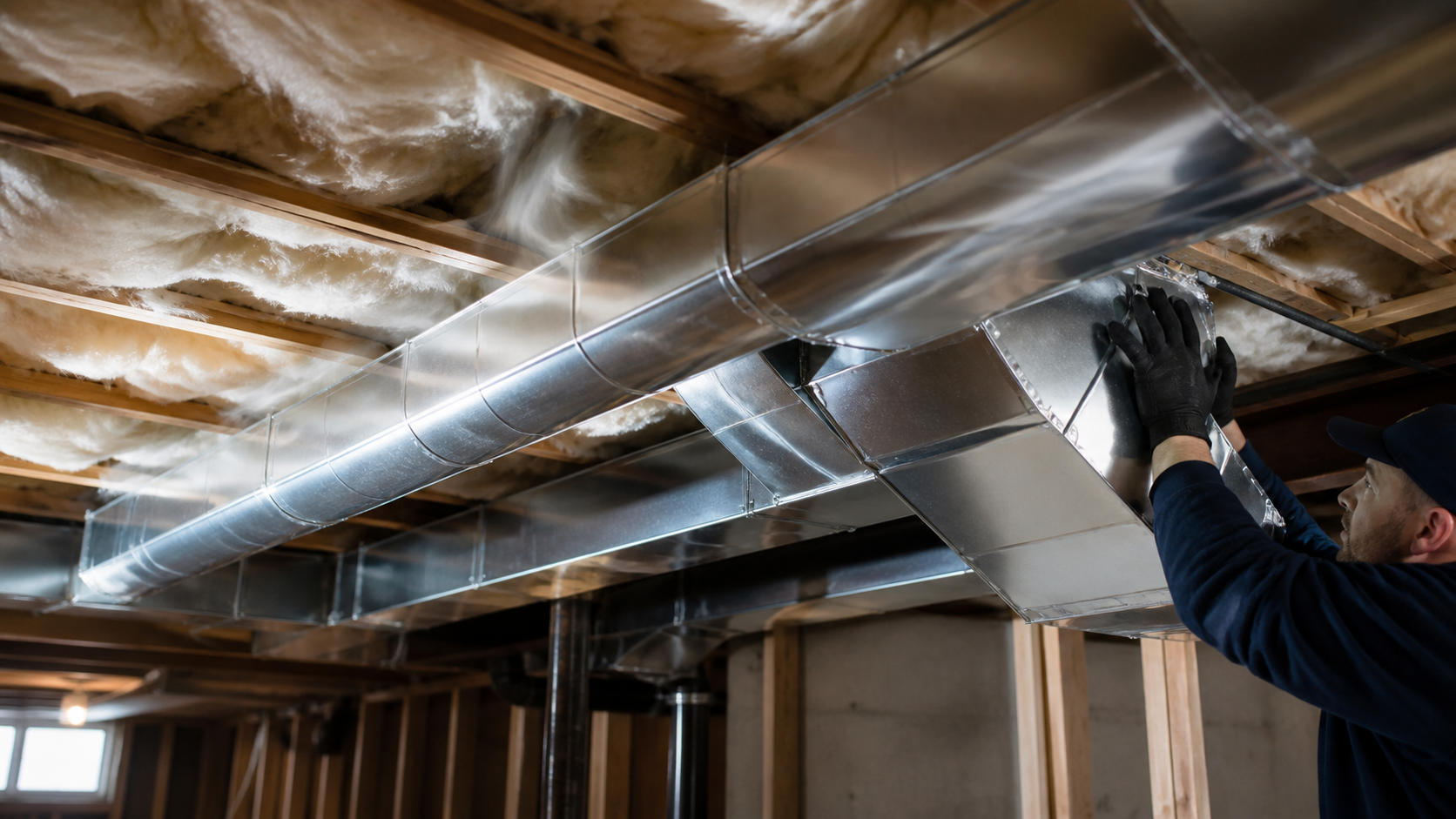
What the clue may tell you
| What you notice | What it can point to | Sensible next step |
|---|---|---|
| Visible mold inside a hard-surface duct | Moisture on a duct or HVAC component | Inspect the affected area and correct the moisture source before cleaning |
| Droppings, nesting, or chewed insulation | Rodents or insects entered the duct path | Document what is visible and address pest entry before cleaning |
| Heavy debris at a supply register | Dust or material is reaching the living space | Ask for photos, the affected areas, and a written cleaning scope |
| Musty smell when the system runs | Damp material, a coil, drain pan, return, or another moisture source | Trace the odor and find the moisture before approving cleaning |
| Dust on a return grille or furniture | Normal household dust near the return air path | Clean the accessible grille and check the filter before assuming contamination |
| Weak airflow or uneven room temperatures | Filter, duct leakage, coil, blower, dampers, or equipment trouble | Request airflow and duct-leakage diagnosis, not an automatic cleaning |
The signs that deserve a closer look
Start with what you can actually see, smell, or document. Visible mold inside a hard-surface duct or HVAC component, evidence of vermin, and heavy dust or debris that comes out of supply registers are more useful clues than a generally dusty home. Dust on a return grille is common because return air pulls household dust toward the register.
If we recommend cleaning, ask to see the condition. A photograph, camera image, or accessible inspection point can clarify what's inside the system. If the evidence isn't visible, we'll explain what we'll inspect and why the work's appropriate. EPA guidance explains what to ask a duct cleaning provider.
- Check more than one register. One dirty opening doesn't describe the whole system.
- Treat dust blowing from a supply register differently from dust sitting on a return grille.
- Ask for the affected areas, total cost, and written scope before approving add-on work.
Mold and musty odors need a moisture check
A musty smell doesn't tell you where it started. The odor may come from a wet crawlspace, drain pan, insulation, wall cavity, return area, or duct material. We find the moisture source first. Then we inspect the affected HVAC areas before we approve any cleaning. The CDC explains that mold cleanup needs to be paired with fixing the moisture problem.
Insulated ductwork needs special care. EPA guidance says wet or moldy insulation in insulated air ducts can't be effectively cleaned and should be removed and replaced. Ask which material's affected, whether it's wet, and what will keep the moisture from returning. The CDC recommends keeping indoor humidity at or below 50 percent to help prevent mold growth, but humidity alone doesn't diagnose a duct problem.
- Find and correct the moisture source before treating a musty smell as a cleaning job.
- Ask whether the affected material is sheet metal, insulation, a coil, a drain pan, or another HVAC component.
- Discuss coughing or wheezing with a healthcare professional rather than using duct cleaning as a medical answer.
Vermin, heavy debris, and particles at the vents
Rodent or insect activity inside ductwork is more than a cosmetic concern. Look for nesting material, droppings, insect bodies, chewed insulation, or an odor that began after pest activity. Do not open inaccessible sections or disturb suspected contamination. Document what you can see from a register and ask which parts of the system need inspection.
Heavy debris matters more when it has a clear path into the living space. Tell the professional if particles puff out when the blower starts, settle around supply registers, or appeared after work inside the duct system. The location matters because debris in a return plenum, filter cabinet, air handler, or supply branch can point to different causes. EPA lists common indoor biological contaminants without treating every indoor particle as a duct problem.
- Keep suspected pest contamination contained and ask which specialist should handle it.
- Note when particles appear and whether they come from a supply or return opening.
- Be cautious when ordinary household dust is presented as proof of a broad indoor air quality problem.
Poor airflow may not mean dirty ducts
Weak airflow, an uncomfortable bedroom, longer equipment cycles, or rising utility bills can come from several parts of the HVAC system. Check the filter first. ENERGY STAR says a dirty filter can slow airflow and make the system work harder, and recommends checking it monthly during heavy-use seasons with the exact replacement interval based on the home, filter, and equipment.
Duct leakage is another possibility. A disconnected, crushed, poorly insulated, or leaky duct can send conditioned air into an attic, crawlspace, garage, or wall cavity. ENERGY STAR explains that sealing and insulating ductwork can help with uneven room temperatures. Sealing controls air loss and pollutant entry. It isn't the same service as removing dust from the inside of the ducts.
The blower, coil, refrigerant circuit, dampers, return path, or equipment sizing can also affect airflow. When a Frederick County home isn't staying comfortable, ask us to evaluate the symptom and the whole system before assuming cleaning's the answer. ENERGY STAR connects poor airflow with efficiency, comfort, and equipment-life problems.
- Use a filter and airflow check for ordinary surface dust.
- Use a duct-leakage check when comfort or a rising energy bill is the main complaint.
- Ask which verified problem the proposed service is meant to address.
What a responsible duct cleaning inspection should cover
Before approving work, ask which ducts, registers, plenums, coils, fans, or air-handler components will be inspected or cleaned. Ask what evidence shows cleaning is needed, how the home and equipment will be protected, and whether wet insulation, mold-like material, or pest evidence requires replacement work or another specialist.
EPA advises homeowners to compare written estimates, ask providers to show the contamination that justifies cleaning, and request a written agreement describing the total cost and scope. NADCA also publishes questions about the cleaning process, but an industry association page is not proof that a particular company is certified or affiliated with it. Verify qualifications directly.
- Ask which areas are included and what would cost extra.
- Ask how filters, furniture, HVAC equipment, and the home will be protected.
- Request the findings and recommended next step in writing.
Questions that come up next
What are the strongest signs your air ducts need cleaning?
Look for substantial visible mold inside hard-surface ducts or HVAC components, rodents or insects inside the ductwork, or heavy dust and debris coming out of supply registers. Dust on furniture alone isn't proof the ducts need cleaning.
Does a musty smell mean the air ducts need cleaning?
Not by itself. A musty odor can come from wet insulation, a drain pan, a coil, a crawlspace, a return area, or duct material. Find and correct the moisture source before approving cleaning.
Can a dirty filter look like a duct problem?
Yes. A dirty or poorly fitted filter can restrict airflow and let dust pass around the frame. Check the filter, return path, duct leakage, and equipment before assuming the inside of the ducts needs cleaning.
What should a duct cleaning provider show you?
Ask to see the condition that justifies cleaning, the areas included, the protection plan, the total written cost, and what happens if the inspection finds wet insulation, mold-like material, or pest evidence.
Need HVAC help in Frederick?
Tell us what the system is doing and what you've checked already. If it needs a visit, we'll say so.