How Often Do Air Ducts Need Cleaning?
Most homes don't need air duct cleaning on a fixed yearly or multi-year schedule. The useful question is what's inside the system now: substantial visible mold, a pest infestation, or heavy dust and debris that's actually being released into the home. The U.S. Environmental Protection Agency doesn't recommend routine duct cleaning because conditions vary from one home and duct system to another.
That matters in Frederick County, where homes differ in age, construction, insulation, duct material, equipment, and moisture problems. Dust on a vent doesn't automatically mean the whole system needs cleaning, and what you're feeling in the house may point to equipment or duct leakage instead. Start with what you can see, then match the next step to what we find.
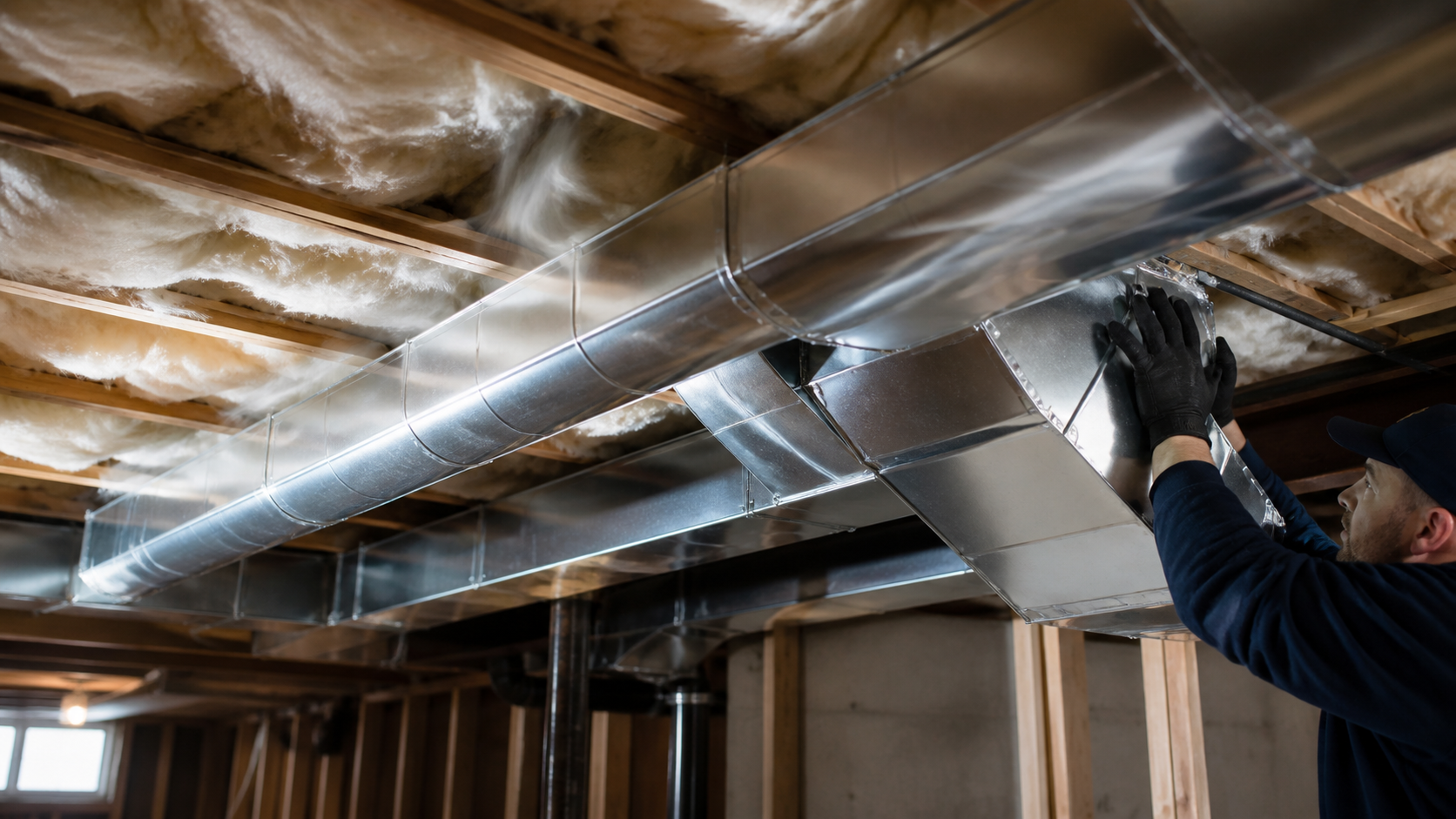
What should guide the next step?
| What you find | Best next step | Why it matters |
|---|---|---|
| Clean registers and normal household dust | Keep the filter maintained; skip a routine cleaning | Surface dust doesn't prove the ducts are dirty |
| Substantial mold or damp buildup | Find the moisture source, then arrange an inspection | Cleaning without correcting moisture invites the problem back |
| Rodent or insect debris | Address the pest entry first, then inspect the ductwork | Pests can contaminate the system |
| Heavy dust or drywall debris after remodeling | Inspect for construction debris and clean if it reached the ducts | Remodel dust can spread through the home |
| Weak airflow, water, ice, or uneven comfort | Request a diagnosis instead of assuming dirty ducts | Filters, drains, blowers, duct connections, and equipment can cause these symptoms |
Is there a normal schedule for air duct cleaning?
There is no reliable calendar interval that fits every home. If the ducts are dry, intact, and free of substantial contamination, routine cleaning may add little value. The EPA describes duct cleaning as an as-needed decision, not a standard yearly task.
A major renovation, significant water event, pest problem, or visible contamination deserves a closer look, and we're glad to take it. A small amount of dust around a return grille may only call for normal housekeeping and HVAC maintenance. Cleaning the ducts is also different from servicing the blower, coils, drain pan, heat exchanger, controls, or other equipment that moves air.
- A home's filter and moisture conditions matter more than its age.
- A calendar reminder isn't evidence of contamination.
- Ask to see the specific buildup before approving a cleaning.
What conditions can justify duct cleaning?
The EPA identifies three situations that can justify considering air duct cleaning: substantial visible mold growth inside hard-surface ducts or on other heating and cooling components; rodents, insects, or other vermin inside the duct system; and substantial deposits of dust and debris, especially when particles are released from supply registers into the living space.
The word substantial matters. A dark-looking spot isn't automatically confirmed mold, and some materials that look like mold need expert confirmation before we call it that. If a leak, condensation problem, wet insulation, or drainage issue caused contamination, we address the moisture source first. Wet or moldy insulated duct material may not clean effectively and may need a different remedy.
- Look for substantial contamination, not a little surface dust.
- Treat mold as a finding that may need confirmation and moisture control.
- Address pest entry, leaks, condensation, or wet insulation before cleaning.
Does dust at a vent mean the ducts are dirty?
Not necessarily. Return registers pull dust-laden household air through their grilles, so some dust there's normal. Turn the system off, clean an accessible grille according to its material, and don't open sealed equipment cabinets or reach into moving, electrical, gas, or refrigerant components.
Dust and stale odors can come from carpets, furniture, cooking, smoking, outdoor air, moisture, or ordinary housekeeping. The EPA's broader indoor-air-quality approach combines source control, ventilation, and filtration. Keep indoor humidity below 60 percent, ideally between 30 and 50 percent, and investigate persistent dampness, condensation, or a musty smell instead of masking it.
Use the filter size and type recommended for the equipment. A much more restrictive filter isn't automatically better. If the filter becomes dirty unusually fast, look for the reason rather than treating frequent replacement as proof that all the ducts need cleaning.
- Clean an accessible grille; don't open sealed HVAC equipment.
- Use source control, ventilation, filtration, and humidity control together.
- A dirty filter protects poorly when it is the wrong type, wet, damaged, or overloaded.
How is duct cleaning different from HVAC maintenance?
HVAC maintenance keeps equipment operating safely and helps catch problems before heavy seasonal use. Duct cleaning addresses contamination inside the air-distribution system. One doesn't create an automatic schedule for the other. ENERGY STAR recommends annual pre-season checkups, with cooling equipment checked in spring and heating equipment in fall.
Homeowner-safe maintenance includes checking the filter, keeping supply vents and return grilles open, looking for water around indoor equipment without opening the cabinet, and keeping the outdoor unit clear. Professional maintenance may include controls, electrical connections, coils, blower components, the drain line, cycling, and safety operation. Those checks are useful even when the duct interiors are clean.
- Maintenance serves the equipment; duct cleaning addresses confirmed contamination.
- A plugged drain line can cause water damage and affect indoor humidity.
- Fuel-burning heating systems need their own annual safety inspection and service.
When should a symptom lead to diagnosis instead?
Weak airflow, an uneven room, warm air from the vents, short cycling, water near the indoor unit, or a frozen coil can involve the filter, blower, drain, duct connections, insulation, controls, refrigerant circuit, or equipment itself. Cleaning the duct interiors may not fix those causes. Gaps, holes, and poor insulation can also let conditioned air escape, which is a different problem from dust on a duct surface.
Write down which rooms are affected, whether airflow's weak at one register or throughout the house, whether the system runs continuously, and whether you see water, ice, pests, or debris. If you know or suspect the HVAC system's contaminated with mold, stop running it and call us to evaluate it while the moisture problem's addressed. Gas odors, smoke, a strong burning electrical smell, or a carbon monoxide alarm require an immediate safety response before HVAC service.
- Comfort symptoms don't prove the ducts are dirty.
- A photo and a clear symptom timeline are more useful than guessing at a failed part.
- Leave for gas, smoke, fire, sparking, or a carbon monoxide alarm and call from a safe location.
What should you ask before hiring a duct cleaner?
If the evidence points toward cleaning, ask what specific contamination we found and whether we can show you where it is. We'll confirm whether the written scope includes supply ducts, return ducts, related components, access points, materials, and protection for the equipment and home.
Ask what moisture, pest, or equipment problem needs to be corrected so contamination doesn't return. Be cautious with routine-cleaning pitches or broad health claims. The EPA says sweeping health claims are unsubstantiated and doesn't certify, endorse, or approve duct-cleaning companies. A clear explanation of the condition and work scope is more useful than a generic whole-house promise.
- Ask to see the condition and the evidence behind the recommendation.
- Get the areas, access points, materials, and protection steps in writing.
- Treat chemical treatments or sealants as separate proposals that need a reason.
Questions that come up next
How often do air ducts need cleaning?
There's no useful fixed interval for every home. Inspect and clean when you find substantial mold, pest debris, heavy dust or debris being released from the registers, or another clear duct problem. Normal household dust alone isn't a reason to schedule it.
Should I clean my ducts after moving into a home?
Inspect first. Look inside accessible registers and ask about past remodeling, moisture, or pest issues. Clean only when the condition of the ductwork gives you a reason.
Does changing the filter mean I never need duct cleaning?
No. A good filter reduces new debris but can't remove mold, pest contamination, or construction dust that's already in the ducts. It's prevention, not a substitute for an evidence-based inspection.
Does dust on a vent mean I need duct cleaning?
No. Some dust on a return grille is normal because it pulls household air through the opening. Clean an accessible grille, check the filter, and look for substantial debris being released from the registers before deciding that the duct interiors need service.
Should I clean ducts if the system has weak airflow or water?
Request a diagnosis first. Weak airflow, uneven comfort, water, ice, and short cycling can come from filters, blowers, drains, duct connections, insulation, controls, or the equipment. Duct cleaning may not address those causes.
Need HVAC help in Frederick?
Tell us what the system is doing and what you've checked already. If it needs a visit, we'll say so.