Gas smell or a CO alarm
Get out of the building and call 911 or the gas utility from a safe location. Don't reset the furnace, flip a switch, or look for the source inside.
Spring Ridge, MD emergency service
Emergency HVAC repair starts with safety. When a furnace stops heating or an AC quits on a hot day, what you do next depends on what else is happening. A gas odor, smoke, sparking, a carbon monoxide alarm, or water near electrical equipment changes the plan immediately, and we'll walk you through it.
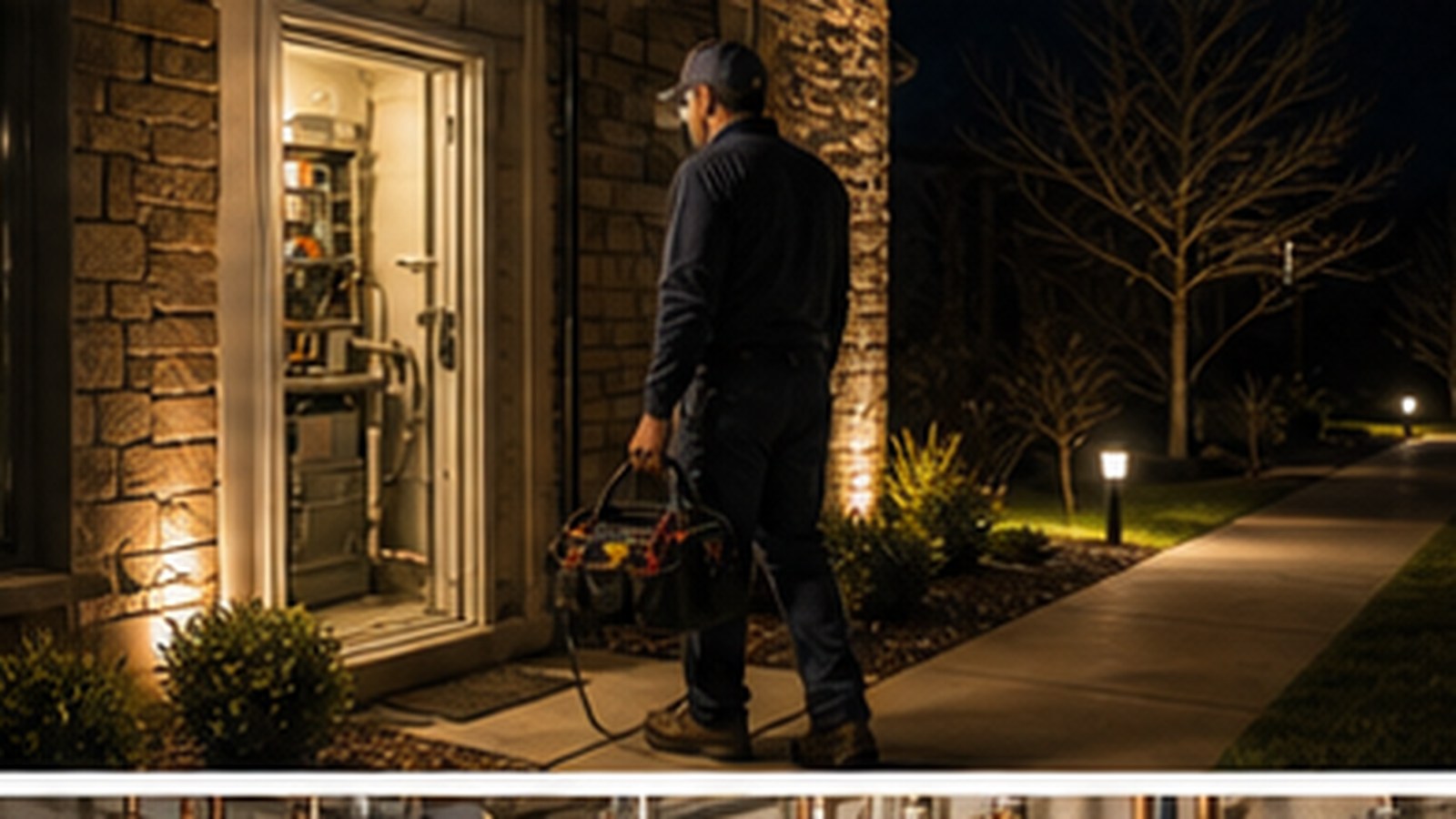
If there's a gas odor, smoke, fire, sparking, a carbon monoxide alarm, or a medical emergency, leave the home and call 911 from a safe location. We start HVAC service after emergency responders or the gas utility clear the property.
Sort the problem
Separate danger from discomfort first. A direct safety concern, serious water damage, or a dangerous indoor temperature changes what you should do next.
Get out of the building and call 911 or the gas utility from a safe location. Don't reset the furnace, flip a switch, or look for the source inside.
Move away from visible damage, smoke, sparking, or a burning electrical smell. Don't open the equipment cabinet or keep testing the system.
Stay away from standing water near electrical equipment, shut cooling down when the coil's frozen, and stop resetting a breaker that trips again.
Move people at higher risk to a warmer or air-conditioned location if the home's becoming unsafe while we arrange service.
The CDC explains that carbon monoxide is odorless and colorless. Treat an alarm as an immediate reason to leave, not as a troubleshooting project.
When weather is the risk
Losing heat or cooling can turn into a health problem before the equipment's fixed. The safest choice is often leaving the home, not waiting beside the thermostat.
Move children, older adults, and people with chronic health conditions to an air-conditioned location when the home is becoming unsafe. Use Ready.gov heat guidance for warning signs.
Dress in layers, close unused rooms, and arrange a warmer place to stay if the home cannot hold a safe temperature. Never use a gas range or oven for heat.
Only when the home is safe
Do these only when there's no gas odor, CO alarm, smoke, sparking, flooding, or medical emergency. Stop if anything smells burned, looks damaged, or trips electrical protection again.
Confirm the display's on, the mode matches the season, and the set point is calling for heating or cooling. Check batteries only if the thermostat uses them.
Replace a packed filter only if it's easy and safe to reach and you know the correct size, usually a 1-inch or a 4-inch. A restricted filter can cut airflow and stress the system.
Move furniture, rugs, boxes, or anything else blocking supply registers and return grilles. Note whether one room or the whole home is affected.
Only look at the labeled HVAC breaker when the panel and surrounding area are dry, with no burning smell or visible damage. Leave it off if it trips a second time.
Note whether the indoor blower or outdoor unit runs, and photograph an error code without touching the equipment. Don't open panels or handle refrigerant.
ENERGY STAR maintenance guidance supports checking filters, airflow, controls, drains, and safe system operation without turning a homeowner check into equipment work.
What happens after you call
You don't need to identify the failed part. What we need is when the problem began and what the equipment's doing now.
Tell us when the problem began, whether it followed a storm or power interruption, and what the thermostat shows.
We'll check controls, power, airflow, drainage, motors, burners, venting, the heat exchanger, or the outdoor unit, whatever the symptom points to.
The failed part, the equipment's age, prior breakdowns, and overall condition help us decide whether repair or replacement makes more sense.
We're not done when a part's changed. We test the system against the symptom you called about.
Repair or replace?
Repair can make sense when we can make the system safe and the failed part is repairable. The equipment's age, repeated repairs, a major component, and the condition of the rest of the system shape that conversation. The Department of Energy identifies those factors as reasons to discuss replacement, not as an automatic rule.
Call preparation
Tell us what changed. You don't need to name the technical part yourself.
Spring Ridge questions
These answers cover the safety questions that matter before an HVAC diagnosis.
No. Shut the cooling system down and call us, especially if it freezes again after thawing. Ice usually points to an airflow or a refrigerant problem.
Have the equipment type if you know it, the symptom, when it started, the thermostat setting, any error code, and any sound, smell, water, or ice you noticed. Tell us clearly if there's a gas odor, a CO alarm, smoke, or an electrical concern.
Call us when necessary heating or cooling has stopped, the issue's getting worse, or a safe basic check didn't solve it. For gas, carbon monoxide, fire, or an immediate electrical hazard, leave first and call 911 or the gas utility.
If the home is safe to occupy, tell us what changed and what you observed. If there is gas odor, a carbon monoxide alarm, smoke, fire, or a medical emergency, leave first and call 911.