Spring Ridge, MD

AC Repair in Spring Ridge, MD

Warm air, a frozen coil, water under the indoor unit, or an outdoor condenser that won't start can all feel like "the AC is broken." They don't all need the same repair, and we start with what changed before we touch anything.

Start with the symptom. A clear diagnosis gives you a better basis for deciding what to fix, what to watch, and what can wait.

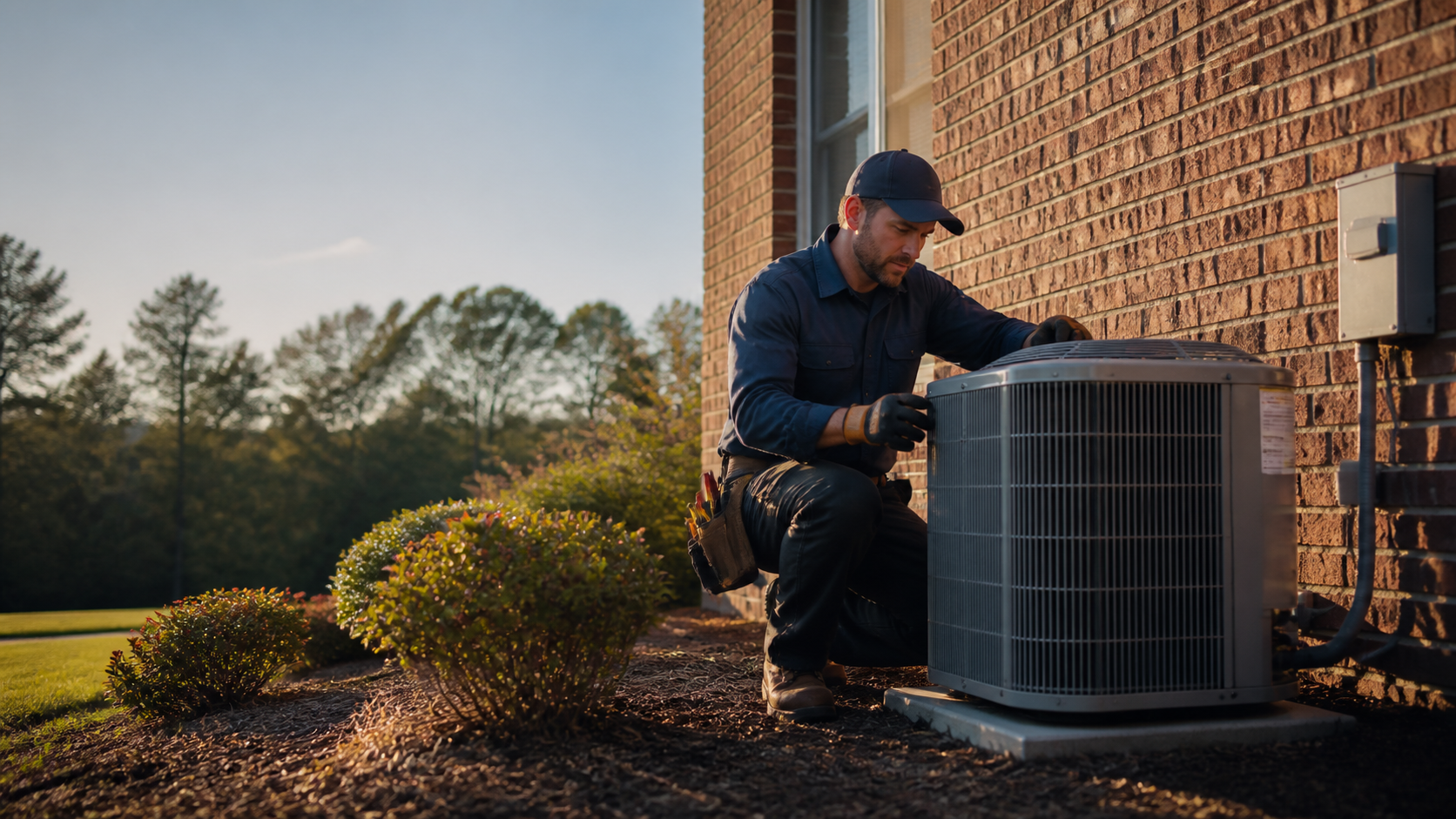
Air conditioning equipment being evaluated for a Spring Ridge home
Read the symptom

What your AC may be telling you

The symptom doesn't identify the failed part by itself. It does show if you're dealing with a comfort problem, possible equipment trouble, or a situation that needs quick attention.

Warm air

The AC runs but the house stays warm

The thermostat, airflow, outdoor unit, coil, refrigerant circuit, or an electrical control can all cause the same result. A healthy system drops the supply air 15 to 20 degrees below the return, so confirm the setting first and leave the part diagnosis to testing.

Weak airflow

One room or the whole house feels short on air

A closed vent or blocked return can affect one room. Weak airflow everywhere often points toward a filter, a duct restriction, separated ductwork, or a broader equipment problem.

Ice

You see ice on a line or indoor coil

Ice means turn cooling off. It's not a reason to keep waiting for the system to catch up. Running it iced up adds strain and spreads the damage.

Water

Water is collecting near the indoor unit

A drain problem, a full pan, or thawing ice could be involved. Protect the floor and stop the system if water's moving toward flooring, drywall, or electrical equipment.

Noise or cycling

The system buzzes, grinds, or starts and stops

Write down when the change began and whether it happens during startup, shutdown, or continuous operation. A new sound or short cycling deserves a diagnosis.

Blank display

The thermostat keeps going blank

A dead battery's often the simple answer, but a control or drain-safety issue can look the same. Note what the display shows before doing more than a basic battery check.
Safe observations

A few checks are useful. Opening the equipment isn't.

Confirm the simple details, then stop before handling electrical or refrigerant components. A careful symptom report beats a guessed compressor or capacitor diagnosis every time.

Thermostat

Confirm the cooling call

Set the thermostat to cooling with the target 3 to 5 degrees below room temperature. If the display's blank, check the batteries on models that use them.

Airflow

Look at the filter and vents

Note whether the filter's visibly loaded with dust. Make sure supply vents are open and return grilles aren't covered by furniture, rugs, or storage.

Outdoor unit

Observe from a safe distance

Look for leaves, grass, or stored items blocking the area. Keep your hands out of the cabinet, and don't open the electrical panel or bend coil fins.

Indoor equipment

Watch for water or ice

Protect nearby flooring if water's spreading. If you see ice, turn cooling off and arrange an evaluation instead of running a frozen system.

Keep the panels closed.Don't open the electrical panel, bend coil fins, spray water into the cabinet, handle refrigerant lines, bypass a float switch, or attempt a wiring, gas, or refrigerant test.
Stop troubleshooting

Some AC problems are safety problems first.

A gas odor, a carbon monoxide alarm, smoke, or a strong burning electrical smell isn't a routine AC project. Move people and pets to a safe location and call 911 from there.

Leave first: gas odor, smoke, fire, sparking, or a carbon monoxide alarm.

Get help quickly: water spreading toward electrical equipment, repeated breaker trips, visible ice, or a total loss of cooling during dangerous heat.

Don't: restart fuel-burning equipment, repeatedly reset a breaker, or open the cabinet to find the cause.

The home matters too

A running AC isn't the whole comfort story

An upstairs bedroom, a finished basement, or a room over the garage can stay uncomfortable because of the home's air path, not just the equipment.

Upstairs rooms

An upper bedroom that stays warm can reflect ductwork, insulation, air leaks, or how the home gains heat, even when the outdoor unit's running fine.

Finished basements and rooms over garages

Different exposures and layouts change how much cooled air reaches a room. Tell us whether the imbalance is new or has always been there.

Humidity and filter changes

Sticky air at 60 percent humidity or higher, long run times, or weaker airflow after a filter change are all useful clues. A higher-efficiency filter still has to fit correctly and work with the system's airflow.

Tell us whether the problem's new or has existed for years. A sudden change deserves an equipment and airflow check. A long-standing imbalance may call for a wider look at ductwork, insulation, air sealing, or sizing before anyone assumes a new condenser fixes it.

What a visit should clarify

The repair decision should follow the finding.

Warm air, water, and weak airflow can have several causes. The useful sequence connects what you noticed to what the system's actually doing.

01

Start with what changed

Share the rooms affected, when the problem began, the thermostat setting, and what you can see, hear, smell, or feel.

02

Separate the likely causes

A useful check follows the symptom through the thermostat signal, the airflow, the drain, the controls, the outdoor equipment, and the coil - then the refrigerant or electrical readings.

03

Explain the finding

You should hear what we found and whether the next step is maintenance, a repair, more airflow or drainage evaluation, or a replacement conversation.

04

Test against the complaint

The visit isn't finished when a part gets changed. We check the system against the warm room, water, noise, or cycling problem you reported.

Request AC repair in Spring Ridge

Bring the symptom, not the part guess.

Share the system type if you know it, the thermostat setting, affected rooms, start time, and any photo of visible ice or water. That gives us a useful starting point.

Cooling answers

Spring Ridge AC repair questions

Why is my Spring Ridge AC running but not cooling?

The cause could be a thermostat setting, an airflow restriction, a frozen coil, an outdoor-unit problem, a control issue, a refrigerant-side fault, or another electrical problem. The useful next step is testing the indoor and outdoor sections instead of guessing at one part.

What should I do if my AC is leaking inside?

Turn it off if water's reaching flooring or a wall, protect the surrounding area, and don't open the cabinet. Water can come from drainage trouble, a full pan, or ice that's thawed.

Can one warm room be an HVAC equipment failure?

It can be, but a long-standing room imbalance can also involve duct gaps, insulation, air sealing, blocked registers, or the home's layout. Tell us whether the problem's new.

Should I repair or replace the AC?

That decision follows an evaluation of the equipment and the home. Age, repeated failures, safety, a major component, and long-term comfort can all change the comparison, but one symptom alone isn't a replacement verdict.

Know what changed in your Spring Ridge AC

Start with what changed and leave the part guess behind. A clear diagnosis gives you a calmer repair decision.