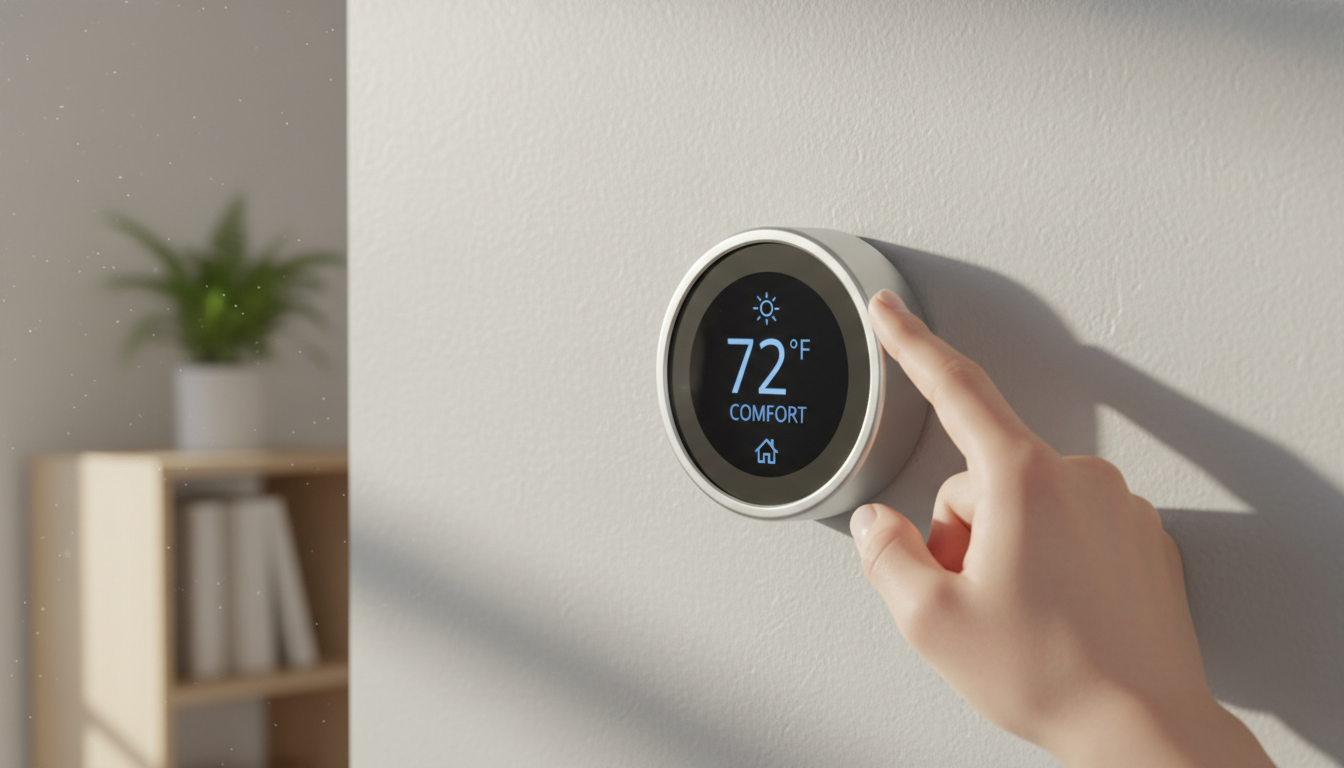
A working display isn't proof of a working system.
The thermostat can ask for heat or cooling while a control, safety switch, blower, or power issue keeps the equipment from responding.
Spring Ridge HVAC repair
Spring Ridge wraps around Spring Ridge Elementary on Ridgefield Drive, and the calls we get here tend to sound alike: the display looks right, but one room, one floor, or one zone doesn't feel right. The thermostat is a clue. We follow the request from the wall into the airflow, the controls, and the equipment to find where it stops being true.
Read the whole signal
The display can show the setting, the sensed temperature, and sometimes what the equipment is doing. It cannot identify one certain failure by itself.
The thermostat can ask for heat or cooling while a control, safety switch, blower, or power issue keeps the equipment from responding.
An upstairs room or a finished basement can fall behind for airflow reasons, duct reasons, or insulation reasons. We check which one before recommending anything.
A loaded filter or a dirty coil can stretch out heating and cooling. So can a refrigerant problem or a change in the house - we test to tell them apart.
Safe homeowner checks
A few settings and observations may uncover a simple issue. Stop before removing a panel, touching wiring, or working around gas and electrical components.
Confirm the thermostat's set to heat or cool, not off or fan-only, and that the selected temperature is different enough from the room temperature to call for a change.
Note whether the display is blank, flashing, waiting, or showing a warning. The wording and the time you saw it help make the next conversation more useful.
Notice whether the indoor equipment starts, air comes from the vents, and that air feels warmer or cooler than the room. Don't remove an equipment cover.
Replace a visibly loaded filter only when you know the correct size and normal procedure. Leave it alone if it's hard to reach or you're unsure.
Write down whether the problem affects the entire home or one room. Compare airflow at the uncomfortable room with a nearby room.
Don't bypass a safety switch, change wiring, open an electrical compartment, handle refrigerant, or take apart the furnace, heat pump, or air conditioner.
Symptom pattern
The same thermostat symptom can come from different conditions. A short note about the message, rooms affected, timing, and equipment response gives diagnosis a better starting point.
Note whether the indoor equipment's also silent and whether there was an obvious power interruption.
Record the mode, setpoint, room temperature, and when you first noticed the equipment didn't respond.
Watch what happens next: does the system start, stop, run the fan only, or leave the home uncomfortable?
Compare the change with normal operation and note any new sound, ice, water, or repeated start attempt.
A homeowner discussion about a "waiting for equipment" message alongside uneven cooling is a useful reminder to read the message with the comfort symptoms around it. Read the homeowner discussion.
Diagnosis beyond the display
Depending on the symptom, we start at the thermostat and the filter, then follow where the problem points - the blower, the drain under the unit, the ignition, or the outdoor equipment. A furnace, an air conditioner, and a heat pump don't all respond the same way.
For a Spring Ridge homeowner, the result should be a clear explanation of what we found, what's still uncertain, and what the reasonable options are.
Keep the steps visible
Share the display message, room, timing, weather or indoor conditions, and what you can observe at the vents and equipment.
We compare the request with the response: what the thermostat asks for, what the indoor and outdoor equipment actually do, and what comes out of the vents.
We'll tell you what caused the symptom, whether the system's safe to operate, what remains uncertain, and what repair we recommend.
The visit ends with us checking the original comfort problem again, not just a reset or a new part installed.
Ask what failed, whether the system is safe to operate, and what happens if you monitor the issue. You should not need to approve a replacement simply because the thermostat displayed a confusing message.
Repair or replacement
Repair may be the right answer for one broken part in otherwise sound equipment. Age and history matter, but one number cannot decide every home. Repeated failures, safety concerns, a major component, or a comfort problem that never quits may make replacement worth comparing.
Spring Ridge service options
Questions homeowners ask
Yes. The thermostat can ask for heat or cooling while a power problem, a bad control, or an airflow issue keeps the equipment from actually responding.
Treat the message as a clue. Note whether the equipment starts after a short pause, starts and stops, runs the fan alone, or leaves the home uncomfortable.
No. Repair may make sense when the failure is understood and the equipment is otherwise in good condition. Replacement belongs in the conversation when safety, repeated failures, major equipment condition, or repair value changes the decision.
Tell us what the thermostat says, what the system actually does, and which rooms are affected.