The thermostat's set to heat, but the furnace stays quiet
The useful clues here are simple: does the thermostat have power, does the furnace make any sound at all, and where in the sequence it stops.
Burkittsville, Maryland furnace repair
When a furnace quits in Burkittsville - the village sits in a notch against South Mountain, and cold air settles into it - a house can lose 10 degrees or more before dinner. You might hear it start and stop, feel cool air at the registers, or watch the thermostat say 68 while the rooms sit in the high 50s. The next step is a real diagnosis, not a guess at which part failed.
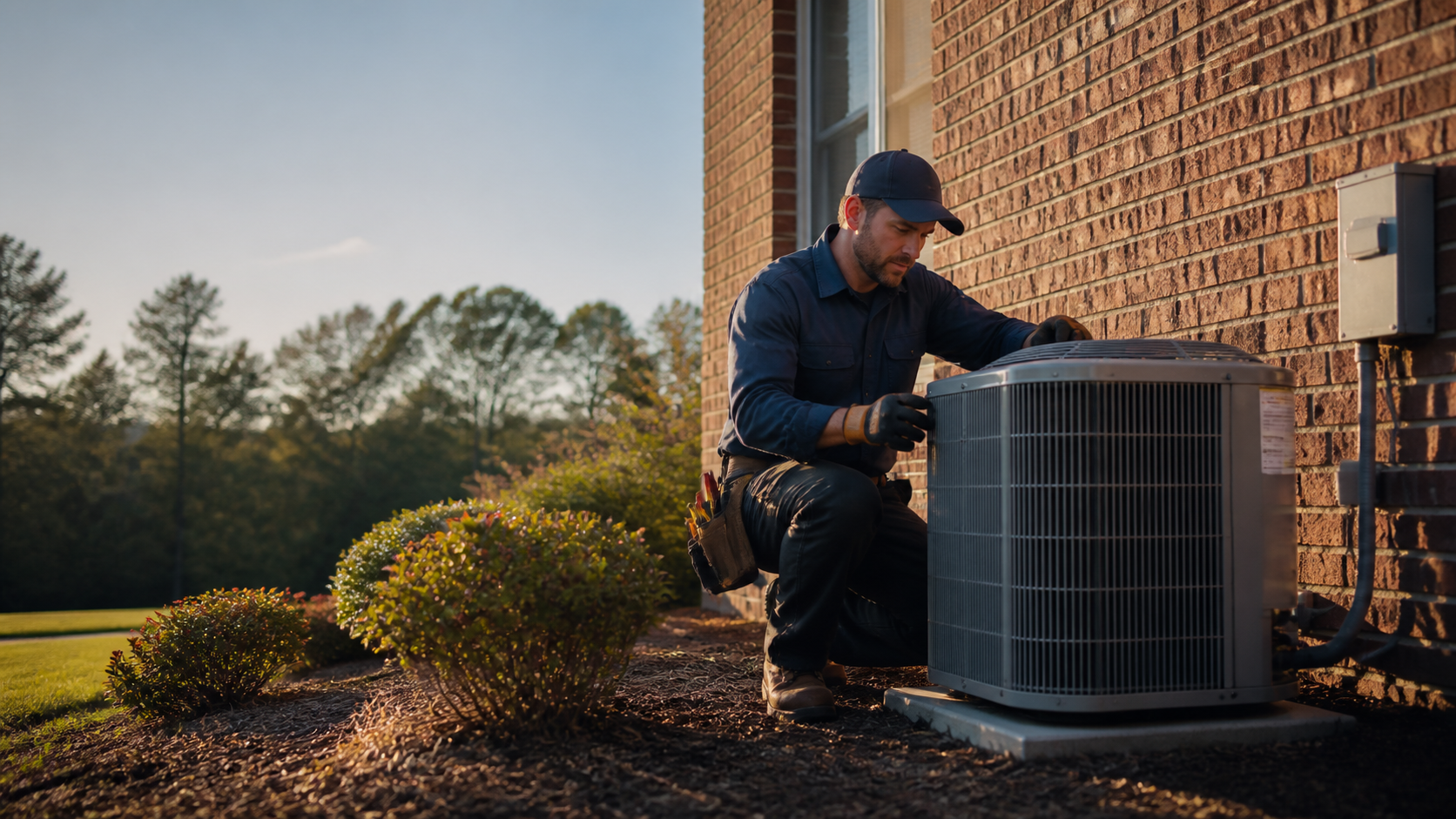
A gas furnace and an electric furnace don't share the same heating components. We'll trace your symptom through the thermostat signal, the airflow, and the ignition - the part that lights the burners - without expecting you to know which part it is.
What you notice first
A new pattern is useful information. Record the timing, sound, temperature, and location of the problem before changing several settings.
The useful clues here are simple: does the thermostat have power, does the furnace make any sound at all, and where in the sequence it stops.
A furnace can move air fine while ignition, airflow, a safety control, or another step in the sequence is the actual problem.
That's not always the furnace. It can trace back to ductwork or how heat gets distributed through the house.
If it's shutting down inside 5 minutes of starting, time it instead of resetting the system over and over. Short cycling has more than one possible cause.
That could be the blower, loose material, a motor, or 1 of several other parts. The sound alone won't name it.
Note when it happens, and leave a repeated trip alone. Don't open the cabinet or keep forcing the power back on.
Only when the home is safe
Don't open the furnace cabinet, bypass a safety switch, touch gas controls, work near live wiring, or keep resetting a breaker or safety control that just tripped.
Confirm it's set to heat and push the setpoint 3 to 5 degrees above the room. If it runs on batteries, make sure the display looks normal.
Only check it if you can reach it without opening the furnace cabinet. A filter past the 1 to 3 month mark is often the whole problem, so swap it for the correct size and type if it's caked with dust.
Make sure supply registers are open, not buried under furniture or rugs. Compare how the airflow feels room to room.
Note any water, an error code, an odd smell, a hot cabinet, or what happens when the furnace tries to start. Leave the covers on.
From symptom to answer
You should walk away knowing what failed and why our repair fixes it. A part name on its own isn't an explanation.
Tell us when it began, which rooms it hits, what the thermostat shows, and whether the furnace makes any sound.
We check power and the thermostat signal first, then the airflow. From there it's the ignition - the part that lights the burners - the flame sensor, and the safety controls, with the blower and the venting to finish.
You should walk away knowing what failed, what the recommended work changes, and what's still left to check if the scope isn't final.
Equipment condition, repair scope, prior failures, and comfort through the home all belong in that repair-or-replace call.
Repair or replace?
Weigh the repair scope against the equipment's condition, its recent history, and whether the home actually stays comfortable when the furnace runs.
A smaller repair on a furnace that's been dependable can be the right call when the rest of the system's in good shape.
Ductwork, insulation, airflow, controls, or repeated failures can all change what one repair is actually worth.
A major repair or an unresolved safety and reliability concern should get a plain look at the alternatives. Not a sales pitch.
Stop troubleshooting
Get people and pets away from the danger first. Leave the home if you can and call emergency services or the utility from somewhere safe. Don't relight equipment, reset a breaker, or go back in to look for the source.
No immediate danger, but the furnace keeps shutting down, smells off, or trips a breaker more than once? Stop resetting it and call for help.
Before you request service
Bring the make and model if you can read the label safely, along with the thermostat behavior, which rooms are affected, when it started, a recent filter change, and anything you saw, heard, or smelled.
The blower can run before ignition finishes or after a safety shutdown. Note when the air changed and whether the furnace starts, stops, or throws an error.
Check the thermostat mode and setpoint, the display or batteries if it has them, the filter you can reach, and open registers. Don't touch wiring, gas controls, safety switches, or the inside of the cabinet.
Age by itself doesn't answer that, even past the 15 to 20 year mark. Weigh the failed component, the repair scope, recent repair history, how even the comfort is, and the condition of the rest of the equipment.
Stop troubleshooting. Leave the home and call emergency services or the utility from somewhere safe. Don't relight anything, reset a breaker, or go back in to look for the source.
Tell us what changed, what you've already checked, and what the system's doing right now. A focused diagnosis should give you a clear repair decision.