Emergency HVAC Repair Cost in Frederick
What Homeowners Should Expect
When the furnace quits on the coldest night of January or the AC dies in the middle of a July afternoon, the first question is blunt: what will this cost? The honest answer is that emergency HVAC repair cost in Frederick depends on the equipment, the part that failed, the hour you call, and what the diagnosis turns up.
National cost guides can frame the ballpark, but they are not Frederick County quotes. HomeGuide puts emergency service somewhere between about $140 and $210 an hour on the low end and $400 to $600 on the high end. Treat that as budgeting context, not a local promise.
The cleanest way to narrow the number is to price the urgency separately from the repair. A clear estimate tells you what was found, what work is proposed, which costs are inside the number, and what can safely wait.
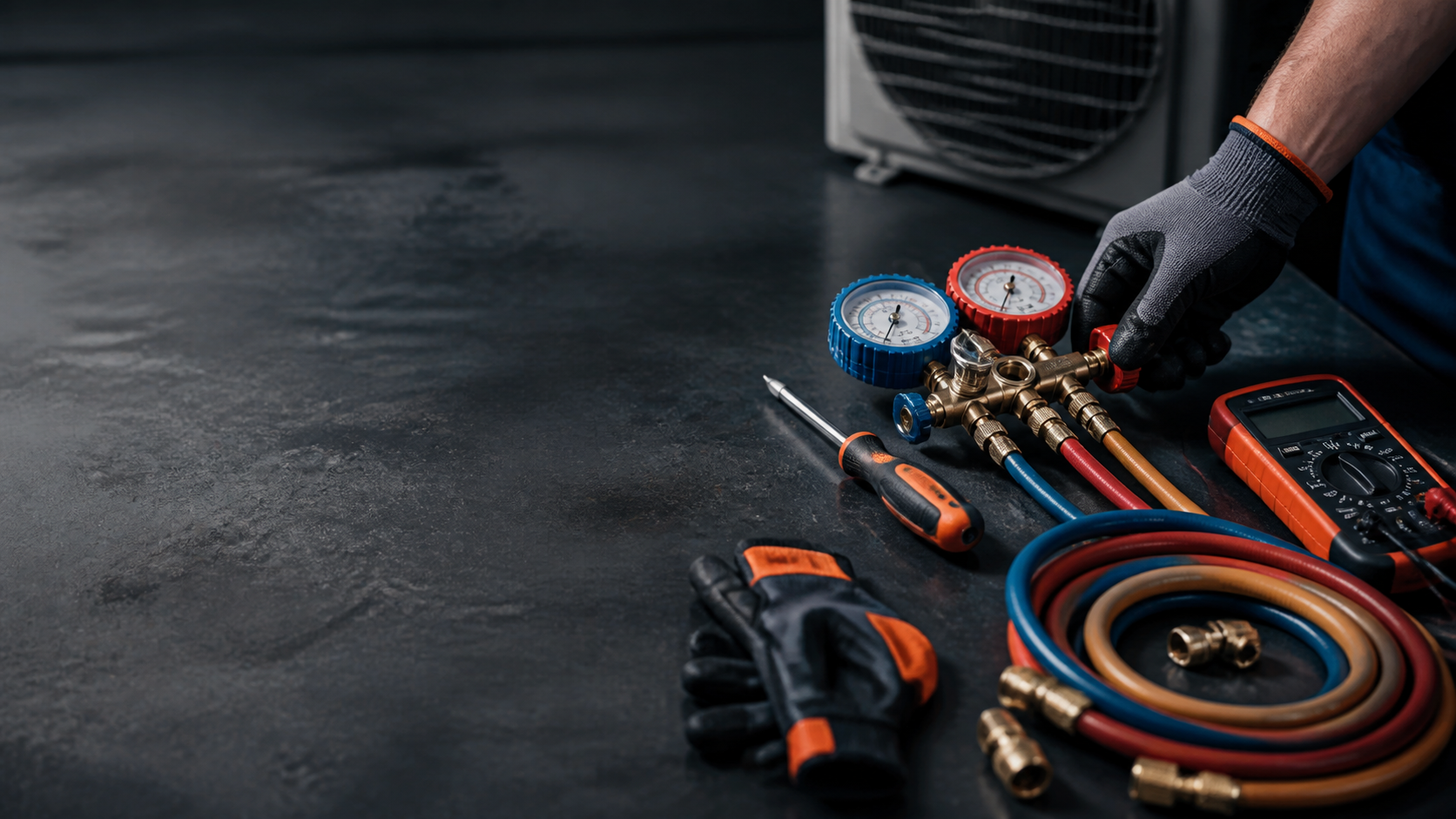
What the bill may include
A service or dispatch charge, diagnostic time, labor, parts, and an after-hours premium may arrive as separate lines or one bundled number. Ask what the figure covers before you nod.
People before price
A carbon monoxide alarm, gas danger, smoke, or a medical emergency comes before any cost question. Leave the house and call 911 from outside.
Compare scope, not just price
A smaller number that leaves out testing, a required part, refrigerant work, or a return trip is not the same job. Compare descriptions of the work, then compare prices.
What is inside an emergency HVAC bill?
An emergency invoice can arrive as one number or as several lines. Some companies bundle; others itemize.
The usual pieces are a service or trip fee, diagnostic time, labor, parts, and an after-hours premium.
The dispatch charge puts a technician in your driveway. The diagnostic portion pays for the time and tools it takes to find the failure.
Labor covers the repair itself. Parts might be a control board, a motor, a sensor, a thermostat, a drain component, or something bigger, and the part depends on what actually failed, not on the symptom you noticed.
Some repairs finish on the first visit. Others need a part ordered, a second trip, more testing, or a temporary step that restores partial operation.
If the quote is flat, ask what it includes. If it is itemized, ask which line is diagnosis, which is labor, and which is materials.
- Ask whether the number covers the visit, the repair, or both.
- Sort diagnosis, labor, parts, testing, and after-hours charges apart.
- Ask whether the work is complete, temporary, or spread over a return visit.
- A national range from the internet is not a Frederick price.
Why after-hours work costs more
Evening, overnight, weekend, and holiday calls often price differently from a Tuesday-morning appointment. The difference may show up as a dispatch premium, a different labor rate, or one bundled emergency charge.
Ask which one applies before you approve the visit.
The problem itself moves the number too. A thermostat set wrong costs one thing to fix.
A clogged filter restricting airflow is another. A blocked condensate drain, the line that carries water away from the coil, causing water damage is a third.
A refrigerant leak, an electrical fault, a blower problem, or a failed compressor each take different testing and different time. Not cooling names a symptom, not a part or a price.
Equipment details matter as well. A furnace, a central air conditioner, a heat pump, and a dual-fuel system do not share controls or components.
Tight access, an attic or crawlspace location, and parts availability all decide whether the repair finishes that night.
- Ask whether the premium is a dispatch fee, a rate change, or a bundle.
- The same symptom can come from parts at very different prices.
- System type, access, and parts availability change the work time.
- Price the urgency separately from the repair.
Is the problem actually an emergency?
Some failures are urgent because people or the house are at risk. If a carbon monoxide alarm sounds or you suspect a gas danger, leave and call 911 from outside.
Do not stay indoors troubleshooting a furnace, and never heat the house with a gas oven or range.
Weather can change the answer too. Older adults, children, and people with certain health conditions are more exposed in extreme heat.
If the AC is down in a heat wave, find a safe cool place first and watch for heat illness; a fan is not a cooling plan.
A comfort problem without a safety signal may have more scheduling room than you think. No heat in freezing weather, spreading water, smoke, a burning odor, exposed wiring, or something getting worse fast still needs quick attention.
When you call, describe the symptom and the conditions so the urgency gets read correctly.
- CO alarm or suspected gas danger: leave first, call 911 from outside.
- Protect vulnerable people in extreme heat and in hard freezes.
- Water, smoke, burning odors, exposed wiring, and decline are urgent clues.
- A stable comfort problem may schedule in normal hours.
What you can safely check first
Keep it observational. Confirm the thermostat is on the intended mode and temperature, and if it takes batteries, whether the display is alive.
Look at the filter without removing panels or reaching into the equipment. See whether furniture is blocking supply registers.
Look for visible water around the indoor unit and check whether leaves or debris are burying the outdoor unit. Write down when the problem started, what the system sounded like, whether the fan runs, and whether the whole house is affected or just one room.
Stop at observing. Electrical compartments, safety controls, gas connections, refrigerant lines, and adding refrigerant are diagnosis-and-quote territory, not homeowner territory.
- Confirm the thermostat mode, temperature, and display.
- Look at the filter, registers, visible water, and outdoor debris; open nothing.
- Write down start time, sounds, fan behavior, and affected rooms.
- Panels, controls, gas, and refrigerant are not do-it-yourself work.
Repair or replace after an emergency failure?
An emergency does not automatically mean replacement. First ask what failed and whether the system can be returned to safe operation.
Then ask why it failed, whether this failure has happened before, how the repair sits with the rest of the equipment, and what the technician observed about overall condition.
Replacement becomes a real option when the repair is extensive, when failures keep recycling, when the equipment has broader problems, or when the system no longer fits the house. That is a decision point, not a conclusion to jump to off one symptom.
If safety allows, set the repair scope beside a separate replacement estimate.
If refrigerant enters the conversation, ask which one it is: a leak, a charge issue, or a different component failure. Handling refrigerant belongs inside a professional scope, not in a homeowner's hands.
- Ask what failed and whether safe operation can be restored.
- Weigh repeat failures, overall condition, fit, and repair scope first.
- Set a repair estimate beside a separate replacement estimate when safe.
- Ask what testing supports any refrigerant recommendation.
How to compare an emergency quote in Frederick
Before approving anything non-safety-related, get the scope in writing and in plain English. You should know what failed, what evidence supports that finding, and whether the number covers the visit, the repair, or both.
Ask whether the work is complete, temporary, or a return-visit plan. If replacement is on the table, ask what condition or repair history pushed the recommendation.
Ask what happens if you decline the repair after paying for diagnosis.
Do not pick a number without reading the job. A lower quote that skips testing, a required part, or a return visit is not the same work as a quote that includes them.
Two clear descriptions make a fair comparison; two prices alone do not.
- What failed, and what evidence backs the diagnosis?
- Which lines cover the visit, diagnosis, labor, parts, testing, and refrigerant?
- Is the work complete, temporary, or split across visits?
- What happens if you decline the repair after diagnosis?
- If replacement is recommended, what history led there?
The number you can defend
The right emergency HVAC repair cost in Frederick is the one attached to a real diagnosis and a scope you can read. A safety danger means protect people first and price nothing.
Discomfort that is stable means document the symptoms, ask what the visit includes, and weigh repair against replacement once the equipment has been examined.
One habit keeps the bill honest: ask questions before approving, not after. What failed, what is included, what can wait.
A company that answers those plainly is giving you the comparison that matters.
- Is emergency AC repair always pricier? Not every problem needs the after-hours rate. Timing can change the charge, but the diagnosis, the part, and the work time set most of the total.
- What does 24 hour HVAC cost mean? Usually a request outside normal schedule hours. Ask for the timing charge and the repair scope as separate items.
- Can a new filter fix an emergency? It can clear a restriction, but it will not fix every no-heat or no-cooling failure. If the system stays down or unsafe, get it diagnosed.
- Does adding refrigerant fix a leak? Not by itself. Ask where the leak is suspected, what testing found it, and what repair is proposed.
- What should I have ready? System type, thermostat display, the symptom, start time, sounds or smells, recent repairs, and any water or ice.
Keep the bill's anatomy in mind
When the quote arrives, take it apart: trip fee, diagnostic time, labor, parts, and any after-hours premium, whether they appear as lines or as one figure.
Keep the breakdown with your service history. The next decision, repair or replace, works better with numbers you actually understand.
- A quote you can itemize is a quote you can compare.
Answers to the usual follow-up questions
Is emergency AC repair always more expensive?
Not every problem needs the after-hours rate. Timing may add a charge or change the labor rate, but the diagnosis, the part, the system, and the hours required still drive the total. Ask what premium applies and whether the repair itself is included.
What does 24 hour HVAC cost mean?
It usually describes a service request outside a standard schedule. The phrase alone does not tell you the dispatch fee, who is available, or whether the repair can finish that night. Ask for the timing charge and the repair scope separately.
Can a new filter solve an emergency HVAC problem?
A dirty filter can restrict airflow and stress equipment, so checking it is worthwhile, but it will not fix every no-heat or no-cooling failure. If the system stays unsafe, keeps shutting down, leaks water, or will not run after a basic check, get a diagnosis.
Does adding refrigerant fix an air conditioner leak?
Adding refrigerant does not fix the leak it came out of. Ask where the leak is suspected, what testing was run, and what repair is proposed. Handling refrigerant belongs in a professional scope.
What should I have ready when I request service?
The system type if you know it, the thermostat display, the symptom, when it began, any sounds or smells, recent repairs, and any water or ice. A photo of the equipment label helps, but do not remove panels to get one.