How Much Does Furnace Repair Cost in Frederick?
A furnace quits, and the first question is blunt: what will this cost? In Frederick County there is no honest flat answer before anyone knows the furnace type, the failed part, how reachable the equipment is, and what the safe repair involves. A national 2026 cost guide puts furnace repair between $64 and $1,475, averaging around $318. Treat that as a planning benchmark, not a local quote.
What helps is understanding why the range is that wide. A filter or ignitor problem is a small job; a blower motor, gas valve, heat exchanger, or venting problem is a different day of work. Labor, access, parts, timing, and whether diagnosis has to come first all move the total.
Here is how to think about furnace repair cost in Frederick without approving anything on the strength of an online number.
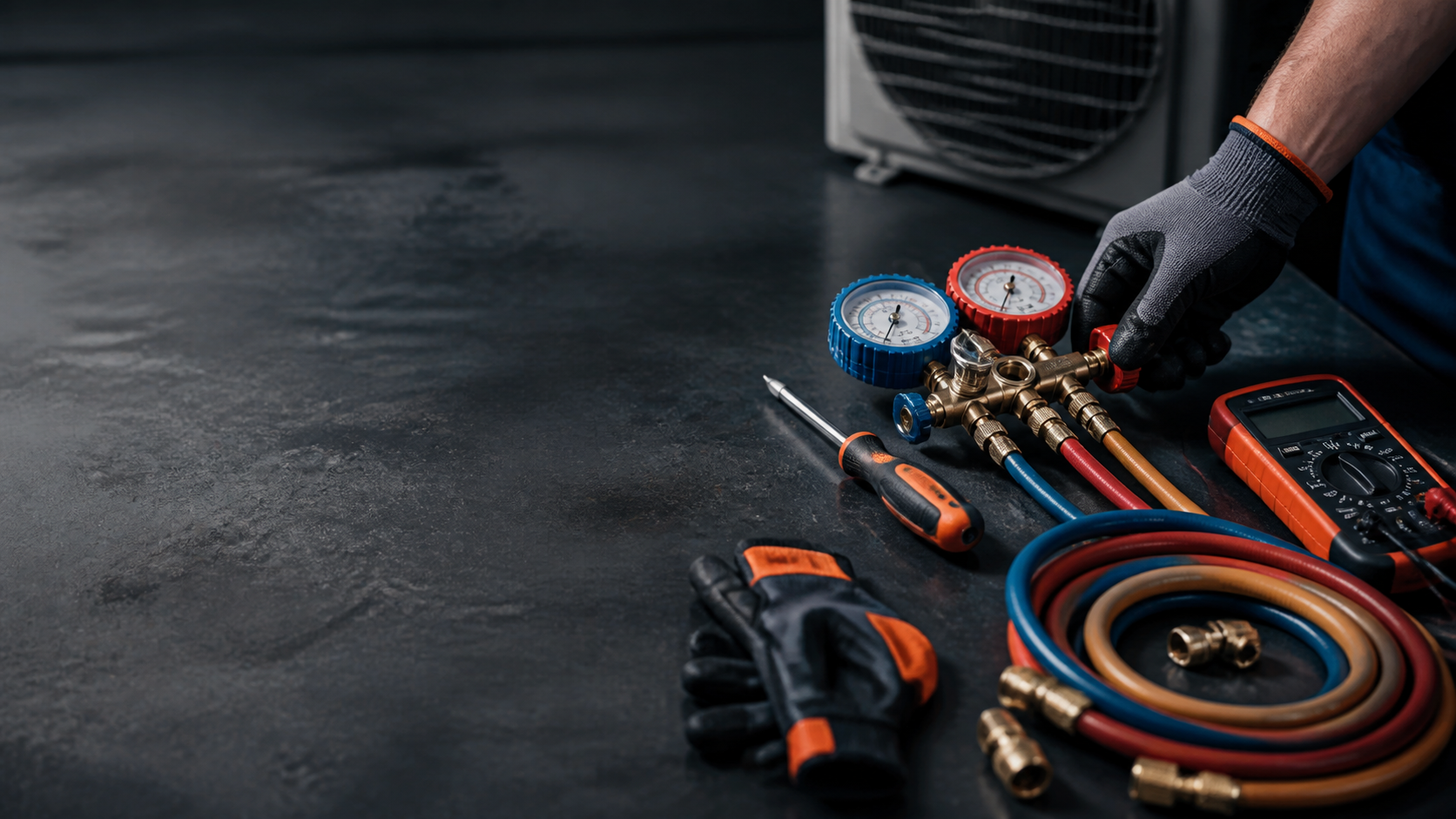
Small job or big job
A filter or ignitor problem and a blower motor, gas valve, heat exchanger, or venting problem are different jobs with different prices. The symptom alone does not name the repair.
What moves the total
Furnace type, the failed component, labor and access, after-hours timing, and the scope of the work all shape the final estimate.
Safety before price
Gas odor, a CO alarm, smoke, or a worsening electrical smell is not a price-comparison situation. Leave the home and call 911 or the gas utility from a safe location.
What does furnace repair cost in Frederick?
For budgeting, start with the national benchmark and expect the local number to come from your equipment and your symptom. Angi reports a 2026 national range of $64 to $1,475 with an average near $318.
The spread is the distance between a small service problem and a repair involving a major component, difficult access, combustion, or venting.
That range says nothing about your furnace in Frederick, Urbana, Walkersville, Middletown, or anywhere else in the county, and it says nothing about whether repair is even the right call. A good estimate starts with what the system is doing, names the failed condition, and shows the work and parts inside the number.
The practical homework is safe to gather: gas, propane, oil, or electric; approximate age; the model number if it is easy to read; when the symptom began; which rooms; recent repairs; any error code. A short video of an odd sound helps too.
Keep the panels on and away from the wiring, gas controls, burners, and heat exchanger.
- National tables are planning benchmarks, never local quotes.
- The estimate should reflect the equipment, symptom, access, and work.
- Ask what was tested and what alternatives were considered.
- Gather observations without opening the furnace.
What changes a furnace repair price?
Furnace type comes first, because gas, propane, oil, and electric systems do not share controls, safety devices, or heat-producing parts. The fuel decides what the technician inspects and which parts might be involved.
The failed component does the rest of the shaping. A thermostat or an ignitor is a different job from a blower motor, gas valve, control board, heat exchanger, or flue.
From the hallway the symptoms can sound identical even when the repair paths are not.
Labor, access, and timing move the total as well. A furnace in an open utility room is an easier visit than equipment wedged into a tight attic, crawlspace, or finished space.
A scheduled appointment and a midnight call carry different labor conditions. Ask whether the estimate includes the diagnosis, the labor, the part, disposal, and a test of the system afterward.
- Furnace type changes the controls, safety devices, and parts.
- The failed component sets most of the repair path.
- Tight access adds labor time.
- After-hours timing and the scope of work move the total.
Which furnace problems change the bill?
Online tables show the shape of a bill, not a menu of DIY jobs. Angi lists national examples around $100 to $300 for thermostat repair, $150 to $450 for blower motor repair, $150 to $250 for an ignitor replacement in ordinary circumstances, $200 to $600 for a gas valve, $100 to $200 for heat exchanger repairs, and $400 to $800 for flue pipe replacement.
Those figures are not calibrated to Frederick County homes, and a part price is not a finished repair price.
Ignitor and thermostat problems tend to be the smaller repairs. Blower motors, gas valves, control boards, heat exchangers, and flues bring bigger components and more labor.
A heat exchanger or flue also raises a safety question along with the cost question.
Do not open the combustion compartment, alter gas pressure, bypass a safety control, or attempt vent work because a table made a part sound familiar. The diagnosis is what ties your symptom to the work being sold.
- Thermostat and ignitor examples generally sit below major component work.
- Blower motors, gas valves, control boards, heat exchangers, and flues cost more in parts and labor.
- A part price is not the finished repair price.
- Combustion, gas, and venting work need professional handling and verification.
When should I stop troubleshooting?
Leave the house and get help if you smell gas, a carbon monoxide alarm sounds, smoke is present, or a burning electrical smell is getting worse. Do not restart the furnace, keep resetting a breaker, or continue testing equipment that may be unsafe.
Move people and pets outside first, then call 911 or the gas utility from a safe location when gas or carbon monoxide is involved. HVAC diagnosis waits until emergency responders or the utility says the house is safe to reenter.
Keep CO alarms on every level and outside each sleeping area, and follow the alarm manufacturer's instructions. If one sounds, get outside immediately and call 911.
That is a boundary, not an optional step in a price comparison.
- Gas odor, CO, smoke, or a worsening electrical smell: leave first.
- Do not restart unsafe equipment or repeatedly reset a breaker.
- Call 911 or the gas utility from a safe location when appropriate.
- Wait for the all-clear before arranging diagnosis.
Can maintenance reduce the chance of an expensive repair?
Maintenance cannot promise a furnace will never fail, but it can catch operating and safety problems before a peak-weather breakdown. Annual pre-season checkups cover controls, the start-and-stop behavior, electrical connections, gas or oil connections, burner combustion, and the heat exchanger.
Some of the work is yours. Look at the filter monthly and clean or replace it per the equipment instructions.
Keep supply and return grilles open, and pay attention to anything new in airflow, noise, cycling, or temperature. A filter that loads up unusually fast is worth a conversation about size, system airflow, ductwork, or indoor conditions.
If the system includes cooling, a plugged condensate drain, the line that carries water off the indoor coil, can cause water damage and humidity trouble. Water near the furnace or coil deserves attention before it reaches drywall, flooring, or stored things.
- Schedule heating maintenance before the long winter run.
- Check the filter monthly and follow the instructions.
- Keep supply and return grilles open.
- Treat new airflow, noise, cycling, temperature, or water changes as early warnings.
Should I repair or replace my furnace?
Age matters, but it is one voice in the room. A furnace past 15 years is a reason to weigh replacement, and frequent repairs or climbing energy bills add weight.
Those are signals, not an instruction to replace anything today.
Look at the equipment's condition, the repair history, the safety of the proposed work, and how well the system actually serves the house. A room that is always too hot or too cold may be a ductwork, insulation, or sizing story rather than a furnace story.
When a repair quote runs high, ask for two clear comparisons: what restoring safe operation costs now, and what a properly scoped replacement would change. The comparison should identify the failed component, the expected service ahead, the comfort effect, and any ductwork or venting work attached to the recommendation.
- Weigh age, repair history, condition, and safety together.
- An older furnace plus a major repair may favor replacement.
- A comfort problem may live in ducts, insulation, or sizing.
- Set a safe repair option beside a properly scoped replacement option.
What should I ask for in a Frederick furnace estimate?
Ask for the failure and the work in plain language. The estimate should tie the symptom to what was tested, then show which parts, labor, and other work sit inside the number.
For a normal comfort problem, describe exactly what the furnace is doing and ask for the diagnosis first. Anyone handing you a replacement recommendation before explaining the failure should be asked what was tested and what repair alternatives existed.
What you want is a price attached to a real diagnosis rather than copied from a national table. Once the failure and the scope are clear, choosing between the repair, maintenance, and a replacement comparison gets a lot calmer.
- What failed, and how was it tested?
- Which parts, labor, and other work are inside the estimate?
- Is the repair safe, and are there combustion or venting concerns?
- What can wait, and what should happen now?
- Given age and repair history, does repair still make sense?
- If replacement is recommended, what condition makes it the better call?
Price the problem before the price
Before any number makes sense, the failure has to. A thermostat repair and a heat exchanger decision are different conversations, and the symptom cannot tell you which one you are in.
Keep the eventual diagnosis with your service history. The next time the furnace acts up, the price conversation starts from what actually failed last time, not from scratch.
- Diagnosis first, number second.
Answers to the usual follow-up questions
What is the national benchmark for furnace repair cost?
Angi reports a 2026 national range of $64 to $1,475 with an average of about $318. That is a planning benchmark, not a Frederick quote. The local estimate depends on your furnace, the failed condition, access, timing, and the work required.
What changes furnace repair cost the most?
Furnace type, the failed component, labor and access, after-hours timing, and the scope of the work. A thermostat or ignitor problem is a different job from a blower motor, gas valve, heat exchanger, or venting repair.
When is a furnace repair a safety issue?
Gas odor, a CO alarm, smoke, or a worsening burning electrical smell is a safety issue. Leave the home, get people and pets outside, and call 911 or the gas utility from a safe location. Stop testing the furnace.
Is it cheaper to repair or replace my furnace?
It depends on age and condition, repair history, the failed part, the safety of the work, and how well the system serves the house. Ask for a written repair comparison and a properly scoped replacement comparison before deciding.
Can maintenance lower my furnace repair cost?
Maintenance cannot prevent every failure, but annual pre-season checks and safe filter care catch operating and safety problems before a peak-weather breakdown. Keep grilles open and mention unusual airflow, noise, cycling, temperature changes, or water.
What should a furnace estimate include?
A clear estimate names what failed and how it was tested, then lists the parts, labor, diagnosis, and other work included. It should also cover safety or venting concerns, what can wait, and the reasoning if replacement is being recommended.