Daikin Mini Split Error Codes
Seeing a Daikin mini split error code can make a simple comfort problem feel like a parts diagnosis. The code is useful, but it is not a universal answer. Daikin code tables differ by product family, and the same display area may be interpreted differently on another indoor or outdoor unit.
For a homeowner in Frederick County, the useful goal is not to guess which part to buy. Capture the exact code, notice what the system is doing, complete only safe checks, and know when a recurring code needs diagnosis.
Use the model number and the manual for that exact system before treating a code as a confirmed failure.
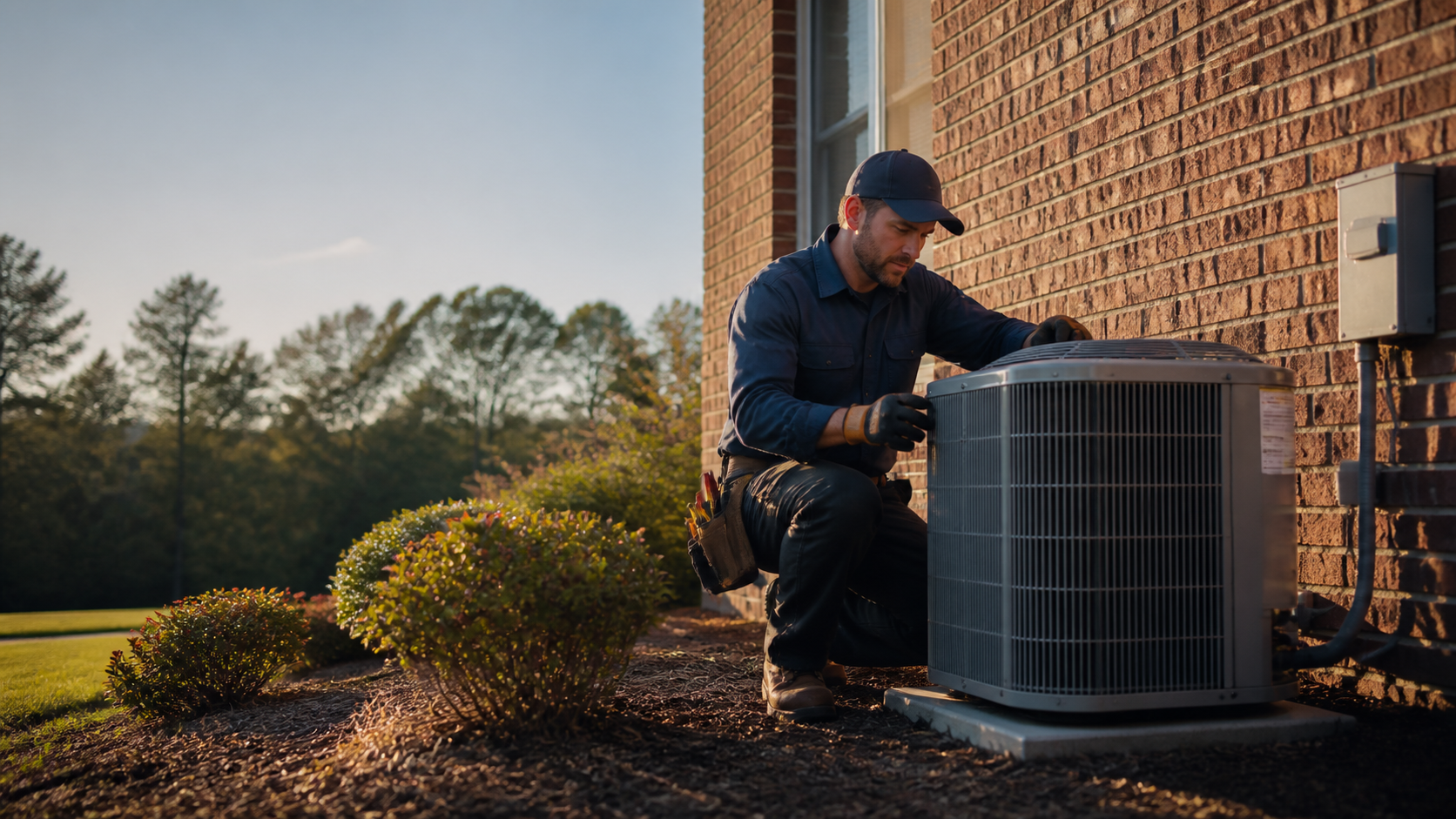
Capture the exact code
Write down every letter and number, such as U4, U0, or C4, and note which zone is affected. A photo of the display plus the indoor and outdoor model numbers is more useful than a guessed part name.
Check only what is safe
Confirm the remote batteries, mode, setpoint, and visible filter condition. Look at the outdoor unit from a safe distance for obvious obstruction. Do not remove covers, connect gauges, or touch wiring.
A recurring code needs diagnosis
A reset can show that a code was temporary, but it does not prove the issue is fixed. If the code returns, comfort drops, water or ice appears, or a safety warning is present, stop resetting and request service.
What to know before using a Daikin error-code chart
Daikin mini splits use diagnostic displays to point toward a system area. Depending on the model, the display may be on a wireless remote, a wired controller, the indoor unit, or an outdoor-unit indicator.
A code can identify a communication problem, a pressure protection event, a sensor circuit, or an operating condition without proving which component failed. Daikin documentation is organized by product family with separate installation, operation, and service manuals, so an exact model search is more reliable than a generic Daikin AC error code chart.
Before looking up the code, find the model number from the indoor unit label, outdoor unit label, installation paperwork, or owner documentation. Record the exact code, affected zone, operating mode, symptoms, recent power interruptions, and whether the code clears and returns.
- An A1 is not the same code as a U1, and a C4 is not a G4.
- Note whether the system is cooling, heating, running the fan, stopping, or not starting.
- Record any ice, water, unusual noise, weak airflow, or recent power interruption.
- Use the manual for the exact indoor and outdoor system before treating a code as a confirmed failure.
How to retrieve the exact code from a Daikin remote
The retrieval sequence depends on the remote-controller model. In one Daikin 17 Series procedure, the user holds an ON TIMER CANCEL or OFF TIMER CANCEL button for five seconds, then presses the same button repeatedly.
A long beep identifies the matching unit code.
Daikin multi-zone documentation uses a similar Timer Cancel process: holding the button for five seconds displays 00, then repeated presses move through codes until a long beep sounds. Not all codes appear in that sequence, so a second method or the correct service manual may be necessary.
Use the procedure only if it matches your remote and manual. Do not guess at a different controller sequence.
Take a photo of the display and record the code. If the remote does not show a code, the outdoor unit may have an LED indication explained in the model manual.
- Check the remote or wired-controller model before starting a retrieval sequence.
- Hold the documented Timer Cancel button only when the exact manual calls for it.
- Record the long-beep code, the display location, and the affected indoor head.
- If the sequence does not match your controller, stop and use the model manual instead.
Common Daikin mini split error codes and their meanings
The chart below summarizes code areas found in official Daikin residential manuals. It is a starting point for conversation with a service professional, not a promise that every Daikin mini split uses every code in the same way.
The same letter and number can have different meanings across product families. A code identifies a system area or operating condition; it does not automatically identify the failed part.
- A1: indoor printed circuit board error or failure.
- A3: drain pump or drain-level abnormality.
- A5: antifreeze, anti-icing, or freeze-up protection.
- A6: indoor fan motor abnormality, overload, overcurrent, or lock.
- E1: outdoor PCB abnormality.
- E3, F6: high-pressure protection or high-pressure control in cooling. E5, E6: compressor overload or compressor lock/start-up problem. E7: outdoor DC fan lock. F3: discharge-pipe temperature control or overheat area. U0: refrigerant shortage or abnormal suction-piping temperature. U2: low or high voltage detection, or a power-voltage malfunction. U4: transmission or communication error, often between indoor and outdoor units. U5: transmission error between the indoor unit and remote controller. U7, UA, UF: inverter transmission, field-setting, piping or wiring mismatch, or related installation code areas.
What you can safely check before Daikin mini split troubleshooting
Start with observations and controls, not disassembly. Confirm that the remote has working batteries, the mode and temperature are set as intended, and the indoor filter is not visibly loaded with dust.
Check whether air is moving from the indoor head.
Look at the outdoor unit from a safe distance for obvious obstruction, and note whether the outdoor fan starts when the system calls for operation. If the system stopped after a power event, follow the reset instruction in the owner manual for that model.
A reset can tell you whether the code was temporary, but it does not prove that the underlying issue is fixed. If the same code returns, record how long the system ran and what changed before it stopped.
- Check remote batteries, operating mode, and temperature setting.
- Look at the filter without opening the equipment beyond the normal user-accessible filter procedure.
- Observe airflow and inspect the outdoor unit from a safe distance for obvious obstruction.
- Follow the exact owner-manual reset instruction once after a power event, then record whether the code returns.
- Do not remove electrical covers, bridge terminals, reconnect communication wiring, add refrigerant, or attach gauges.
When a Daikin error code is urgent
Turn the system off and stop troubleshooting if you see smoke, sparks, a strong burning electrical smell, or signs of an electrical fault. If there is an immediate fire or life-safety concern, leave the area and contact emergency services.
Water around the indoor unit, heavy ice, no cooling during dangerous heat, or no heat during freezing conditions also changes the decision. Do not keep resetting a unit that repeatedly shuts down.
A recurring A, E, F, or U code, a code paired with weak airflow, or a system that will not maintain comfort calls for diagnosis. Refrigerant and pressure-related codes are not a reason to buy a canister or open the line set.
- Leave the area and call emergency services for smoke, fire, sparks, or an immediate life-safety concern.
- Stop troubleshooting for a strong burning electrical smell or visible electrical fault.
- Request diagnosis for a recurring code, repeated shutdown, heavy ice, water, or lost heating and cooling.
- Keep hands, tools, gauges, and refrigerant containers away from the equipment.
What to tell an HVAC technician in Frederick County
Give the indoor and outdoor model numbers if available, name the exact code and where it appeared, identify the affected room or zone, and describe the symptom in homeowner terms: no airflow, warm air, ice, water, noise, or no start.
Mention a recent outage, breaker event, cleaning, installation, or other change. Say whether the code cleared, returned, or changed after a documented reset.
That lets the visit begin with the actual problem instead of a parts guess.
If the system is still operating and the code appeared once, keep the model and code photo with your records and follow the manual's monitoring guidance. If the code returns, comfort drops, water or ice appears, or a safety warning is present, ask for a diagnosis and explain what you observed.
- Indoor and outdoor model numbers.
- Exact code, display location, and affected zone.
- Operating mode and symptoms, including airflow, water, ice, noise, or no start.
- Recent power events, cleaning, installation, or other changes.
- Whether a reset cleared the code, and whether it returned.
Photograph the code before it disappears
Every letter and digit — U4, U0, C4, whatever the display shows — plus which zone showed it and whether it was the wall head, the wired controller, or the outdoor indicator. Codes rotate and vanish; a phone photo doesn't.
Pair it with the model numbers from the indoor head and outdoor unit. Those two pictures are the whole handoff.
- Code photo plus model-plate photo — two pictures, done.
The mini-split homeowner line
Remote batteries, mode, setpoint, filter, a look at the outdoor unit from the path — that's the entire safe checklist on a ductless system. The louver covers, electrical compartments, and refrigerant flare nuts stay untouched.
Mini-splits pack a lot of voltage and refrigerant into a small chassis. The reward for staying on your side of the line is keeping all ten fingers and a warranty.
- Settings and sight only — no covers, no gauges, no wiring.
Answers to the usual follow-up questions
Are Daikin mini split error codes universal across every model?
No. Daikin code tables differ by product family, and the same display area may be interpreted differently on another indoor or outdoor unit. Confirm the model number and use the manual for that exact system before treating a code as a confirmed failure.
How do I retrieve a Daikin mini split error code?
The sequence depends on the remote-controller model. Some Daikin procedures use a Timer Cancel button held for about five seconds, followed by repeated presses until a long beep identifies the code. Use that sequence only when it matches your remote and model manual. A wired controller or outdoor unit may show the fault differently.
Can I reset a Daikin mini split error code myself?
If the system stopped after a power event, follow the reset instruction in the owner manual for that model. A reset can show that the code was temporary, but it does not prove the underlying issue is fixed. If the code returns or the system repeatedly shuts down, stop resetting and arrange diagnosis.
Is a Daikin refrigerant error code a DIY repair?
No. Refrigerant and pressure-related codes are not a reason to open the line set, attach gauges, or add refrigerant. EPA identifies refrigerant handling and gauge work as technician activities covered by certification requirements, and a shortage code needs the cause diagnosed rather than a blind top-off.
What information should I give a Frederick HVAC technician?
Provide the indoor and outdoor model numbers, exact code, display location, affected zone, operating mode, symptoms, recent power events or service, and whether the code cleared or returned after a documented reset. Those details are more useful than guessing which part failed.
When should I stop troubleshooting a Daikin mini split?
Stop for smoke, sparks, a strong burning electrical smell, visible electrical fault, water around the indoor unit, heavy ice, repeated shutdowns, or a recurring code. Leave the area and contact emergency services for an immediate fire or life-safety concern.