Mini split outdoor unit iced over? What to check and when to call for repair
An iced-over outdoor unit comes in two very different flavors. One is a light coat of frost while the system heats — normal in cold, damp Frederick weather, and the system melts it off itself during defrost. The other is hard ice that holds its ground, keeps thickening, and slowly steals the system's ability to heat or cool. The second kind needs a proper diagnosis.
If it's safe to do so, glance at the operating mode, the filter, the airflow, and whatever is piled around the outdoor unit. What you shouldn't do: chip ice off the coil, open anything on the refrigerant lines and coil, or go into the electrical compartment. Ice is a clue, not a verdict.
The question that sorts the cases is simple — what happens after the system gets a chance to defrost? Frost that clears and stays gone is one story. Ice that smothers the coil, reaches the fan, comes right back, or lingers while the house gets uncomfortable is another.
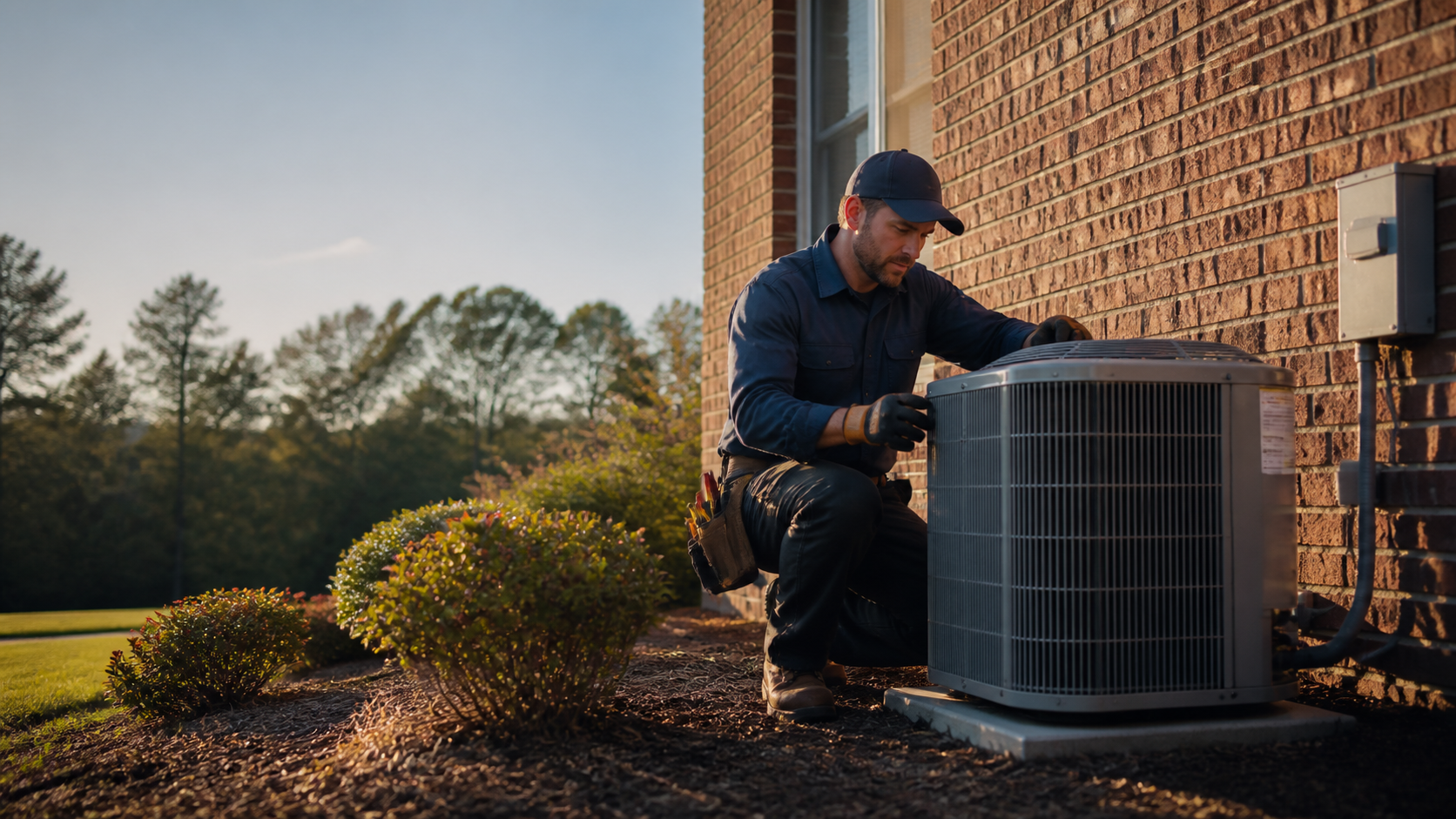
Check first
Figure out whether the system is heating or cooling. Look at the indoor filter, and from a safe distance scan for leaves, snow, tall weeds, stored items, or water dripping down onto the outdoor unit.
Stop here
No chipping, scraping, or prying ice off the coil. No hot water over the unit, no panels off, no hands near the fan. Shut the system down if thick ice is blocking the fan or the unit sounds wrong.
What to tell us
The mode, the outdoor temperature, how much of the unit is iced, whether defrost cleared any of it, how the airflow felt indoors, and how fast the ice came back.
Is a little frost on a mini split outdoor unit normal?
Often, yes — when a ductless heat pump is heating in cold weather. The outdoor coil absorbs heat from the outside air, which leaves the coil colder than the air around it, and moisture freezes onto it as frost.
The system is built to handle this: it runs a defrost cycle that warms the outdoor coil and melts the buildup. While that happens, you might feel briefly cooler air from the indoor head or spot water and a puff of steam outside.
In cold, humid weather, none of it means trouble.
What matters is the after picture. Frost that melts away and stays away is normal operation.
Hard ice that blankets the coil, climbs to the fan, or re-forms hours after a defrost is a different situation.
- Thin frost during heating is usually normal.
- A defrost cycle should clear the temporary buildup.
- Water or brief steam appears as the frost melts off.
- Ice that stays or grows is the kind that needs looking into.
Why does a mini split outdoor unit stay iced over?
Several conditions produce the same white picture, so the ice alone doesn't finger one failed part. Airflow starved by leaves, dirt, snow, tall grass, or something parked too close interferes with heat exchange.
A dirty indoor filter chokes airflow from the other end.
Low refrigerant or a leak is another candidate, especially if the system has also been struggling to heat or cool. And if a leak is the real issue, the fix worth paying for is finding and sealing it — not a refill that leaks back out.
The system also leans on controls and sensors to decide when defrost starts and when it's finished. A faulty defrost control or sensor lets ice keep accumulating.
So does meltwater or roof-edge runoff dripping onto the coil and refreezing overnight.
- Check airflow around the outdoor unit and at the indoor filter first.
- Low refrigerant can be involved, but ice alone can't prove it.
- Defrost controls and sensors can fail to stay ahead of the buildup.
- Water dripping onto the coil can refreeze right back onto it.
What can I safely check before calling for service?
Keep it visual, and stop if thick ice is jamming the fan or the unit is making sounds it shouldn't. Confirm the mode and setpoint on the remote or controller — frost in heating mode and ice in cooling mode lead to different questions.
If the indoor filter looks dirty, clean or replace it exactly the way the manual describes. From a distance, look for leaves, snow banks, tall vegetation, stored items, or a steady drip landing on the outdoor unit.
Clear the loose stuff you can reach without scraping the coil or tugging at the ice.
Light ice with the system apparently mid-defrost? Give it time to finish.
Weather, humidity, and ice load all vary, so there's no fixed thaw clock. The hard lines: never chip ice off the coil, never pour hot water over the unit, and never touch refrigerant, wiring, the fan motor, sensors, or the control board.
- Confirm the operating mode and setpoint.
- Inspect the filter; clean or swap it per the manual.
- Look for obstructions, snow, and water dripping onto the unit.
- Keep hands, tools, and panels away from the iced equipment.
Does icing mean something different in heating and cooling mode?
Mode matters because the two coils swap jobs when the system reverses. In heating, the outdoor coil is the cold one gathering heat from the air — frost in cold, humid conditions is expected, and defrost should clear it.
In cooling mode, ice on the outdoor unit isn't ordinary winter frost. Watch instead for weak airflow, warm air, marathon run times, or ice on the refrigerant lines.
Blocked airflow, a dirty outdoor coil, and refrigerant trouble are the usual suspects — but again, the ice doesn't name the culprit by itself.
When you call, mention the mode, the outdoor temperature, whether the ice ever cleared, the indoor temperature, and whether the problem came back. That short list gives the tech a running start.
- Heating-mode frost can be part of normal heat-pump operation.
- Cooling-mode outdoor icing points somewhere else entirely.
- Weak airflow, poor comfort, and repeat icing are the telling clues.
- Write down the mode and the timeline before the visit.
When should I call for ductless heat pump repair in Frederick?
Arrange a diagnosis in Frederick County once ice stays put, grows, blocks the fan, dents comfort, or returns after you've dealt with the filter and the visible airflow path. A freeze that stubborn usually involves refrigerant, airflow, the fan, a sensor, drainage, or the defrost controls — and an inspection beats a part guess every time.
Treat these as urgent: a burning smell, damaged or hot wiring, breakers that keep tripping, loud abnormal sounds, or water near anything electrical. Shut the system off if you can do it safely, and keep everyone back from the equipment.
For a routine call, hand over your observations plus the equipment model if you can read it without removing a panel. If refrigerant work might be involved, the person doing it needs the applicable certification — that's not optional.
- Call when ice persists, grows, blocks the fan, or returns quickly.
- Burning smells, hot or damaged wiring, repeat trips, or harsh new sounds: stop and get urgent help.
- No opening panels or guessing at refrigerant, electrical, or control repairs.
- The diagnosis should explain why the ice formed before anyone recommends parts.
What information helps the technician find the cause?
Tell us whether the system was heating or cooling when the ice appeared, whether defrost cleared it, how the indoor airflow felt, and whether water was dripping onto the unit from above. A photo taken from a safe distance shows how much of the coil is buried — no touching required.
With that, a technician can start separating the look-alikes from the yard: airflow restrictions, refrigerant problems, fan trouble, drainage, and defrost-control faults. The goal is a plain diagnosis and a repair recommendation that matches it.
We handle HVAC repair and diagnosis for Frederick County homeowners, and this one rewards the visit: once the ice explains itself, it's usually clear whether the answer is a repair, a cleaning, or a maintenance item.
- Heating or cooling mode, plus the outdoor temperature.
- How much ice formed and whether a defrost cycle cleared it.
- Indoor airflow, comfort changes, sounds, water, or error codes.
- How quickly the ice returned after melting.
Start with the mode and the surroundings
Two things you can settle from the doorway: is the system heating or cooling, and is anything crowding the outdoor unit — leaves, snow, tall growth, stored items, or runoff dripping onto it? Pair that with a look at the indoor filter and you've covered the checks that don't require a single tool.
Keep the answers with the rest of the system's history, so the eventual repair decision stands on what the equipment actually did.
- Mode, filter, clearance, and runoff — the four-minute once-over.
Hands off the ice itself
The ice stays where it is. Don't chip it, scrape it, or pry it off the coil, don't pour hot water over the unit, don't open panels, and stay clear of the fan.
If thick ice is blocking the fan or the unit is making abnormal sounds, turn the system off and leave the rest to whoever comes out.
Note what made you stop, right alongside the rest of your observations — the line where homeowner checks end is exactly where good notes begin.
- Ice, panels, fans, and refrigerant: technician territory, full stop.
Answers to the usual follow-up questions
Should I turn off a mini split outdoor unit that is iced over?
It depends on the ice. Thick, growing ice, a blocked fan, poor comfort, or abnormal sounds mean stop running it and arrange service. Light frost during heating, with the unit clearly cycling through defrost, is fine to watch — just don't interfere with it.
Can I remove the ice myself?
No. Chipping, scraping, or prying at the coil can wreck the fins and refrigerant tubing. Keep your checks to the filter, the controller settings, and the visible clearance around the unit. Refrigerant, electrical, fan, and control repairs all take a professional.
Can I remove the ice myself?Does ice prove that my mini split is low on refrigerant?
No. Low refrigerant is one possibility among several — airflow restrictions, debris, water refreezing, and defrost-control faults can all look similar. Ice calls for diagnosis, not an automatic charge of refrigerant.
Can a dirty filter cause the outdoor unit to freeze?
It can contribute — a clogged filter restricts airflow and drags down performance. Check it first, but a clean filter doesn't rule out refrigerant, fan, drainage, or defrost problems. If ice persists after the filter's addressed, call for service.
What is the most useful information to give the HVAC technician?
Whether the system was heating or cooling when the ice appeared, whether defrost cleared it, how the indoor airflow felt, whether anything was dripping onto the unit, and how quickly the ice returned after a thaw.