Condensate Drain Maintenance
A Homeowner's Guide to Preventing AC Water Leaks
Condensate drain maintenance — caring for the line that carries away the water your AC pulls from the air — is a small part of air conditioning care, but it can decide whether your system quietly removes moisture or leaves water around the indoor unit. In Frederick County, a clogged line may show up as a wet utility closet, a musty smell, higher indoor humidity, or an air conditioner that suddenly stops running.
The useful way to think about this task is simple: keep the drainage path open, notice changes early, and do not treat every water symptom as a quick do-it-yourself fix. A clear drain supports normal cooling. A recurring backup needs diagnosis, because the clog may be only one part of the problem.
This guide explains what the drain does, which checks are safe, what professional cleaning looks at, and when a water problem needs more than a quick flush.
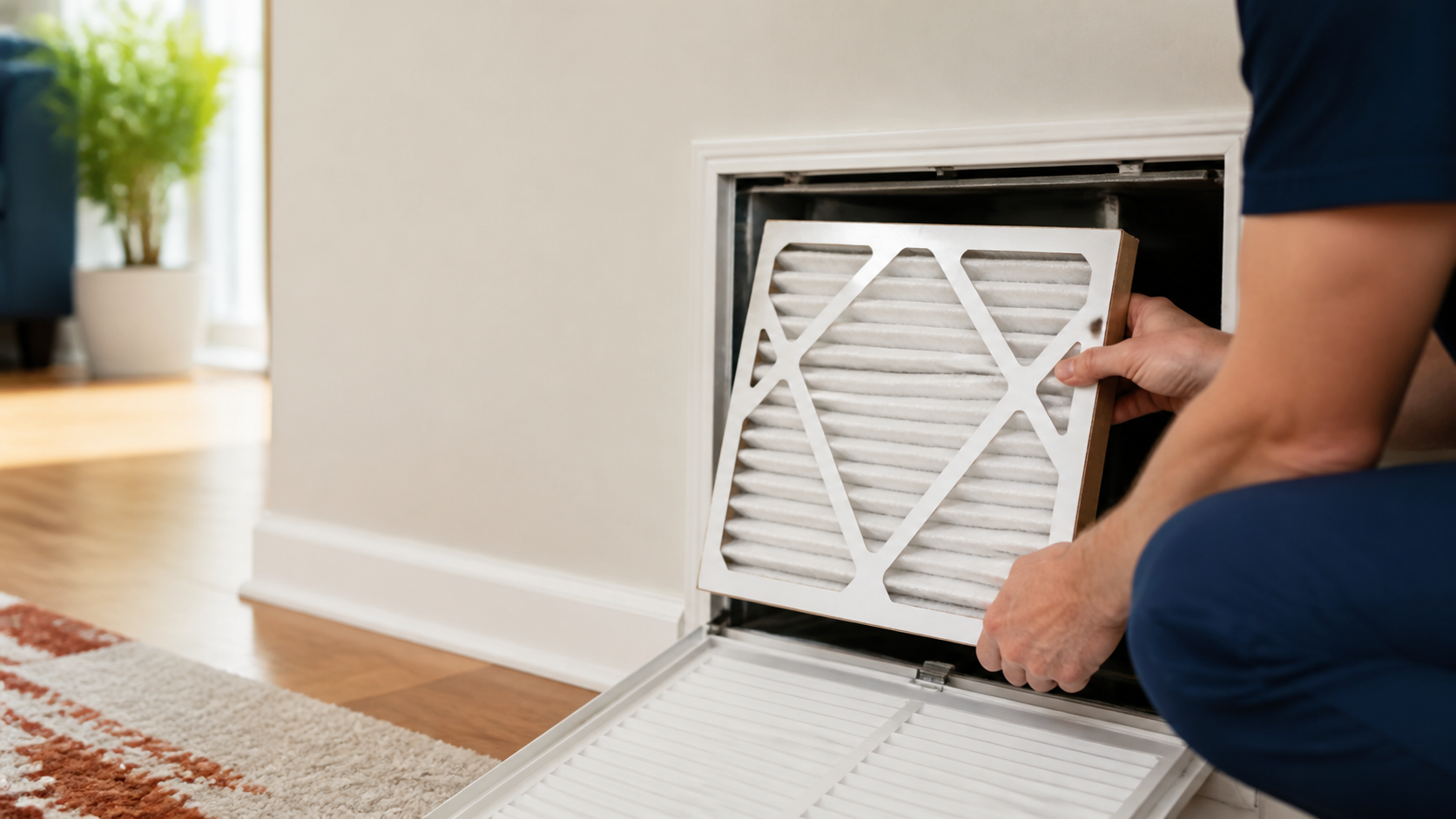
Look for the pattern
Check for water near the indoor air handler, furnace, attic platform, basement equipment, or utility closet. A musty odor, unusual humidity, or an AC that stops can also point to a backed-up drain.
Protect the area
Turn cooling off when water is present. Keep people away from wet electrical equipment, protect nearby belongings if you can do so safely, and do not open an energized cabinet or bypass a float switch.
Ask for the whole path
When you request help, describe the symptom and ask for the pan, line, trap, pump, float switch, termination, and water flow to be checked. A repeat clog needs a cause, not just another temporary opening.
Why does an AC system need a condensate drain?
When an air conditioner cools indoor air, its evaporator coil removes heat and moisture. That moisture becomes condensate, or water collected from the air.
The water falls into a drain pan and travels through a condensate drain line to a suitable drain or outdoor termination.
The drain line is usually a small PVC pipe, although some installations use copper. It connects to the indoor evaporator-coil area, not simply to the outdoor condenser cabinet.
The pan and line work as one path, so a dirty or cracked pan can create the same indoor-water concern as a blocked pipe.
Slope, support, traps, pumps, and the final termination all affect whether water can move away from the indoor unit. A line that sags, kinks, or has an installation problem may keep backing up after a simple flush.
- The evaporator coil removes moisture while the AC cools.
- The drain pan collects condensate before it enters the line.
- PVC or copper piping carries water to a drain or outdoor termination.
- Slope, traps, supports, and pumps can affect drainage.
What are the signs of an AC drain line clog?
The most obvious warning is water where it should not be: around the indoor air handler, furnace cabinet, attic platform, basement equipment, or utility closet. A clogged drain pan or line can let water back up indoors and contribute to water damage or system malfunction.
Other clues include a musty or moldy odor near the indoor unit or supply vents, standing water in or beneath the pan, indoor humidity that feels higher than usual, a cooling system that stops unexpectedly, or a visible drain outlet that no longer drips during a hot, humid cooling cycle.
Not every symptom points to the drain. Weak cooling can also involve airflow, a frozen coil, electrical controls, refrigerant, or a mechanical failure.
The pattern matters, especially when a clog clears briefly and then returns.
- Water, staining, or wet insulation near indoor equipment.
- A musty smell or higher indoor humidity.
- An AC that stops unexpectedly or shuts down in hot weather.
- No usual drip at the outdoor termination during humid cooling.
Why does an AC float switch shut the system off?
Many systems use an overflow control near the drain pan. If the water level rises to the switch's trip point, the control can shut down cooling so the system does not keep making condensate — that water pulled from your air — while the drain is backed up.
That shutdown can feel like an electrical or thermostat failure, especially when the thermostat display is still working. Look for water near the indoor unit before repeatedly resetting breakers or controls.
The safeguard is not proof that the drain is the only problem, and not every air handler has the same overflow switch. If the system stops and water is present, protect the area and arrange diagnosis rather than forcing it back on.
- A rising pan level can trip the overflow control.
- The switch may shut off cooling before water spreads farther.
- A working thermostat does not rule out a float-switch shutdown.
- Never lift, bypass, or defeat a safety switch to keep cooling on.
What can a homeowner check safely?
Start with the area around the indoor unit. Look for standing water, staining, wet insulation, a full pan, or a drain line that is visibly kinked or sagging.
If you can identify the outdoor termination without removing panels, check whether it is blocked by mud, grass, insects, or debris.
If water is present, turn the cooling system off before attempting any basic drain inspection. This is a safety boundary, not an invitation to open electrical compartments.
Do not reach into an energized cabinet, disconnect wiring, lift a float switch, or work around refrigerant lines.
For an accessible outdoor drain opening, a wet/dry vacuum may be appropriate for a minor clog when the equipment instructions and tool setup support it. Stop and request HVAC help if the line will not clear, water returns, the pan is cracked or overflowing, the drain has a pump, the equipment is in a difficult location, or you are unsure which disconnect controls the system.
Do not force a wire, coat hanger, pressure, or chemical cleaner into a line you cannot see. A short-term opening can hide a deeper clog or a slope, trap, pump, or termination issue.
- Look for water, staining, wet insulation, or a full pan.
- Check an accessible outdoor termination without opening equipment.
- Turn cooling off before any basic inspection when water is present.
- Stop when the path is unclear, the clog returns, or equipment is difficult to reach.
What happens during professional drain-line cleaning?
Professional drain-line cleaning should begin with a look at the whole drainage path, not just the visible end of the pipe. The technician may inspect the pan, access point, drain line, trap, pump if present, float switch, and termination.
The exact process depends on the equipment and the location of the blockage. It may include removing standing water, clearing the line with suction or another suitable method, cleaning accessible pan surfaces, and checking that water flows through the system afterward.
The flow check matters. A line can look open at the termination while remaining restricted farther upstream.
A professional can also notice whether the line lacks support, has a low spot, or is routed in a way that allows water to collect.
When requesting drain line cleaning in Frederick, describe the symptom clearly: indoor water, a float-switch shutdown, a musty odor, weak cooling, a missing outdoor drip, or a clog that keeps returning. That gives the technician a better starting point and makes it easier to discuss maintenance, drain repair, or broader AC diagnosis.
- Inspect the pan, line, trap, pump, float switch, and termination.
- Remove standing water and clear the restriction with a suitable method.
- Verify water flow through the path after clearing.
- Look for low spots, poor support, or another recurring cause.
How often should the drain be checked?
There is no single interval that fits every home. Equipment type, drain length, attic or basement location, humidity, dust, previous clogs, pan design, and whether the system uses a pump all matter.
Your equipment manual and installation details should control product-specific cleaning instructions.
A practical seasonal routine is to inspect the indoor equipment area before the cooling season, keep the outdoor termination visible, and pay attention to any change in drainage during humid weather. Annual HVAC maintenance can include checking the drain line along with the rest of the cooling system.
If the line has clogged before, ask for the cause to be checked rather than relying on repeated flushes. Prevention is most useful when it addresses the reason water is not leaving normally.
- Check the indoor equipment area before the cooling season.
- Keep the outdoor drain termination visible and clear.
- Watch for drainage changes during humid weather.
- Have recurring clogs investigated instead of repeatedly resetting them.
When should you request HVAC diagnosis?
Choose routine maintenance when the system is working normally and you want the drain, pan, and related components checked as part of seasonal care. Choose diagnosis when the system has stopped, water is present, the thermostat or float switch has shut cooling down, the line clogs repeatedly, or cleaning does not restore normal drainage.
Treat active indoor water as time-sensitive. Turn off cooling, keep people away from wet electrical equipment, protect nearby belongings if you can do so safely, and arrange service.
If water is spreading, the equipment is in an attic or ceiling space, or you cannot safely reach the disconnect, skip the hands-on check.
A clear answer should tell you whether water is moving normally, whether the system is protected from overflow, and what changed if it is not. For a healthy system, plan the check with seasonal HVAC maintenance.
For water, shutdowns, or repeat clogs, diagnose the drainage problem before a small blockage becomes a larger indoor mess.
- Request maintenance when the system is working and the check is preventive.
- Request diagnosis for water, shutdowns, repeat clogs, or failed basic clearing.
- Turn cooling off when active water is near the indoor unit.
- Skip hands-on checks when the equipment or disconnect is unsafe to reach.
The five-spot water walk
Air handler base, furnace cabinet floor, the attic platform under the equipment, the basement pad, and the utility-closet floor — five places water collects first when a drain gives up. A monthly thirty-second look at whichever one you can see costs nothing.
Add the smell test. A musty closet in July is the drain introducing itself before the puddle does.
- Five spots, thirty seconds, once a month in cooling season.
Answers to the usual follow-up questions
Is water dripping from the AC drain outside normal?
Often, yes. During a warm, humid cooling cycle, the system may remove enough moisture to produce a visible drip at the outdoor termination. The important distinction is outdoor drainage versus water pooling around the indoor equipment.
Can a clogged drain make the AC stop running?
It can, if the system has an overflow or float switch that responds to rising water in the pan. The switch may shut down cooling to stop the system from pulling more moisture from the air while the drain is backed up. Other causes can also stop cooling, so a reset that does not hold is a diagnosis signal.
Should I pour bleach or another cleaner into the line?
Do not assume a household chemical is right for your equipment, drain material, or pan. Follow the equipment manual, and ask an HVAC professional when the line is blocked, the pan is full, or the clog keeps returning. The goal is clear drainage and a verified flow path.
Does every air conditioner have a float switch?
No. Not all air handlers have an overflow switch watching the drain pan. The absence of a switch does not make a clogged drain harmless; it means the system may not shut itself down before water reaches the surrounding area.
What should I ask for when I need drain line cleaning in Frederick?
Ask for the drain path, pan, termination, and any float switch or pump to be checked, not just the end of the pipe. Ask whether water flow was verified after clearing and whether the technician found a recurring cause such as a kink, low spot, damaged pan, or pump issue.
How often should condensate drainage be checked?
Use the equipment manual and installation details for product-specific instructions. A seasonal check before cooling begins and an annual HVAC maintenance visit are practical reminders. If the line has clogged before, ask the technician to investigate why it keeps happening.