Is No Heat an Emergency?
If your heat stops working, the answer depends on what else is happening in the home. No heat is a life-safety emergency when there's a carbon monoxide alarm, smoke, fire, a gas odor, an electrical danger, or a person showing signs of cold illness. It's an urgent HVAC problem when the home's getting dangerously cold, vulnerable people are exposed, or the system won't recover after safe basic checks.
Start with people and the house, not the equipment panel. If everyone's safe and the home's only uncomfortable, call us for a heating diagnosis instead of guessing at a repair. CDC guidance on hypothermia gives the first boundary: protect people from cold first, then decide what the equipment needs.
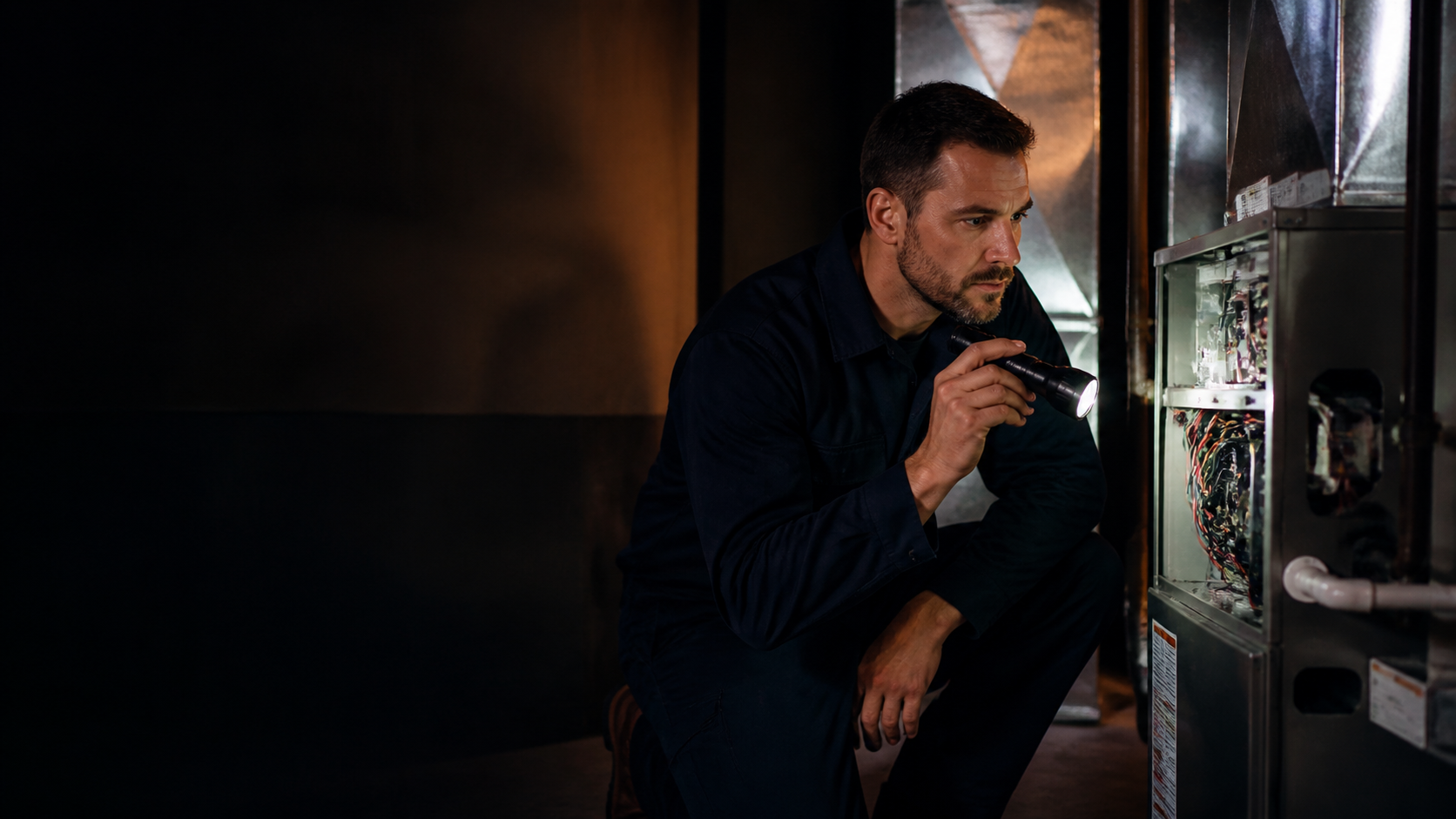
How to think about a no-heat situation
| Situation | Priority |
|---|---|
| Gas odor, smoke, fire, sparks, or a CO alarm | Leave immediately and contact emergency services or the gas utility |
| Someone may have hypothermia or cannot stay warm | Move people to a warm place and seek medical help when needed |
| Freezing weather with plumbing near exterior walls or unheated spaces | Protect the home from frozen pipes while arranging diagnosis |
| Cold house but no safety warning | Record the symptom, check only safe basics, and arrange heating diagnosis |
When no heat becomes a safety emergency
Leave the house and call 911 if you see smoke or fire, smell gas, see sparking or damaged electrical equipment, or think the heating system's creating a dangerous condition. Move people and pets away from the danger, follow emergency responders' instructions, and don't restart equipment that looks unsafe. The U.S. Fire Administration's carbon monoxide guidance explains why a fuel-burning furnace and its vents need special care.
Carbon monoxide deserves special attention because you can't see or smell it. If a CO alarm sounds, move outside to fresh air, call 911, and don't go back inside until responders say it's safe. Don't stay beside the equipment trying to identify the failed part.
Cold exposure is another reason to act quickly. Watch for shivering, exhaustion, confusion, fumbling hands, memory loss, slurred speech, or drowsiness. Babies, older adults, and people who lack adequate heat can be more vulnerable. If someone may have hypothermia, get them to a warm room or shelter, remove wet clothing, and get medical help.
- Leave first for gas, smoke, fire, sparks, a CO alarm, or a medical emergency.
- Don't flip switches, reset equipment, light a flame, or open the furnace when a gas or CO warning is present.
- Follow the gas leak safety guidance when the home needs to be cleared for a gas concern.
When no heat is urgent but not a 911 call
Not every failed heating cycle means the house is immediately dangerous. With no smoke, gas odor, CO alarm, electrical hazard, or medical concern, the next step is usually calling us for a heating diagnosis. Treat it as urgent when indoor conditions are getting worse, the weather's severe, the outage may last, or the home includes an infant, older adult, person with a medical condition, or pet that can't stay warm safely.
Extreme cold can freeze and rupture water pipes, per CDC winter storm safety guidance. A home can be safe for a short period and still need quick attention because cold reaches plumbing, exterior walls, and rooms with little airflow.
You don't need to decide whether the cause is a thermostat, control board, igniter, blower, heat pump, or another component before you call. Describe the symptom instead: the thermostat's blank, the system starts and stops, the fan runs but the air's cold, the outdoor unit's iced, or the system's silent. We can test the system and explain the repair decision once the immediate safety questions are answered.
- Move vulnerable people and pets to a safe warm location if the home can't stay comfortable.
- Protect plumbing during freezing weather while you call us for a quick diagnosis.
- Use the pipe-freeze guidance if the house may stay without heat.
Safe checks you can make before calling
Keep the checks limited to things a homeowner can see or operate without opening the equipment or working on fuel, wiring, refrigerant, or combustion components. Stop if you smell gas, see soot or smoke, hear repeated hard starts, notice sparking, or hear a CO alarm. Get people to safety and call 911.
A safe observation is useful even when it doesn't identify the failed part. Write down any error code, unusual sound, unusual smell, recent outage, or recent service, then stop if the system still won't heat.
- Look at the thermostat. Confirm the display's on, the mode's set to heat, and the setpoint's above the room temperature. If the display's blank, note that symptom instead of assuming the furnace failed.
- Check the normal user-accessible switch or electrical panel only when it's safe. If a breaker trips again, stop resetting it.
- Check the filter if it's in a familiar, accessible location. A visibly loaded filter can restrict airflow, but changing it doesn't make it safe to open the furnace or bypass a safety control.
- Look at visible outdoor vents for snow, ice, leaves, or other blockage. Don't climb, dismantle a vent, or reach into equipment. The U.S. Fire Administration recommends keeping appliance vents clear.
- Describe whether the blower runs, the furnace starts, the fan blows cool air, or the system stays silent. Don't tell us a specific part failed unless a verified diagnosis backs it up.
How to stay warm safely while you wait
Conserve heat in the occupied part of the home. Close doors to unused rooms, close blinds or curtains when practical, and use layers, hats, blankets, and dry clothing. If the home can't be kept warm safely, find a warm place for people and pets instead of waiting beside the thermostat. The CDC winter storm guidance recommends planning for cold-weather hazards and limiting outdoor exposure.
Use only a heating device designed and approved for indoor use. Follow its manual, keep it on a stable surface, and don't leave it running when the instructions say it should be turned off. Never use a gas range, oven, grill, outdoor heater, or charcoal device to heat the home. The CPSC indoor-heating warning explains why outdoor heaters and similar equipment can create deadly carbon monoxide buildup indoors.
Never run a portable generator in a house, garage, shed, basement, porch, or another enclosed or partly enclosed area. Keep it outdoors and follow the manufacturer's placement and operating instructions. If someone develops confusion, unusual drowsiness, slurred speech, or other signs of hypothermia, treat it as a medical issue rather than waiting on an HVAC appointment.
- Keep people in the warmest occupied area and close off rooms that don't need heating.
- Never use a gas appliance, grill, outdoor heater, charcoal device, or generator as indoor heat.
- Leave for a safe warm location if the home can't stay warm without creating another hazard.
Protect the home from cold and frozen pipes
When heat's off during freezing weather, check rooms that contain plumbing, especially rooms on exterior walls, basements, garages, crawlspaces, and areas that are normally closed. Keep access doors open where that helps warmer household air reach plumbing, while keeping people in the warmest occupied area. Don't use an open flame to thaw a pipe.
Watch for a sudden loss of water pressure, a wet spot, dripping, or a pipe that's split. If a pipe bursts, shut off the home's main water supply if you can do so safely and call a plumber. Move belongings away from water only if the area's safe. Extreme cold can freeze and rupture water pipes, so protecting the home is part of responding to no heat.
- Check plumbing near exterior walls, basements, garages, crawlspaces, and other cold areas.
- Watch for pressure loss, wet spots, dripping, or a split pipe.
- If a pipe bursts, shut off the main water supply when safe and call a plumber. Never thaw it with an open flame.
What we need to know when you call
When you call us for heating repair or diagnosis in Frederick County, have the basic facts ready. Tell us what you saw, not what you think failed. A symptom guides our testing. A guessed part can send the conversation the wrong way.
The goal is simple. A safe diagnosis, an explanation of the repair options, and a clear answer about what happens next. For ongoing prevention, get an annual inspection. The CPSC recommends professional annual inspection and service of heating systems, including inspection of chimneys and flues. A CO alarm is an added layer of protection, not a replacement for proper equipment use and maintenance.
- The system type, if you know it: furnace, heat pump, boiler, or another system.
- Whether the thermostat's blank, powered, showing an error, or calling for heat.
- Whether the system's silent, short-cycling, blowing cool air, making a new sound, or showing reduced airflow.
- When the problem started and whether it followed a power outage, filter change, storm, or recent service.
- Any smell, smoke, water, ice, or visible vent blockage, plus what safe check you made and what happened after.
Questions that come up next
Is No Heat an Emergency?
It's an emergency when people or pets are at risk, pipes may freeze, the weather makes the house unsafe, or the no-heat problem comes with gas odor, smoke, sparks, or a carbon monoxide alarm. A cold but safe house still needs a diagnosis, but not every no-heat call carries the same priority.
Should I call 911 because my furnace stopped?
Call 911 for smoke, fire, a CO alarm, suspected CO exposure, gas danger, or a medical emergency. If the furnace simply stopped and the home's otherwise safe, call us for HVAC diagnosis and use safe temporary measures while you wait.
Can I use my oven or gas stove until the repair is done?
No. Don't use an oven, gas range, grill, charcoal device, outdoor heater, or generator as an indoor heating source. Use only approved indoor heating equipment per its instructions, or move to a safe warm location.
What should I do first if the CO alarm sounds?
Leave for fresh air right away, call 911, account for everyone, and don't go back in until responders allow it. Don't go back inside to search for the source or restart the heating system.
When should I call you?
Call us when safe checks don't restore heat, the system keeps stopping, or the home can't stay comfortable and protected. Tell us what you saw, not what you think failed. If a safety or medical emergency shows up first, handle that before you call us.
Need HVAC help in Frederick?
Tell us what the system is doing and what you've checked already. If it needs a visit, we'll say so.