How Do I Maintain My AC Myself in Frederick, MD?
Yes, you can handle several useful AC maintenance tasks yourself. Start with the air filter, keep the outdoor unit clear, check the thermostat and registers, and watch for water around the indoor equipment. Those simple checks can catch restricted airflow or moisture problems before they become a bigger comfort issue.
For a Frederick County home, inspect before the cooling season, look over the system during heavy use, and stop when a task moves from cleaning into repair. DIY care doesn't replace refrigerant checks, electrical testing, deep coil cleaning, or a diagnosis when the system isn't working normally.
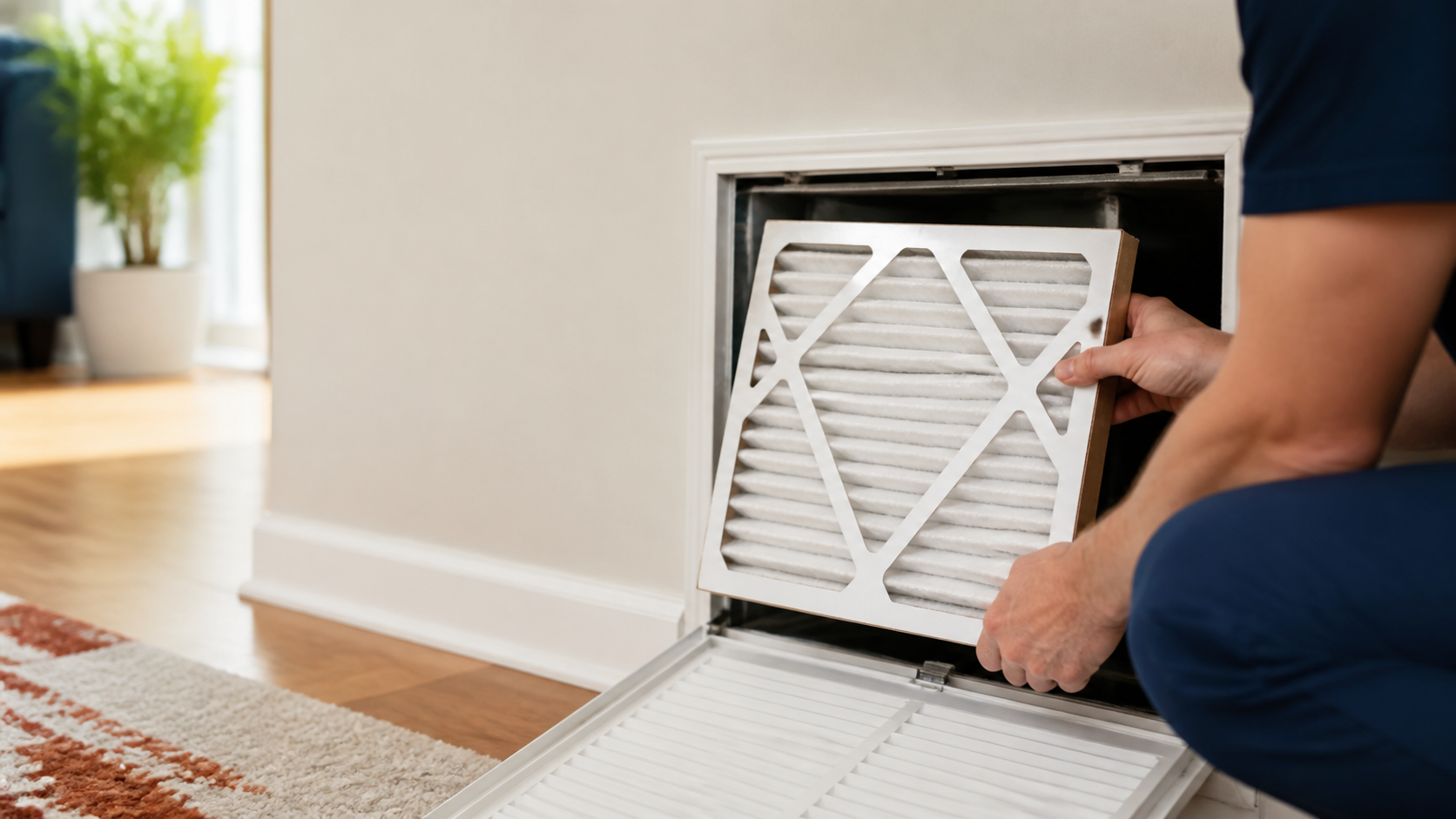
Homeowner-safe AC maintenance tasks
| Task | What to do | Stop and call when |
|---|---|---|
| Air filter | Inspect it regularly and replace or clean it according to its type and the equipment instructions | The correct size is unclear, airflow stays weak, or the system is icing |
| Outdoor condenser | Turn the system off and clear leaves, grass, and loose debris from around the cabinet | The fins are damaged, the fan is noisy, or the unit needs more than gentle exterior care |
| Thermostat and registers | Confirm cooling mode and setpoint, then keep supply and return registers open and clear | The display is abnormal, a room stays uncomfortable, or the system cycles repeatedly |
| Drain area | Look around the indoor equipment for water, staining, or a full drain pan | Water is active, spreading, or returning after the system is shut down |
| System behavior | Note airflow, temperature, noises, odors, and when a symptom began | There is ice, a burning smell, exposed wiring, or a breaker trips |
What can you safely check yourself?
Begin with parts you can see and reach without opening the equipment cabinet. Before touching a filter or moving anything near the condenser, turn the system off at the thermostat. If a task requires opening a panel, reaching wiring, handling refrigerant tubing, or working inside the unit, stop and call us.
A split system has an indoor section and an outdoor section. Your homeowner checklist is simple: inspect the filter, clear visible debris, confirm the thermostat and registers are set up correctly, and look for water, ice, damaged wiring, burning smells, or repeated starts and stops. Those checks help you report a useful symptom; they don't prove that a compressor, control, or sealed system is healthy.
- Turn the system off before working around the equipment.
- Use the filter size and cleaning method listed on the old filter or in the owner manual.
- Write down what you found and when it changed so we can start with useful information.
Start with the filter and airflow
The filter is usually the best first task because it is visible, replaceable, and directly connected to airflow. Depending on the system, it may be in a cabinet near the indoor air handler, inside a return grille, or in the ductwork near the equipment. Replace a disposable filter when it is loaded with dust, or clean a reusable filter only as the equipment maker directs. Do not guess at the size.
Follow the airflow arrow when you install a new filter. It should point toward the blower motor. ENERGY STAR suggests checking central AC filters monthly, but filter type, pets, indoor pollutants, and system use all change how fast a filter loads. Use its maintenance checklist as guidance, then follow your equipment instructions when they differ.
Keep return grilles open and supply registers clear of furniture, rugs, and stored items. ENERGY STAR says airflow problems can reduce air-conditioner efficiency by up to 15 percent. Treat that as a reason to investigate a change in airflow, not as a promise about what one filter replacement will save in your home.
- Inspect the filter on a regular schedule and sooner when airflow drops or the surface looks packed with dust.
- Check the filter location and airflow direction in the owner manual if either is unclear.
- If a correctly installed filter doesn't improve weak or warm airflow, stop treating the filter as the diagnosis.
Keep the outdoor unit and drain area in view
Walk the condenser. Do it before summer use, and again after mowing, tree work, or a storm. Remove loose leaves, grass clippings, branches, and other debris from the base and the area right around it. Leave roughly 2 to 3 feet of clearance so air can move through the coil. Stick to visible debris and clearance. Don't remove the top, lean tools against the cabinet, or reach through the grille while the fan could operate.
The coil has thin metal fins that bend easily. Avoid cleaning chemicals and high-pressure water. A packed coil, damaged fins, or anything that needs more than gentle exterior attention belongs with us. Carrier's outdoor-unit guidance explains why the clearance and fins need careful handling.
Then look around the indoor equipment for moisture. Water in a pan, staining, an active leak, or a blocked drain line can damage the home and affect indoor humidity. Turn the system off if it is safe to do so and arrange service; don't keep running the AC while water is spreading through a ceiling, wall, floor, or equipment area. EPA's moisture guidance also emphasizes addressing damp materials quickly.
- Clear the area around the condenser without opening the cabinet.
- Treat water, ice, and damaged fins as signs to stop and ask for help.
- Do not use a pressure washer or pour a chemical cleaner into a drain you can't identify safely.
Know when maintenance has become a repair
Homeowner maintenance ends when the work requires testing, sealed-system access, or a repair decision. Do not add refrigerant, open a refrigerant circuit, test live electrical components, bypass a safety control, or dismantle the indoor coil because the system isn't cooling well. A professional checkup may include refrigerant and performance checks, coil cleaning, electrical and control checks, and drain-line work.
Call for diagnosis when basic maintenance doesn't answer the problem: weak or warm airflow after a correct filter change, ice on the equipment or refrigerant lines, water near the indoor unit, a burning smell, unusual noise, repeated short cycling, or a system that won't start. If a breaker trips, don't keep treating it as a filter problem. DOE's cooling guidance lists filter, thermostat, drainage, and refrigerant issues among possible causes of poor cooling.
Use three routines instead of one vague annual reminder: inspect the filter during the cooling season, clear the outdoor unit and check for water before summer, and book us for a cooling checkup before the season gets busy. For homeowners in Frederick, Urbana, Walkersville, Middletown, New Market, Ballenger Creek, and nearby Frederick County communities, describe what you checked and when the symptom started so the service conversation begins with useful information.
- Turn the AC off if ice is building and let it thaw instead of adding refrigerant yourself.
- Treat burning smells, exposed wiring, and repeated breaker trips as electrical hazards.
- Ask what was found, what is safe to watch, and what needs repair before approving work.
Questions that come up next
How do I maintain my AC myself in Frederick, MD?
Inspect the filter, keep return and supply registers clear, clear visible debris from the outdoor unit with the system off, and watch for water or ice. Leave refrigerant, electrical, and sealed-system work to us.
How often should I check my AC filter?
Inspect it on a regular schedule and sooner during heavy use, dusty work, or when pets and indoor pollutants load it quickly. Follow the filter and equipment instructions instead of assuming one interval fits every home.
Can I clean my AC coil myself?
You can clear loose debris around the outdoor cabinet, but skip chemicals and high-pressure water. Bent fins, heavy buildup, or a coil that needs access inside the cabinet should be handled by us.
What should I do if my AC is frozen or leaking water?
Turn the cooling off if it is safe, don't add refrigerant or keep running a frozen system, and arrange diagnosis. Weak airflow, a dirty coil, drainage trouble, or a refrigerant problem can each need a different repair.
Need HVAC help in Frederick?
Tell us what the system is doing and what you've checked already. If it needs a visit, we'll say so.