How Long Does It Take to Install a New AC?
For a straightforward central AC replacement, plan on the installation crew being in your home for roughly 4 to 8 hours. A broader on-site estimate can range from 2 to 8 hours depending on whether the work is limited to an AC unit or includes a larger split-system project. The scope of the job controls the schedule.
That's an installation-day estimate, not a promise for the whole project. Evaluation, load calculation, equipment selection, permit checks, scheduling, and final inspection may happen before or around the installation visit. Ductwork, electrical changes, difficult access, or new indoor equipment can stretch the work out.
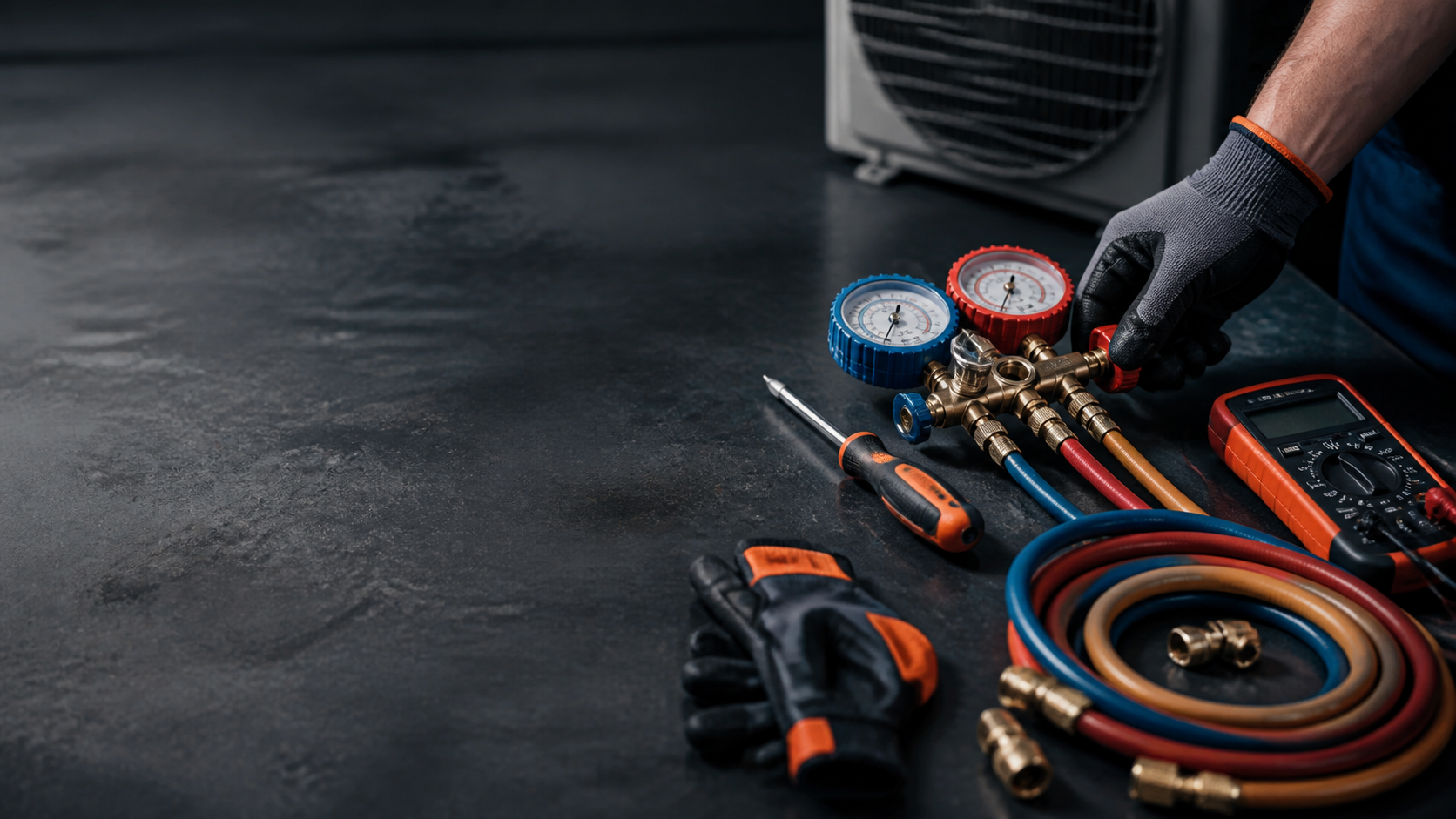
What changes an AC installation timeline
| Project shape | What the crew may do | Why the schedule changes |
|---|---|---|
| Matched replacement | Remove the old equipment, set the new system, connect it, and test it | Existing connections and clear access keep the work focused |
| Replacement with duct repairs | Inspect, seal, resize, or replace sections before balancing the system | The new equipment can't deliver expected comfort until airflow is addressed |
| Indoor equipment included | Replace or match the indoor coil, air handler, furnace, thermostat, or drainage | More components mean more connections, testing, and closeout work |
| First-time central air | Plan equipment, distribution, refrigerant lines, drainage, controls, and outdoor placement | This is a system design and installation, not a simple equipment swap |
What happens before installation day?
The useful first step is a home evaluation, not a guess based only on the size of the old air conditioner. We'll look at the home's size, insulation, windows, ductwork, airflow, electrical capacity, equipment location, and the rooms that have been difficult to cool.
That evaluation should lead to a cooling-load calculation so the new equipment fits the house. The planning stage may also uncover a small return duct, a mismatched indoor coil, a panel question, a tight attic route, or a permit requirement. Ask what has to happen before installation, who handles permits, and when we can actually get the equipment scheduled.
- Confirm the equipment size and matched indoor and outdoor components.
- Ask whether a cooling-load calculation was used for the home.
- Clarify permit checks, equipment ordering, scheduling, and inspection timing.
What happens during the installation?
An installation is more than placing a condenser outside. We protect the work area, shut down the old system, and remove the components being replaced. Then we install the new indoor and outdoor equipment, make the required electrical and refrigerant connections, handle drainage, and check that the system's actually operating the way it should.
Testing is part of the job. Before we leave, ask what we checked — the airflow, the refrigerant performance, the temperature change, the controls, and how the unit drains. A clear path to the equipment keeps the visit on schedule and makes the final walkthrough easier to follow.
- Clear a route to the indoor equipment, outdoor unit, thermostat, and electrical equipment.
- Keep pets and fragile items away from the work area and staging path.
- Ask us to explain the startup checks and what the system should do next.
What can make AC installation take longer?
Several conditions can turn a one-day replacement into a larger project. Ductwork may need repair, sealing, resizing, or replacement. The indoor coil, air handler, furnace, thermostat, or refrigerant lines may also need to be changed so the system works as a matched set.
Limited access matters too. A tight attic, crawlspace, closet, narrow gate, or difficult equipment location can add careful disassembly and protection. Electrical work, permits, inspections, zoning, air-quality equipment, or a first-time central-air project can add more steps. Longer doesn't automatically mean worse. It may just mean we found work the home needs for correct operation.
- Ductwork is leaking, undersized, poorly routed, or unable to serve an addition.
- The new equipment needs electrical changes, a new drain route, or a different location.
- The home has no suitable existing central-air distribution.
- The property requires a permit or inspection for the planned work.
How should you prepare and compare estimates?
Before we arrive, clear a path to the indoor equipment and outdoor unit. Move fragile items, secure pets, and make sure we can reach the thermostat, electrical equipment, attic access, crawlspace, or other areas we need to look at. Write down rooms that stay warm, weak airflow, unusual noises, water, ice, or recent repair history.
Compare proposals by the defined scope, not by the number of hours alone. The estimate should explain the equipment, costs, job schedule, warranty information, testing, cleanup, and any condition that would change the on-site duration. If it just says one day, ask what that phrase actually includes.
- Is this an outdoor-unit replacement, or are the indoor coil, air handler, furnace, thermostat, or lines included?
- Was the equipment size based on a cooling-load calculation and the home's actual conditions?
- Are duct inspection, airflow checks, startup testing, cleanup, and the homeowner walkthrough included?
- Does this address require a permit or inspection, and who handles that step?
Should you schedule installation or start with AC repair?
A warm house doesn't automatically prove that you need a new air conditioner. The cause may be an airflow restriction, thermostat problem, electrical component failure, drainage issue, refrigerant leak, or another repairable condition. Start with diagnosis when the cause is uncertain or the system hasn't been evaluated.
Installation planning makes sense when the equipment's unsafe, repeatedly failing, poorly matched to the home, or clearly at the end of its practical service life. The right timeline starts with the right scope. Once we know what the home and equipment actually need, we can tell you how long the work should take and what happens next.
- Share the system type, symptoms, equipment age if known, and rooms affected.
- Ask whether a repair diagnosis or a replacement estimate is the better first step.
- Connect the schedule to the work the home actually needs, not a generic one-day promise.
Questions that come up next
Can a standard AC replacement be finished in one day?
Often, yes. A matched replacement with accessible equipment, suitable ductwork, and adequate electrical service may fit into one workday, with roughly 4 to 8 hours on site. Duct changes, relocation work, or a first-time central-air installation usually need a larger scope.
What should I ask about the installation schedule?
Ask for the expected on-site duration and the full timeline from approval to completion. The proposal should identify equipment, duct or electrical work, permits, inspections, testing, cleanup, and the conditions that could change the schedule.
What should I do before the installers arrive?
Clear a path to the indoor and outdoor equipment, move fragile items, secure pets, and open up access to the thermostat, electrical equipment, attic, or crawlspace. Tell us about warm rooms, weak airflow, water, ice, noises, and recent repairs.
When should I start with AC repair instead of installation?
Start with diagnosis when the cause of the comfort problem is uncertain or the system hasn't been evaluated. A repairable airflow, thermostat, electrical, drainage, or refrigerant issue doesn't automatically call for a new air conditioner.
Need HVAC help in Frederick?
Tell us what the system is doing and what you've checked already. If it needs a visit, we'll say so.