How Much Does an ERV or HRV Cost in Frederick?
For a straightforward ERV or HRV retrofit in a Frederick County home, we'd put a reasonable planning range at roughly $1,400 to $3,500. That's an inference from published equipment costs of about $400 to $2,000 and some accessible attic or basement installation quotes of $1,000 to $1,500. It's budgeting context, not a Frederick price list or a quote for your house. Review the published cost guidance.
The number gets useful once you separate the ventilator from the work around it. An estimate may include outdoor intake and exhaust connections, supply and return ducting, electrical power, controls, drain work, filters, balancing, and access for future maintenance. If a proposal shows only a box and a total, you don't yet know what you're comparing.
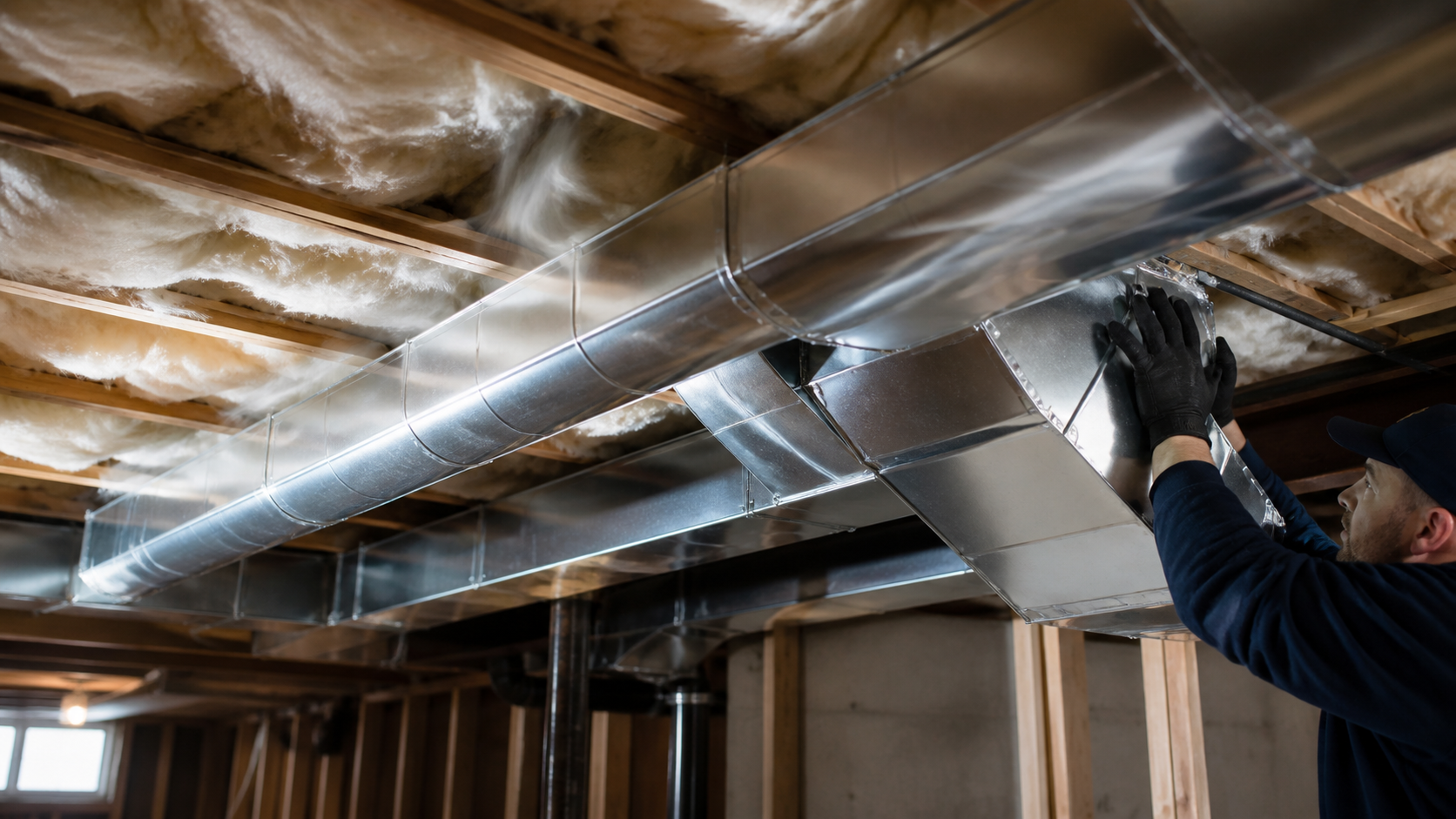
What belongs in an ERV or HRV quote
| Scope factor | Why it changes the price | Question to ask us |
|---|---|---|
| Ventilator and capacity | The model, airflow, controls, and recovery performance affect equipment cost | Why does this model fit my home's airflow and moisture needs? |
| Equipment location | An accessible attic or basement can be simpler than a finished space | Where will the unit go, and can I reach the filters later? |
| Supply and exhaust ductwork | New or longer runs add material, labor, and possible finish work | Where will each duct go, and which rooms will it serve? |
| Outdoor intake and exhaust | Wall or roof placement changes penetrations, sealing, and weather protection | How will you place and seal the openings? |
| Power, controls, and drainage | Wiring, interlocks, drainage, or a pump can add scope | What electrical and drain work is included? |
| Testing and balancing | Measured airflow shows whether the finished system performs as planned | Will you document the final supply and exhaust airflow? |
What is the typical ERV or HRV installation cost?
There's no dependable flat rate for every Frederick home. A simple installation in an unfinished basement or accessible attic may need shorter duct connections and little disturbance to walls or ceilings. A retrofit in a finished two-story home may need new chases, longer runs, several supply points, exterior penetrations, and repairs after the ducts go in.
PNNL's Building America guidance reports core hardware costs historically ranging from about $400 to $2,000, along with some installation quotes of $1,000 to $1,500 in accessible spaces. Higher-end products can reach $3,000 to $5,000 for the equipment itself. Those figures support a rough planning band, but they don't tell you what we'll charge for your particular property. Review the published cost and access factors.
- Use an online range to decide whether the project belongs in the current budget.
- Ask us for an onsite evaluation to decide what the project actually includes.
- Ask for the model, capacity, location, duct path, and access assumptions.
What makes an ERV or HRV installation more expensive?
Most price differences come from installation scope rather than the acronym on the equipment cabinet. An accessible basement or attic can make duct connections simpler. Longer or more numerous runs increase labor, and finished spaces can need construction and repairs after we install the ventilation ducts. PNNL identifies location, duct length, drainage, and finish disruption as reasons installation costs vary. See the retrofit factors.
Existing forced-air ductwork may be part of the plan, but reuse isn't automatically free or appropriate. The connection, airflow, controls, and room distribution still need to make sense. An independent ventilation duct system may suit the layout better, but it can add material and labor.
- Outdoor intake and exhaust connections, including weather sealing.
- Electrical power, controls, interlocks, and drain work.
- Access, ceiling or wall opening, patching, and finish work.
- Startup measurements, balancing, filter access, and homeowner instructions.
What is the difference between an ERV and an HRV?
Both systems bring outdoor air into the home and exhaust indoor air while recovering energy between the two airstreams. An HRV transfers sensible heat, meaning temperature. An ERV transfers heat and some moisture too. That difference matters when you're thinking about winter dryness, summer humidity, and how tightly the home is built. Read the ERV and HRV comparison.
An ERV isn't a whole-home dehumidifier, and an HRV isn't automatically the better choice for a cold-weather house. PNNL notes that selection isn't straightforward outside hot, humid climates. We base the decision on the home's ventilation requirement, moisture pattern, layout, and equipment plan, not one model presented as the answer for every house.
- We ask how the home currently handles humidity and stale air.
- We explain why the proposed system fits the home's moisture conditions.
- We don't choose by equipment price alone.
What should a quality ERV or HRV installation include?
The proposal should describe how we'll confirm that the system moves the intended amount of air. EPA's Indoor airPLUS specifications identify balanced mechanical ventilation as a system that supplies outdoor air and exhausts indoor air, with supply and exhaust airflow measured and documented. Review the EPA ventilation specifications.
EPA also recommends minimizing intake and exhaust duct length and keeping ventilation equipment accessible for cleaning and maintenance. Those details cost something upfront, but they make the system easier to live with after installation.
- A design airflow or CFM target based on the home.
- Balanced supply and exhaust paths, not one-sided ventilation.
- Accessible filters, controls, and heat exchange core.
- Sealed duct joints and weather-sealed exterior penetrations.
- A startup or balancing report, or a clear explanation of what will be measured.
How should I compare ERV and HRV quotes?
Ask each contractor to quote the same basic scope. The total is hard to compare when one bid includes dedicated ducts and exterior penetrations while another assumes a short tie-in to existing ductwork. The lowest total isn't necessarily the lowest-cost project if it leaves out ductwork, power, balancing, or finish repair.
Request the model, airflow capacity, unit location, intake and exhaust routes, electrical work, controls, drain work, grilles, testing, exclusions, allowances, and permit assumptions in writing. A clear scope lets you compare the same work and ask us a useful question when the totals differ.
- Name the indoor-air problem before choosing equipment.
- Ask which rooms receive supply air and where stale air is collected.
- Confirm what happens if finished surfaces or inaccessible ducts must be opened.
- Request an onsite evaluation when stale air, humidity, or a renovation changes the ventilation need.
Questions that come up next
How much does an ERV or HRV cost in Frederick?
A straightforward retrofit runs a rough planning range of $1,400 to $3,500, inferred from published equipment and accessible installation costs. Your total can climb higher when the equipment, the ducting, access, penetrations, or finish work get more involved.
Is an ERV always more expensive than an HRV?
Not necessarily. ERVs and HRVs handle moisture differently, so the right choice depends on your home's humidity, ventilation needs, layout, and equipment plan rather than the lower equipment price.
Can an ERV or HRV use my existing HVAC ducts?
Sometimes, if the connection, airflow, controls, and room distribution make sense. We'll tell you which ducts we can share and whether you need dedicated supply or exhaust runs.
What should be measured after an ERV or HRV installation?
We confirm the intended supply and exhaust airflow, explain the balancing or startup result, and leave filters, controls, and the heat exchange core accessible for maintenance.
Need HVAC help in Frederick?
Tell us what the system is doing and what you've checked already. If it needs a visit, we'll say so.