Do HVAC UV Lights Really Work?
Yes, HVAC UV lights can work, but the honest answer depends on what the light was built to do. A UV-C lamp treating a cooling coil is solving a different problem than a higher-output system built to treat moving air. Results also depend on lamp condition, exposure time, distance, airflow, placement, and maintenance.
For a Frederick County homeowner, the useful question isn't simply whether the bulb glows. It's whether the equipment is matched to the actual problem. A UV light may help limit biological growth on an exposed coil or drain pan, but it isn't a universal answer for dust, mold, odors, humidity, or every indoor-air concern.
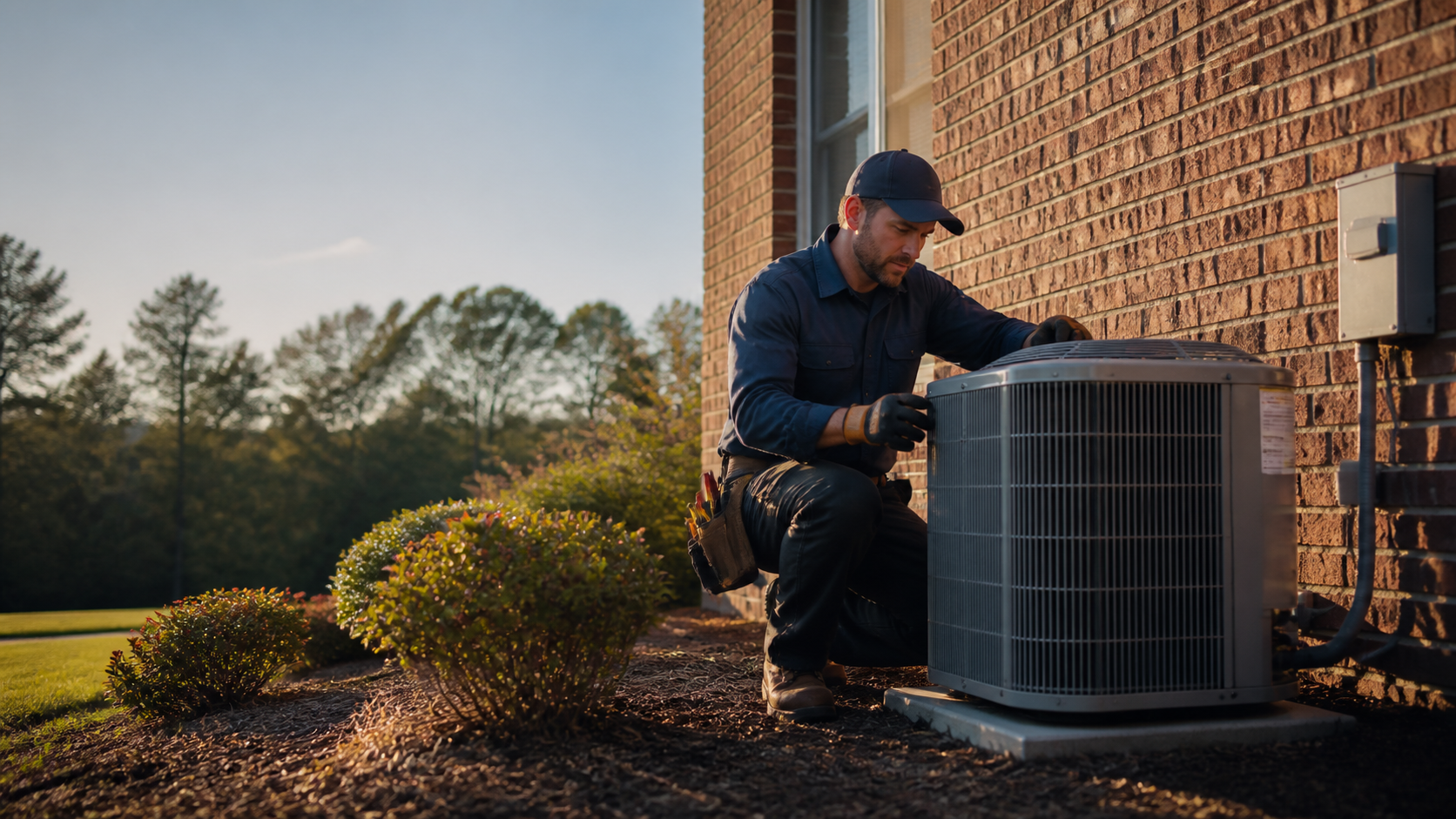
What HVAC UV lights can and cannot address
| Home concern | What a UV light may contribute |
|---|---|
| Growth on a damp coil | A well-placed coil-treatment lamp may help limit growth on the surface it reaches. |
| Musty odor near the air handler | It may help with one moisture-related source, but the coil, drain pan, and drainage still need attention. |
| Dust in the rooms | A UV lamp doesn't capture particles. Filter condition, airflow, duct leakage, and entry points matter more. |
| Mold or bacterial spores | Typical residential units have limited exposure and aren't a substitute for moisture correction or removal. |
| Airborne particles | An air-treatment system needs a design and UV dose suited to the system's airflow; one coil lamp isn't whole-home air cleaning. |
What does an HVAC UV light actually treat?
The phrase HVAC UV light covers more than one type of equipment. Coil-treatment GUV, sometimes called surface treatment, gets installed where the lamp can shine on an evaporator coil, drain pan, or another damp HVAC surface. Its job is to limit biological growth on that exposed equipment over time.
Air-treatment GUV is different. It applies a stronger UV dose to air moving through the duct or air handler, where lamp output, exposure time, and airflow all have to work together. The CDC distinguishes coil-treatment GUV from air-treatment GUV and explains why air-treatment systems generally need more powerful lamps, more lamps, or both.
- Ask us what surface or airstream the lamp is designed to treat.
- A coil lamp can be useful without being an air-disinfection system.
- The target, dose, exposure time, and airflow matter more than a visible blue glow.
Can UV lights remove dust, mold, and odors?
Usually, no. UV light doesn't act like a filter that captures dust from the airstream. The EPA explains that UVGI should be used with conventional particle filtration, not as a replacement for it. If dust is the main complaint, we start with the filter, airflow, duct leakage, and the places where dust enters the home.
Mold and musty odors need a wider look. A properly designed UVGI cleaner may affect some growth on moist HVAC surfaces, but typical residential units have limited effectiveness against many bacteria and molds. The EPA notes that dead spores can still trigger allergic reactions. A UV light can't dry a wet system, repair a drain, remove contaminated material, or correct the moisture source.
Indoor-air improvements usually work best as a combination of controls. The EPA recommends source control and ventilation, with filtration and air cleaning used as supplemental measures. EPA guidance says indoor humidity should stay below 60 percent, ideally between 30 and 50 percent.
- A UV lamp won't remove settled dust or replace a clean, correctly sized filter.
- A returning odor can point to a wet coil, drain pan, drain line, duct, crawl space, or basement.
- We fix the moisture condition before assuming another lamp will solve the problem.
What determines whether a UV light works well?
UV performance isn't a simple on-or-off question. A lamp can be powered and still provide less useful treatment than the homeowner expects. The important factors include the intended job, UV dose, distance and angle, airflow, lamp condition, placement, and the rest of the HVAC system.
The EPA's technical summary notes that residential UVGI units may have insufficient intensity or exposure time for most airborne microorganisms. Most lamps also lose real output somewhere around the 1 to 2 year mark, well before the bulb itself burns out. A visible glow only shows some light is present. It doesn't prove the intended dose reaches the intended target.
A product label isn't a promise about every home. EPA compliance guidance addresses applicable claims about what UV devices kill or affect. Ask us what the equipment is designed to treat, where it's installed, and what maintenance keeps it operating as intended.
- Placement has to give the lamp a clear view of the surface or a layout built for moving air.
- A blocked filter, dirty coil, water problem, or weak airflow may still be the real cause of the complaint.
- Lamp inspection and replacement are part of the equipment's performance, not an afterthought.
What signs suggest the UV light or HVAC system needs service?
Useful signs include a musty smell that returns when the system runs, visible buildup near the indoor coil, water around the equipment, a failed indicator, a damaged housing, weaker airflow, or rooms that no longer cool or heat evenly.
Those signs don't prove the UV lamp is at fault. A dirty filter, blocked drain, dirty coil, blower problem, refrigerant issue, duct problem, or excess humidity can create similar symptoms. ENERGY STAR's HVAC maintenance checklist includes filters, drain lines, coils, blower airflow, and system controls. We keep the lamp in that larger HVAC picture during a good diagnosis.
- Note when the odor, water, or airflow change started.
- Photograph the equipment label from outside the cabinet if you can do so safely.
- Don't remove access panels just to see whether the lamp is on.
Are HVAC UV lights safe to inspect?
Treat an HVAC UV-C lamp as an energized radiation and electrical hazard. Don't look directly at the lamp, remove a panel while it may be powered, bypass a door switch, or reach toward the equipment to test it. The FDA warns that UVC can cause severe skin burns and eye injuries.
Some UVC lamps can also generate ozone, which may irritate the nose, throat, and lungs. In-duct systems should keep UV radiation enclosed, and ASHRAE guidance says the UV system should be deactivated before maintenance or repair access. If a lamp is broken, keep people away and call us for the right service instructions instead of improvising cleanup.
- Never bypass a safety switch or test a UV-C lamp by looking at it.
- Follow the equipment instructions and keep people away from exposed radiation.
- Let a qualified technician handle damaged lamps, wiring, or access panels.
When should a Frederick homeowner schedule UV light service?
An HVAC assessment makes sense when the lamp has failed, the housing or wiring looks damaged, dust covers the lamp, the coil or drain pan shows buildup, the odor keeps returning, or the system is being credited with solving a problem it hasn't solved. The next step may involve the UV device, a filter, drainage, airflow, humidity, coil condition, or another HVAC repair.
Seasonal maintenance is a practical time to talk about the equipment. ENERGY STAR recommends annual pre-season heating and cooling checkups, including filter, drain, coil, airflow, and control checks. That doesn't mean every home needs a UV light. It means we consider the lamp alongside the equipment and the complaint together.
For homeowners in Frederick, Urbana, Walkersville, Middletown, New Market, Mount Airy, Ballenger Creek, and nearby Frederick County communities, the best next step is a clear diagnosis. Tell us what changed, where you notice it, and what the UV device was meant to do. We'll explain whether the lamp is a sensible supplement, needs service, or is being asked to solve a different problem.
- Bring us the equipment model information if it's visible without opening the cabinet.
- Tell us whether the concern is growth, dust, odor, moisture, airflow, or comfort.
- A UV light should support a clean, working HVAC system, not hide a maintenance problem.
Questions that come up next
Do HVAC UV lights really work?
They can help limit growth on an exposed damp surface such as an evaporator coil when the equipment is correctly selected, installed, and maintained. They don't replace filtration, cleaning, ventilation, or fixing the moisture source.
Will a UV light clean the air in my house?
Not on its own. A coil-treatment lamp isn't designed to treat moving air, and an air-treatment system needs an appropriate UV dose, exposure time, and airflow design. Dust and other particles still call for filtration and source control.
Will a UV light remove mold or a musty smell?
It may help with some growth on a damp HVAC surface, but it can't remove contaminated material, dry the system, or repair a drain. A returning odor needs a check of the coil, pan, drainage, ductwork, humidity, and other possible sources.
What do you check before installing one?
We look at the complaint, coil, drain pan, airflow, filter, lamp location, nearby materials, safety clearances, and how the device will get serviced. The lamp should support a clean, working system rather than cover for a problem that still needs repair.
Can I inspect an HVAC UV-C lamp myself?
Don't look directly at the lamp, open a powered cabinet, bypass a safety switch, or reach toward the equipment. UV-C can injure eyes and skin, and damaged lamps or wiring need qualified service.
Need HVAC help in Frederick?
Tell us what the system is doing and what you've checked already. If it needs a visit, we'll say so.