One room or the whole home?
An upstairs bedroom stuck at 78 degrees points us somewhere different than a system that won't start anywhere in the house.
Myersville HVAC repair
Myersville sits at the west end of the county near the base of South Mountain, between I-70 and the old Baltimore National Pike - a small town of houses that range from weathered to brand new. When the house feels wrong, we put the system and the symptom in the same conversation. Maybe one room's uncomfortable. Maybe the air feels damp, the thermostat's blank, or the system sounds different. Start with what changed at home. You don't need to diagnose the part yourself.
Start with the change
Naming a part too early can narrow the conversation before we've looked at anything. Describe the house first, then we let the symptom guide the inspection.
An upstairs bedroom stuck at 78 degrees points us somewhere different than a system that won't start anywhere in the house.
Tell us whether it hit all at once, has been slipping for a few weeks, or only shows up during certain cycles.
A new noise, weak airflow, a blank thermostat, humidity, water, or ice gives us a real place to start.
Put both sides together
A furnace, air conditioner, or heat pump runs inside a particular house, with its own rooms, ductwork, thermostat, insulation, and comfort expectations. The same complaint can start in a different place from one home to the next.
"The upstairs bedroom's still warm after an hour" tells a different story than "the whole home's warm and the system never starts." A cooling system that's lost its expected 15-to-20-degree drop between the air going in and the air coming out points somewhere different than one that never fires at all. Bring us both pieces.
Tell us what you've checked safely, like whether the thermostat has a display or whether the system responds at all. Don't open equipment panels, handle refrigerant, or work around live electrical components.
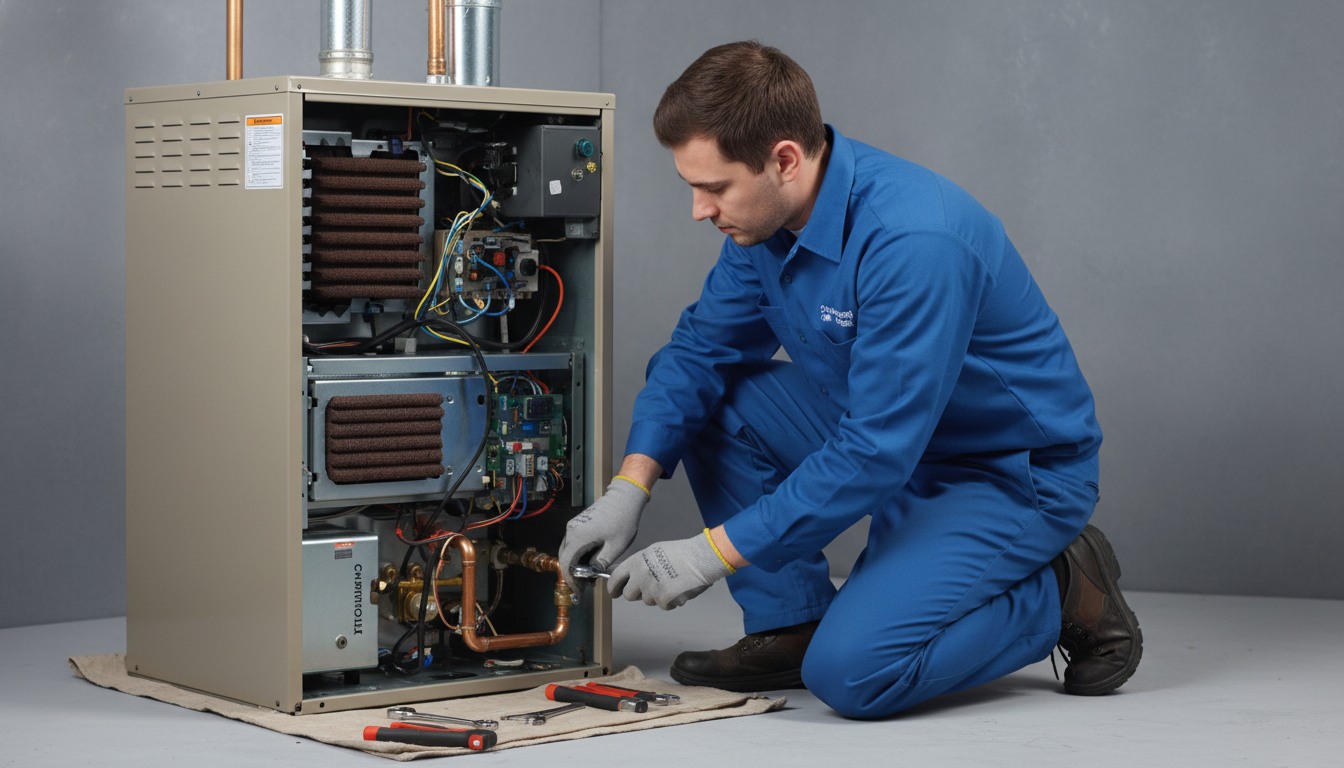
When to call us
Some problems stop heating or cooling completely. Others show up as a comfort change that keeps returning. Both are worth describing.
We start with what the thermostat shows and what the equipment does when you change the setting.
Supply air, return air, ductwork, insulation, or the equipment itself can each affect one room.
A fan, a motor, or a loose panel can sound almost the same from inside the house. The source matters, and we'll find it.
Tell us where you see it and whether the system's still running. Don't open the equipment to check for yourself.
A straightforward next step
Share what changed, where it's happening, and what you've already noticed.
We follow the symptom through the thermostat, airflow, controls, equipment, and the conditions around it.
We review what needs attention before you choose a repair, a maintenance visit, or a broader comparison.
We test the system against the original problem once the work's done.
Choose the next step
Healthy equipment, a symptom that won't quit, severe comfort loss, and an aging system each call for a different decision.
The equipment's running fine and you want to talk through its condition before the next hot or cold stretch.
The symptom's persistent, it keeps coming back, or it's making the house hard to live in.
Comfort loss is severe, or something feels unsafe. Safety comes first, every time.
The system's aging, failures keep repeating, or a major issue changes the repair math.
A symptom doesn't automatically mean replacement. It means we can look at repair and replacement together once we know the equipment's condition and what your home actually needs.
Local HVAC help
Myersville is part of our Frederick County service area. Lead with what you can actually describe: the room, the temperature, the airflow - and any new sound, smell, water, ice, or change on the thermostat.
Questions homeowners ask
Tell us what changed, where it's happening, when you noticed it, and whether the system starts, runs, stops early, or shows water, ice, an odor, or an error code.
No. A clear description of the house and the symptom helps us more than a guess at the part. Don't open equipment panels or handle refrigerant and live electrical components.
Yes. Supply air, return air, ductwork, insulation, sizing, or the equipment itself can affect one room while the rest of the home feels fine.
We compare repair and replacement when the system's aging, failures repeat, parts get hard to find, or a major issue changes the math.
Tell us what the equipment is doing and what changed at home.