HVAC Warranty Expiring Soon? What Frederick Homeowners Should Do Next
If your HVAC warranty is expiring soon, don't panic — and don't assume you need a new system. First confirm the exact expiration date and what the warranty covers. Then document any problem the air conditioner, furnace, or heat pump is showing, and request an evaluation before the deadline if the system needs attention.
The goal is simple: understand the equipment's condition and likely out-of-pocket cost before a warranty date closes. A warranty can help with a covered part, but it does not automatically make every service visit, repair, or replacement free.
An expiration date is a timing issue, not a diagnosis. Let the written terms, the system's repair history, and the comfort in your Frederick County home guide the next decision.
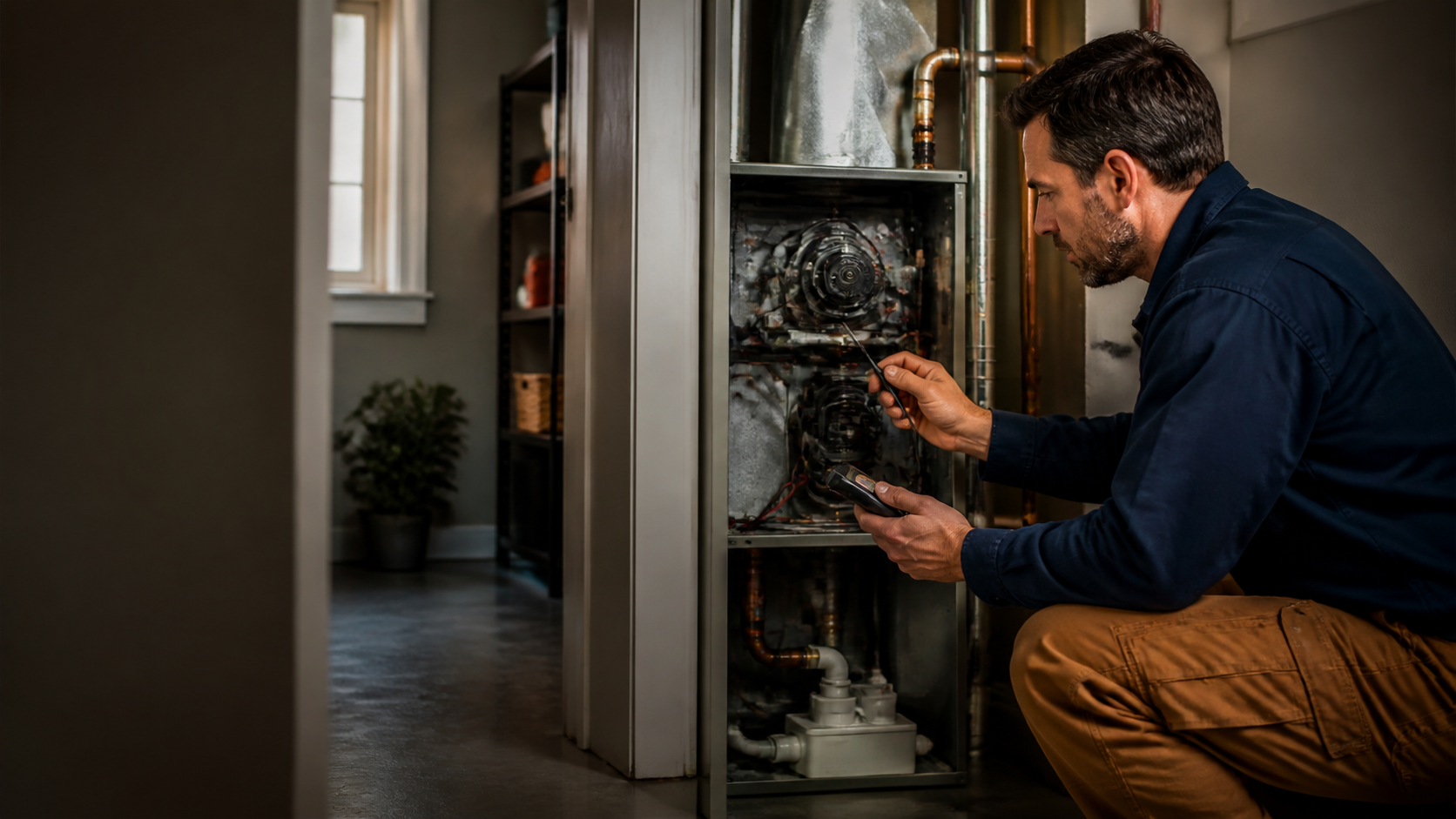
Start with the records
Find the warranty certificate, model and serial numbers, installation date, registration record, and prior service invoices before you call.
Repair case
One tested failure, a covered part, clear remaining labor costs, and an otherwise reliable system can make repair the calmer choice.
Replacement case
Repeated breakdowns, poor comfort, major component risk, or a system that has become hard to justify can make replacement planning wiser.
What should I do first if my HVAC warranty is expiring soon?
Put three things together: the warranty certificate, the equipment information, and the symptom that caused you to look up the deadline. Include the manufacturer, model number, serial number, installation or start date, and registration status if you have them.
If the system is working normally, schedule the maintenance or inspection that fits the season and keep the resulting record. If it is short cycling, making a new noise, leaving rooms uncomfortable, leaking water, icing up, or failing to heat or cool, document the problem and seek a diagnosis before the deadline.
A short video of an unusual sound or a photo of ice, water, or a blank thermostat can be more useful than guessing which part failed.
Write down when the change began, what operating mode the system was in, what the thermostat displayed, and whether the problem comes and goes. That gives the technician a useful starting point without asking you to troubleshoot inside the equipment.
- Warranty certificate or installation packet
- Manufacturer, model, and serial number
- The date the symptom began
- Thermostat display and operating mode
- Photos or video of ice, water, noise, or error codes
- Prior repair and maintenance records
How do I verify the HVAC warranty before it expires?
The written warranty decides what is covered, not a neighbor's warranty, a search result, or a general promise that the system is under warranty. Check the length of coverage, covered components, exclusions, maintenance requirements, claim instructions, registration status, transfer conditions, and any separate expiration date for labor.
Parts coverage and labor coverage can end at different times. A manufacturer may cover a listed part while the installing contractor's labor coverage has already ended.
Ask who must open the claim, whether the installing contractor must be involved, and whether diagnostic, trip, shipping, processing, refrigerant, removal, or reinstallation charges remain your responsibility.
Manufacturer programs differ. Carrier, Trane, and Lennox each describe different registration steps, eligible coverage, parts terms, labor responsibilities, and dealer involvement.
Those pages are useful examples, but your warranty certificate, registration record, and current terms control the answer.
- Parts expiration date
- Labor expiration date
- Registration and transfer rules
- Covered components and exclusions
- Maintenance requirements
- Claim contact and approval steps
What should I document before requesting HVAC repair under warranty?
Give the technician or warranty contact a clear account of what the system is doing. Include whether the issue affects heating or cooling, the thermostat setting, indoor temperature if you know it, error codes or blinking lights, whether the outdoor unit runs, whether the indoor blower moves air, and whether the system shuts off and restarts repeatedly.
Gather the installation invoice, warranty certificate, registration confirmation, prior repair invoices, and maintenance records. If you rent or manage the property, include the owner's contact information and any building records that affect access or approval.
Keep homeowner checks limited to safe observations, filter inspection, and thermostat information. Do not open electrical compartments, handle refrigerant, alter gas controls, or bypass a safety switch.
A useful diagnosis should identify the failed component or operating condition, explain whether it appears related to a covered defect, and separate covered work from labor or other charges.
- The symptom and date it began
- Thermostat setting and indoor temperature
- Error code, blinking light, or unusual sound
- Whether the blower and outdoor unit run
- Installation, warranty, service, and maintenance records
- Property access or owner approval details
What might an HVAC warranty cover, and what might I still pay?
The word warranty is not specific enough by itself. A written HVAC warranty may cover a listed part that fails because of a manufacturer defect, but it may not cover every cause of failure, every component, or every cost involved in completing the repair.
Some terms cover parts while leaving labor, shipping, processing, or service-call charges separate.
Before approving work, ask which component failed, whether it is listed as covered, whether the repair is being submitted as a warranty claim or ordinary paid service, who submits the claim, and whether approval is required first. Also ask what happens if the diagnosis finds a non-covered cause or a second problem.
An extended service contract is a separate question. It is sold separately from the product warranty and has its own period, exclusions, claim process, and cost.
Compare those terms with the coverage you already have before paying for an add-on.
- Is the failed component listed as covered?
- Does the warranty pay for labor?
- Are diagnostic, trip, shipping, or processing charges separate?
- Who submits and approves the claim?
- What happens if another problem is found?
Should I repair before the warranty expires or replace the system?
Repair is usually the first conversation when a diagnosis identifies one failed, potentially covered component and the rest of the system is operating acceptably. The repair case gets stronger when the system has been reliable, comfort was good before the issue, the major components show no broader decline, and the remaining labor cost is clear.
Replacement deserves a closer look when the system has repeated failures, a major component problem, persistent comfort issues, a safety concern, or a condition that makes another repair difficult to justify. The warranty deadline itself is not a reason to replace.
Equipment condition and the home's needs should be evaluated together.
Look beyond the outdoor cabinet. Duct condition, filter condition, yearly maintenance, duct sealing, insulation, air sealing, and thermostat settings all affect comfort and equipment performance.
A new system cannot correct a blocked return, leaking duct, or poorly insulated part of the home by itself.
Ask for the reasoning behind each option: what failed, what remains in good condition, what the warranty changes, what work the home needs, and what the next repair or replacement scope includes. That gives you a decision you can explain instead of a deadline-driven guess.
- Single confirmed failure
- Covered part and clear labor cost
- Reliable major components
- Repeated breakdowns or rising repair history
- Poor comfort after repairs
- Parts availability or major component concerns
When is an HVAC problem too urgent to wait for a warranty claim?
Safety comes before paperwork. If a carbon-monoxide alarm sounds, anyone has symptoms that could indicate exposure, you smell gas, or you see smoke or signs of an electrical fire, leave the area and contact emergency services or the utility from a safe location.
Do not keep resetting the furnace, breaker, or safety control while trying to protect the warranty.
Carbon monoxide is colorless and odorless, and fuel-burning appliances such as furnaces can create a risk when combustion, venting, or maintenance is not right. Once the property is safe, tell the HVAC professional exactly what happened.
A warranty claim can wait for the correct safety response. A dangerous condition should not.
- Carbon-monoxide alarm or possible exposure symptoms
- Gas odor
- Smoke, sparking, or signs of electrical fire
- Do not open the furnace or reset equipment repeatedly
- Leave first and call 911 or the utility from a safe location
What is the right next step in Frederick County?
If the equipment is running normally, gather the warranty records and arrange seasonal maintenance. ENERGY STAR recommends annual pre-season checkups, with cooling checks in spring and heating checks in fall, plus regular filter attention for central systems.
If the system is showing a persistent symptom, ask for a diagnosis and bring the model, serial number, warranty certificate, registration record, and service history. If the diagnosis points to a major repair or a system that no longer fits the home, request a repair-versus-replacement comparison rather than approving replacement based only on the expiration date.
This preparation helps whether you live in Frederick, Urbana, Walkersville, Middletown, New Market, Mount Airy, Ballenger Creek, Myersville, Brunswick, Jefferson, Ijamsville, Adamstown, or another nearby community. An HVAC warranty expiring soon is a reason to get clear, not a reason to rush.
- Normal operation: arrange seasonal maintenance
- Persistent symptom: request a diagnosis
- Major repair or poor fit: compare repair and replacement
- Bring warranty, registration, and service records
- Use the deadline as a prompt, not a panic button
The paperwork comes before the phone call
Warranty certificate, model and serial numbers, installation date, registration record, prior invoices — find them before you dial anyone. Every warranty conversation moves faster when the facts are already on the table, and half of them end differently when the dates are actually read.
Keep the folder with the system's records afterward. Expiration dates have a way of mattering again in three years, and the file you build now is the one you'll thank then.
- Certificate, numbers, dates, invoices: the four-minute file check that anchors every claim.
Answers to the usual follow-up questions
Should I repair my HVAC system before the warranty expires?
Repair can fit once a technician confirms the failure, the warranty covers the part, labor costs are clear, and the system has otherwise stayed reliable. The expiration date should prompt a diagnosis, not force a replacement.
Does a parts warranty cover labor?
Not always. Parts coverage and labor coverage are often separate and may expire on different dates. Read the written warranty and ask which diagnostic, labor, shipping, refrigerant, or service charges remain.
Can maintenance records affect HVAC warranty coverage?
They can. Some written terms include maintenance, installation, registration, or authorized-service requirements. Keep invoices, registration proof, filter notes, and repair records together.
Should I replace just because the warranty is ending?
No. An expiring warranty should trigger a review, not panic. Replacement planning makes more sense when reliability, comfort, major-component risk, or system fit is already poor.
What should I ask during a warranty repair visit?
Ask what failed, whether the warranty covers the part and labor, which costs it excludes, who approves the claim, and what risk remains after the repair.