Spring AC Tune-Up in Frederick
A Homeowner's Pre-Season Guide
The first 90-degree afternoon in Frederick is a terrible time to learn your capacitor was dying, your filter was packed, or your drain was one dust bunny from backing up. A spring tune-up trades that surprise for a plan: check the simple things now, catch symptoms while they're small, and know whether your system needs maintenance or a real diagnosis before summer leans on it.
A professional pre-season visit tends to cover the controls, the electrical connections, the drain that carries water away from the coil, the blower, both coils, and the refrigerant charge. It won't prevent every failure — nothing does — but it finds the common ones while you still have weeks of scheduling room to do something about them.
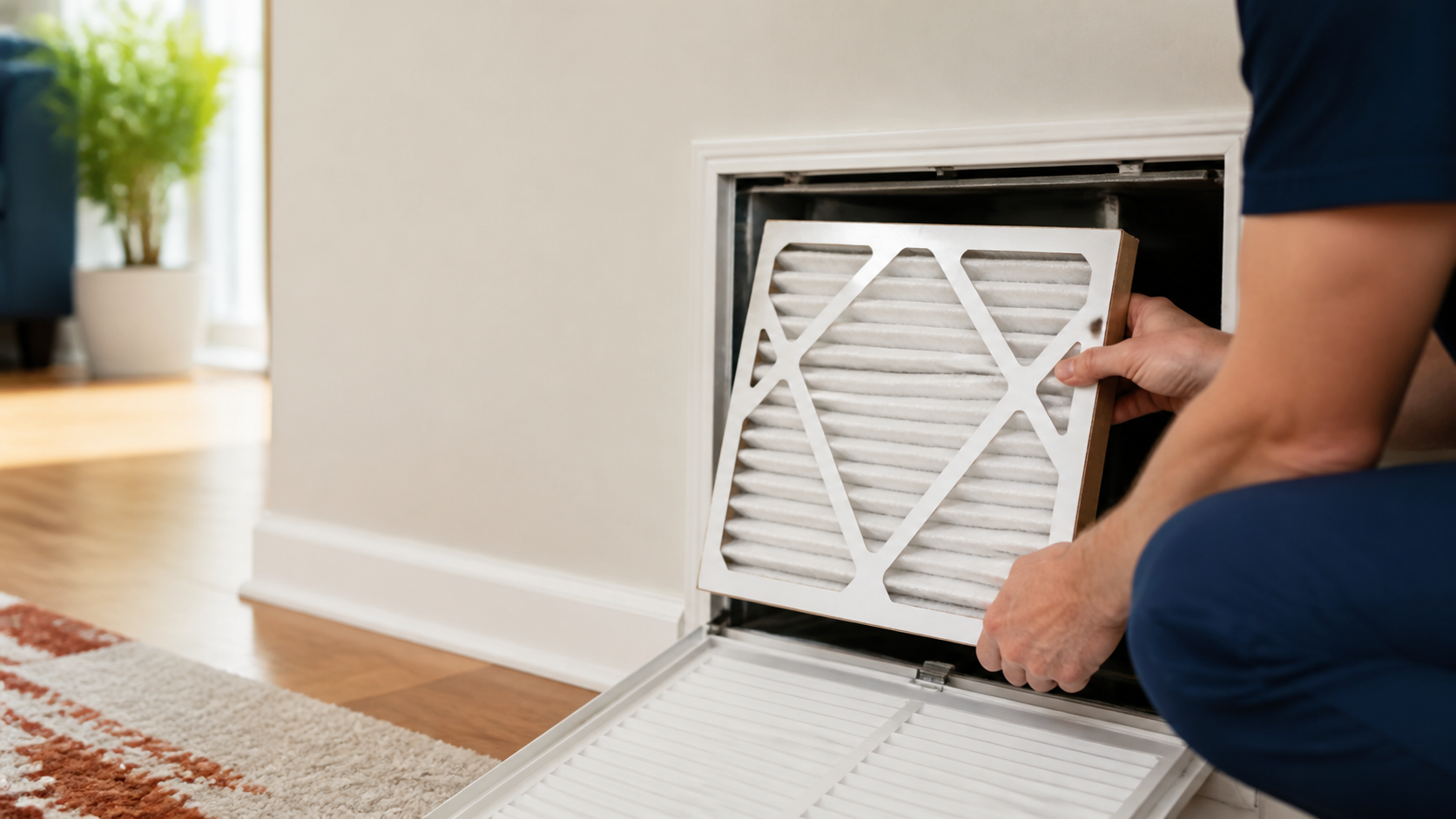
Check first
Look at the filter, confirm the thermostat wakes up and switches to cooling, clear the registers and returns, and pull loose leaves back from the outdoor unit.
Stop here
No removing panels, no spraying water into the indoor unit, no bending coil fins, no bypassing a safety switch, no working near live electrical or refrigerant parts.
What to tell us
When symptoms started, which rooms are involved, the thermostat setting, when the filter was last changed, and any water, ice, new noise, or constant cycling you've noticed.
Why spring is the right time for an AC tune-up
Spring maintenance is pre-season maintenance — the whole point is the calendar. ENERGY STAR recommends checking the cooling system in spring, before it's running hard and before every service calendar in the county fills up.
An air conditioner's job is moving heat out of your house, and restricted airflow or a dirty coil makes it run longer for less comfort. Maintenance also helps prolong system life, which is the kind of boring benefit you'll be glad about in year twelve.
Mostly, spring buys you decision room. When a technician finds a maintenance item or a repair in April, you can schedule it on your terms.
The same finding in July schedules itself.
- Spring is the cooling checkup window before heavy summer use.
- Early findings leave room to schedule corrective work.
- A tune-up buys information before a hot-weather breakdown does.
What you can check before scheduling service
Everything here happens with panels on and the refrigerant circuit sealed. Start at the filter — near the indoor unit, the furnace, or the return grille, wherever yours lives.
Visibly loaded with dust? Replace or clean it per the equipment and filter instructions.
Then the thermostat: display alive, mode willing to switch to cooling, setpoint set on purpose. Walk the house and pull furniture, rugs, drapes, and stored boxes off the supply registers and return vents so air can actually move.
Outside, clear leaves and loose debris from around the cabinet and keep plants, grass, and storage from crowding it. Note any visible water or damage near the indoor equipment or a banged-up outdoor cabinet — photograph it, don't open it.
- Inspect or replace the filter per the manufacturer's instructions.
- Confirm thermostat operation; clear blocked registers and returns.
- Remove loose debris from around the outdoor unit.
- Photograph visible water or damage instead of opening equipment.
What a professional spring tune-up usually checks
Scope varies by equipment and company, so ask for the checklist before the visit — and before approving anything beyond it. A tune-up should amount to more than a glance at the outdoor cabinet and a filter swap.
A thorough visit may cover thermostat operation, system controls, electrical connections, motor voltage and current, moving parts, the condensate drain — the line that carries water off the coil — the blower, the outdoor condenser coil, the indoor evaporator coil, and the refrigerant charge.
These checks earn their keep: dirty coils cut cooling and stretch run times, a plugged drain causes water damage, and loose electrical connections create unsafe operation. None of those findings is an automatic case for replacing the system.
Before the tech leaves, ask what the visit included, what was found, and which items are routine maintenance versus corrective repairs.
- Thermostat, controls, electrical connections, and moving parts.
- The drain, the blower, and both coils.
- Refrigerant charge and overall cooling performance.
- A plain explanation separating maintenance findings from repair needs.
Why the filter and airflow deserve attention
Weak airflow is easy to feel at a vent and hard to trace from the hallway — the cause might be the filter, the blower, the ducts, or the coil. Start with the filter because it's the one you can reach, and because it's the one everybody forgets.
A clogged filter restricts airflow, drags down efficiency, and undercuts the system's ability to cool. Timing isn't one-size-fits-all, either: pets, construction dust, smoke, and heavy run time all load a filter faster than a quiet household does.
Use the filter size and the equipment instructions as your baseline. If the filter is clean and the airflow is still thin, stop blaming the filter and ask for a diagnosis.
- A clogged filter restricts airflow and weakens cooling.
- Pets, dust, smoke, and run time set your filter's real schedule.
- Weak airflow that survives a filter check needs diagnosis.
Signs your AC needs diagnosis before summer
Some situations outgrow maintenance. If the system runs but the house won't cool normally, airflow stays weak at several registers, the system starts and stops over and over, or one part of the house runs dramatically warmer — that's a diagnosis, not a tune-up.
Add to the list: ice on the refrigerant lines or indoor coil, water near the indoor unit or drain, a new grinding, buzzing, or scraping sound, or cooling that's visibly fading. None of these names the failed part on its own; all of them mean something deserves testing.
Active leaking gets one response: turn the system off if you safely can, and get guidance rather than letting it run into the flooring.
- The system runs but the house doesn't cool normally.
- Airflow stays weak after the filter and vents are checked.
- Hard starts, repeat cycling, or a new noise.
- Ice, water, uneven cooling, or fading performance.
What homeowners should leave to a professional
The sealed list: no adding refrigerant, no attaching gauges, no cutting lines, no opening the circuit, no diagnosing charge by pressure alone. Refrigerant work takes proper equipment, the correct refrigerant, and training in leak detection and recovery.
Electrical testing, deep coil cleaning, blower work, and drain repairs belong on the same side of the line. A thermostat sitting dark doesn't make every component near it safe to touch.
And if you're not sure where the filter is, how to isolate power, or whether that wet spot is a drain problem — stop at observation. That's not defeat; that's exactly the right place to hand off.
- Refrigerant, sealed-circuit, and leak work: qualified technician.
- No live electrical testing; no opened panels.
- Deep coil cleaning, blower work, and drain repairs need pro tools.
- When the boundary is unclear, observation is the last homeowner step.
Maintenance, repair, or replacement evaluation?
Let the finding pick the path. Normal cooling plus ordinary wear adds up to maintenance.
Weak airflow, poor cooling, water, ice, noise, or constant cycling adds up to diagnosis first — before you agree to anything larger.
Ask what failed, how it was tested, what repair is on the table, and what deferring it actually risks. The cleanest decision comes from stacking the facts: equipment condition, safety, comfort, airflow, maintenance history, and whether the same problem keeps introducing itself.
Age belongs in the conversation without running it. An older system justifies an evaluation; it doesn't make replacement the only respectable answer.
A spring tune-up should leave you holding information you can use — not pressure timed to the season.
- Normal cooling plus ordinary wear points to maintenance.
- Symptoms point to diagnosis before any bigger recommendation.
- Ask what failed, how it was tested, and what deferring means.
- Weigh condition, comfort, history, safety, and repeat problems together.
Spring AC tune-up questions homeowners ask
For a central AC system, annual pre-season maintenance is the common rhythm, and spring is the cooling-side window. Your equipment manual and service history can adjust the details.
And a system with an active symptom earns a diagnosis, not a routine visit.
The homeowner side of the ledger: observations, filter care, thermostat checks, vent clearance, and loose debris around the outdoor unit. The professional side: refrigerant, electrical, sealed-circuit work, deep coil cleaning, and any drain you can't reach.
Before the technician arrives, write down the symptoms, when they started, thermostat settings, rooms affected, the filter date, and any water, ice, or unusual noise — and clear a path to both the indoor and outdoor equipment.
- Annual pre-season maintenance is the common central-AC schedule.
- Basic observations and filter care are reasonable homeowner tasks.
- A tune-up is not automatically a repair visit.
- Clear notes and clear access make the service conversation easier.
Answers to the usual follow-up questions
How often should an AC receive maintenance?
For a central AC system, once a year before the season is the norm, and spring is the cooling-side window. Your equipment manual and service history may adjust the details. A system showing a symptom needs diagnosis, not routine maintenance.
Can I do my own AC tune-up?
The homeowner half, yes: observations, filter care, thermostat checks, vent clearance, and loose debris around the outdoor unit. Refrigerant, electrical, sealed-circuit, deep coil, and unreachable drain work stay with a qualified professional.
Does a tune-up include repairs?
Not automatically. A tune-up is inspection and maintenance. If the technician finds a fault, ask for the diagnosis, the recommended repair, and any work that falls outside the basic visit — as its own line.
What should I do before the technician arrives?
Write down the symptoms, when they started, thermostat settings, rooms affected, the filter date, and any water, ice, or unusual noise. Then clear access to the indoor and outdoor equipment. You'll get a better starting diagnosis, and you'll understand what changed.
Why is spring the right time for an AC tune-up?
Because it's pre-season maintenance by definition. ENERGY STAR recommends checking the cooling system in spring, before the equipment runs hard and service calendars fill. You're buying calm scheduling and early findings instead of a July emergency.