Why Is There a Loud Bang When My Furnace Starts?
A boom from the basement at startup gets everyone's attention, and it should. The two usual explanations are very different: gas igniting late inside the furnace, or ductwork popping as it heats.
The first is called delayed ignition, and it means gas gathered before it lit. The second is sheet metal doing what sheet metal does. One needs prompt professional attention; the other is mostly an argument about dinner volume.
Telling them apart takes observation, not tools, and the difference decides how fast you act.
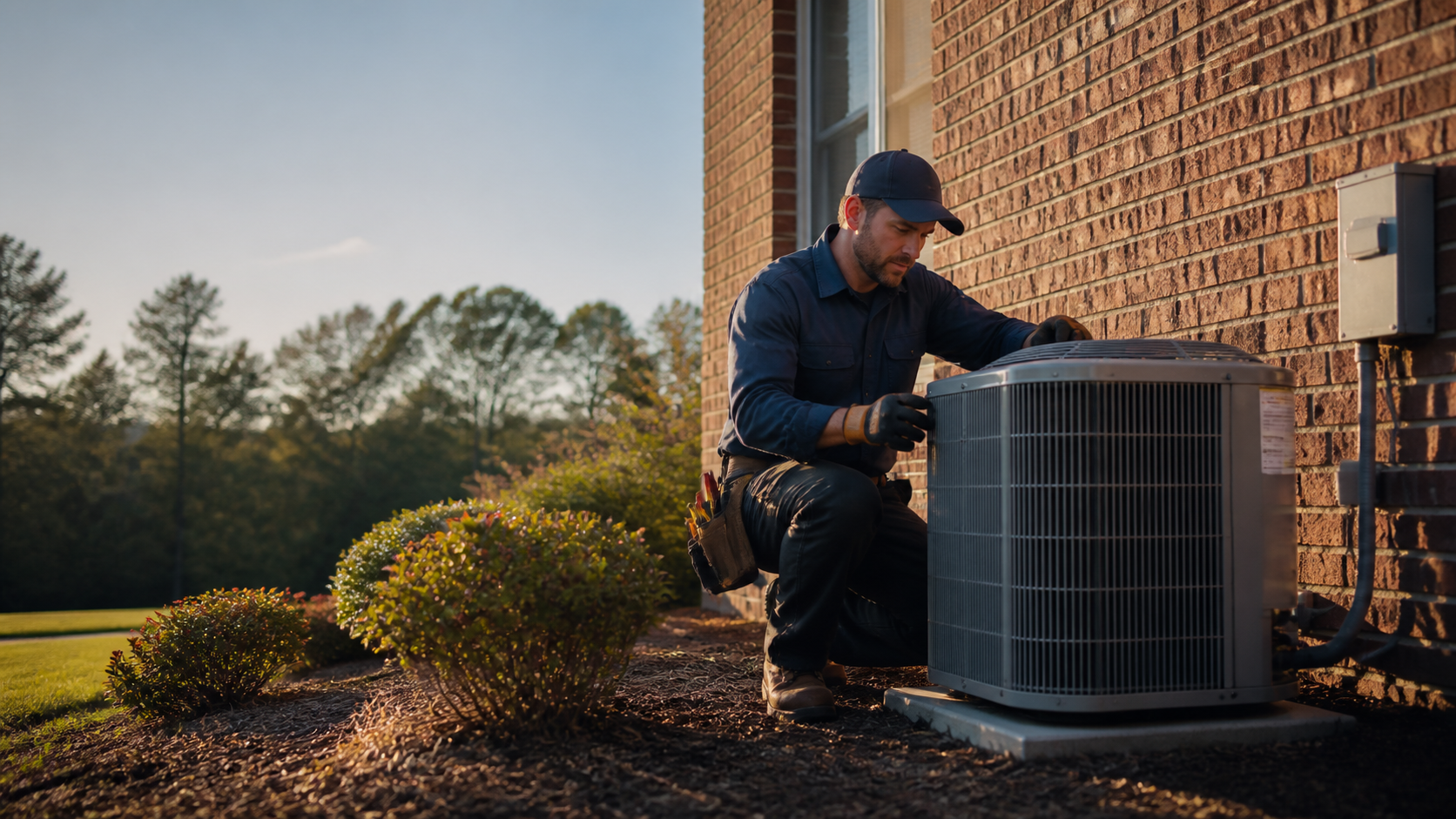
Locate the sound
Notice whether the noise comes from the furnace cabinet, a supply register, or the ductwork. A boom at burner ignition is different from a brief duct pop as metal heats up.
Safe checks only
Confirm Heat mode, inspect the filter, clear blocked registers and returns, and look from a safe position for snow or debris at the outdoor vent. Do not open the cabinet.
Leave first
For a CO alarm, gas odor, hissing, smoke, or physical symptoms, move everyone outside and call from a safe location. Do not stay inside to troubleshoot.
What a furnace boom can mean
A boom timed to burner ignition can indicate delayed ignition: gas accumulated, then lit all at once instead of lighting cleanly at the expected moment.
A dirty burner, an ignition problem, or a combustion condition may be behind it, and the sound alone does not name the part.
What the sound is not, is permission to keep restarting the furnace to hear it again.
Every reproduction is another small explosion, and the trend is not toward improvement.
- A boom at burner ignition can indicate delayed ignition.
- A dirty burner, ignition problem, or combustion condition may be involved.
- The sound is a symptom, not proof that one particular part has failed.
- Do not restart the furnace repeatedly just to hear the noise again.
Could the bang be coming from the ducts?
Location is the first sorting test. A sound loudest at the furnace, at a register, or along the ductwork tells three different stories.
Timing is the second. Before ignition, at ignition, or after the blower starts each points somewhere specific.
A mild, long-standing duct pop as metal expands is ordinary house physics.
A new boom at the furnace is not, and a sound that is new or worsening deserves a service conversation regardless of its address.
- Note whether the sound is loudest at the furnace, a register, or along the ductwork.
- Record whether it happens before ignition, at ignition, or after the blower starts.
- A mild, long-standing duct pop is different from a new boom at the furnace.
- A new or worsening sound deserves a service conversation.
What can I safely check?
Confirm the thermostat is on Heat, set above the room temperature.
Replace a visibly dirty filter with the correct size, and clear blocked registers and returns.
Inspect a visible outdoor vent from the ground for snow or debris, then stop there.
Do not open the furnace, work on the burners, or reset it repeatedly. The bang already told you combustion needs attention; the cabinet is closed for a reason.
- Confirm the thermostat is on Heat and set above the room temperature.
- Replace a visibly dirty filter with the correct size.
- Clear blocked registers and returns; inspect a visible outdoor vent from the ground.
- Do not open the furnace, work on burners, or reset it repeatedly.
When to shut it off and leave
Leave for a CO alarm, gas odor, hissing, smoke, or physical symptoms in anyone. Call 911 or the gas utility from a safe location outside.
Do not flip switches on the way out, light anything, or come back in to investigate.
And do not take the absence of an odor as proof of safety.
A furnace booming at startup has earned a professional look whether it smells like anything or not.
- Leave for a CO alarm, gas odor, hissing, smoke, or physical symptoms.
- Call 911 or the gas utility from a safe location outside.
- Do not flip switches, light a flame, or return inside to investigate.
- A lack of odor is not proof that a furnace with a startup boom is safe.
How a technician diagnoses delayed ignition
Expect questions first: the startup sequence, the timing, and where the noise is loudest. Your notes are the opening evidence.
A professional may then inspect the burners, the ignition, combustion behavior, venting, and the safety controls.
The repair-versus-replacement decision follows those findings, never the noise alone.
Ask what was found and what the recommended repair actually addresses.
- Expect questions about the startup sequence, timing, and location of the noise.
- A professional may inspect burners, ignition, combustion, venting, and safety controls.
- The repair-versus-replacement decision follows the findings, not the noise alone.
- Ask what was found and what the recommended repair addresses.
The right next step in Frederick County
Stop trying to reproduce the noise. The information is already in hand.
Record when it happens, where it is loudest, and whether heat output changed afterward.
Request a furnace diagnosis for a new, forceful, repeated, or ignition-timed bang, and use the emergency guidance first for gas odor, a CO alarm, smoke, or symptoms.
- Stop trying to reproduce the noise.
- Record when it happens, where it is loudest, and whether heat output changed.
- Request a furnace diagnosis for a new, forceful, repeated, or ignition-timed bang.
- Use emergency guidance first for gas odor, a CO alarm, smoke, or symptoms.
Address before adjectives
Furnace or duct, at ignition or after the blower: the two-part location answer does most of the sorting before anyone arrives.
Write it down the first time it happens. Boom reports age badly.
- Where and when, in one sentence.
The part nobody should skip
Filter, registers, and the visible outdoor vent are the entire safe list, and none of it involves opening the cabinet.
Everything else about a startup boom, especially one that repeats, is professional work from the first minute.
- A repeated boom is a diagnosis, not a quirk.
Answers to the usual follow-up questions
Why does my furnace make a loud bang when it starts?
Usually one of two things: delayed ignition, where gas gathers and then lights all at once with a boom, or ductwork popping as it pressurizes and heats. Location and timing separate them, and an ignition-timed boom at the furnace needs professional attention.
Is a banging furnace dangerous?
It can be. Delayed ignition is a combustion event that should not be happening, and repeated booms justify shutting the furnace off and calling promptly. It becomes an emergency with a gas smell, a CO alarm, smoke, or symptoms: leave and call from outside.
Is a banging furnace dangerous?Can I keep using my furnace if it bangs at startup?
Not repeatedly. If it bangs at every start, turn it off and arrange diagnosis rather than letting it accumulate another boom each cycle. Occasional duct pops are one thing; ignition-timed booms are another.
What is the difference between a furnace bang and duct popping?
A furnace bang is loudest at the cabinet and timed to the burners lighting. Duct popping is softer, scattered along the ductwork or at registers, and timed to the blower starting. When in doubt, treat it as the furnace until a technician says otherwise.
Can I clean the furnace burners myself to stop the banging?
No. Burner cleaning means opening the combustion section, which is professional work with gas controls in play. The safe homeowner list is the thermostat, the filter, the registers, and the visible outdoor vent, and nothing more.
Can I clean the furnace burners myself to stop the banging?When I call about the bang, what should I tell you?
Where the bang is loudest, when it happens in the sequence, how often it repeats, whether the heat output changed, and any odors, alarms, or symptoms. That paragraph is the diagnosis's head start.