Heat Pump Repair or Replacement After Compressor Failure
A compressor failure diagnosis lands hard, but it is a decision point, not a verdict. Before anyone approves a compressor replacement, the failed component should be confirmed, the electrical and refrigerant conditions around it checked, and the cause of the failure identified.
Repair can make sense when the rest of the heat pump is sound and the scope is clear. Replacement becomes the serious conversation when the unit is past ten years, the repairs keep coming, or comfort has been sliding for seasons.
Here is how the diagnosis should go, what separates repair from replacement, and what to ask before signing anything.
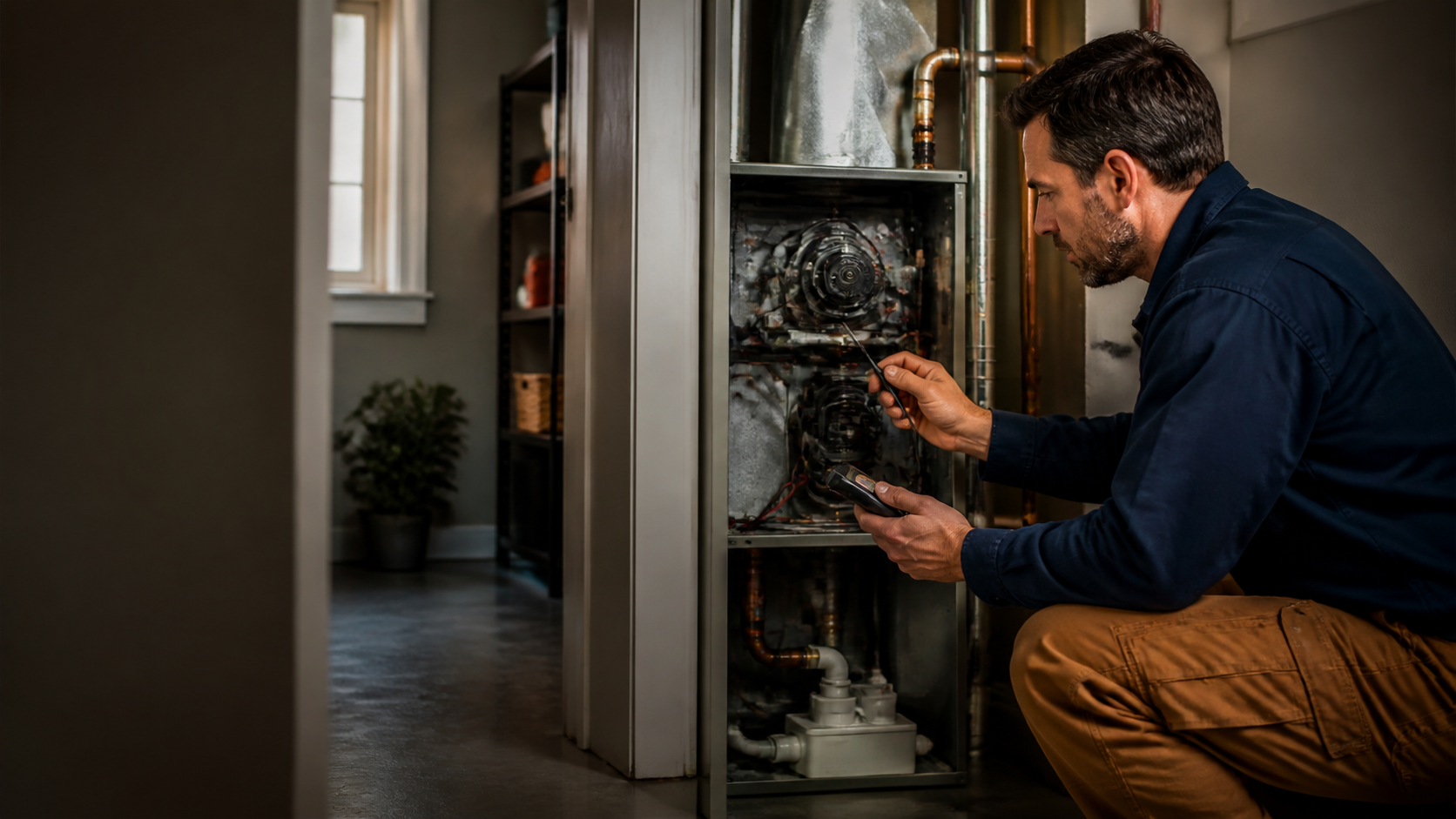
Start with the diagnosis
Humming, short cycling, a tripped breaker, or weak heating and cooling does not prove the compressor failed. A capacitor, contactor, wiring, control, airflow, or refrigerant problem can look identical.
Repair may be enough
If the failed part is smaller, the compressor itself still tests serviceable, and the rest of the heat pump is sound, a defined repair can restore operation without replacing the system.
Compare the whole system
On an older unit or one with repeat repairs, set the existing-system repair scope beside a properly matched replacement: indoor unit, refrigerant compatibility, ductwork, controls, and the comfort problem.
Why the compressor matters in a heat pump
The compressor is the heart of the refrigeration cycle, not a stand-alone motor with a stand-alone problem. When it cannot operate correctly, both heating and cooling suffer, because both depend on moving refrigerant.
That is also why the stakes feel high: the symptom reaches every mode the system has.
And it is why the symptom alone cannot identify anything. Confirming what actually failed takes electrical and refrigerant testing.
- The compressor is part of the refrigeration cycle, not a stand-alone motor problem.
- Heating and cooling can both be affected when the compressor cannot operate correctly.
- The symptom alone cannot identify the failed component or the cause.
Signs that can look like compressor failure
The classic presentation is sound: humming, clicking, grinding, banging, or screeching from the outdoor unit.
A fan that runs while the vents deliver neither proper heating nor cooling belongs on the same list. So do short cycling, long run times, no startup at all, or a breaker that trips repeatedly.
Burning odor, ice, water, or unusual vibration around the unit rounds out the clues.
Every one of them is a reason to diagnose the system, and none of them is proof the compressor died.
- Humming, clicking, grinding, banging, or screeching sounds.
- A fan that runs without proper heating or cooling at the vents.
- Short cycling, long run times, no startup, or repeated breaker trips.
- Burning odor, ice, water, or unusual vibration around the unit.
- A symptom is a reason to diagnose, not proof the compressor failed.
How a technician confirms the problem
Confirmation starts with the basics: the thermostat's request for heat, the operating mode, power, wiring, protective controls, and the start circuit. Those cheap checks have cleared many a condemned compressor.
Then the compressor gets tested electrically before anyone condemns it.
After that come airflow, coils, refrigerant condition, fan operation, and operating pressure, because a compressor can be the victim of a problem elsewhere in the system.
The findings get compared against the manufacturer's data before any part is named.
The last step is the one that protects your investment: identify and correct the cause, so a replacement compressor is not dropped into the same failure conditions that killed the first one.
- Confirm the thermostat's request for heat and the operating mode.
- Check power, wiring, protective controls, and the start circuit.
- Test the compressor electrically before condemning it.
- Check airflow, coils, refrigerant condition, fan operation, and operating pressure.
- Identify and correct the cause so a replacement compressor is not left in the same failure condition.
When compressor repair makes sense
If the diagnosis lands on the compressor, the questions begin. Which test confirmed that the compressor itself failed, and was the electrical supply and start circuit checked first?
Then the scope: what condition caused the failure?
And what parts, refrigerant work, labor, testing, and warranty are included in the proposed repair?
Finally, ask how the repaired system will be tested after the work. A compressor job deserves its own verification, and a company that plans for it is showing you its standards.
- Which test confirmed that the compressor itself failed?
- Was the electrical supply and start circuit checked first?
- What condition caused the failure?
- What parts, refrigerant work, labor, testing, and warranty are included?
- How will the repaired system be tested after the work?
Repair or replace the heat pump?
Repair fits reasonable system condition, a clear cause, a defined scope, and no pattern of recurring problems. One bad chapter in an otherwise healthy book.
Replacement fits equipment over ten years old, frequent repairs, rising energy bills, or comfort issues that keep returning.
Those are signals, not commands, and the diagnosis is what weighs them.
Before treating an uncomfortable house as proof the whole unit must go, check the ductwork, insulation, airflow, controls, and equipment matching. Then compare a written repair scope with a written, properly matched replacement scope.
- Repair: reasonable condition, clear cause, defined scope, no recurring pattern.
- Replace: over ten years old, frequent repairs, rising bills, or repeated comfort issues.
- Check ductwork, insulation, airflow, controls, and matching first.
- Compare a written repair scope with a written, properly matched replacement scope.
What to do next in Frederick County
Start with the safe exterior checks: thermostat, filter, outdoor fan, visible equipment condition, and the breaker, all without opening the unit.
Stop using the system entirely for burning odors, damaged wiring, or repeated breaker trips.
When you call, describe what changed and ask what the testing showed before approving work. The sequence of observations is the most useful thing you can hand a technician.
Ask for the repair scope and the replacement scope in writing when both paths are reasonable.
Written options are what let you compare paths instead of reacting to one number.
- Check the thermostat, filter, outdoor fan, visible equipment, and breaker without opening the unit.
- Stop using the system for burning odors, damaged wiring, or repeated breaker trips.
- Describe what changed and ask what the testing showed before approving work.
- Get the repair scope and the replacement scope in writing when both options are reasonable.
The first domino
Everything downstream, the quote, the decision, the winter, depends on the first step: confirming what actually failed and why.
Write down the diagnosis and the test results when they arrive. They are the baseline for every choice that follows.
- Confirm the failure before pricing the future.
And the cheaper ending
Plenty of condemned compressers turn out to be capacitors, contactors, or wiring faults, and those repairs cost a fraction of the headline number.
That is not wishful thinking; it is why the electrical checks come before the verdict. Let the tests speak first.
- Sometimes the cheap part is the whole story.
Answers to the usual follow-up questions
How do I know if my heat pump compressor failed?
Not always, and never assume so. Humming, tripping, or weak performance can come from a capacitor, contactor, wiring, control, airflow, or refrigerant problem. Electrical testing of the start circuit comes before any verdict.
Can a heat pump compressor be repaired?
Confirm the failed component with testing, check the electrical and refrigerant conditions around it, and identify the cause of the failure. Repair fits a sound system with a clear scope; compare replacement when the unit is older or the repairs repeat.
When should I replace a heat pump after compressor failure?
Yes. The compressor circulates the refrigerant both modes depend on, so a true compressor failure usually shows in heating and cooling. A problem in only one mode points elsewhere, which is why testing matters.
Should I get a second opinion on a heat pump compressor failure?
The system's age and condition, the repair scope and cost, warranty status, and your comfort history. Over ten years old with repeat repairs tilts toward replacement; a sound system with an isolated failure tilts toward repair.
What should I ask before approving a compressor replacement?
The full picture: what failed, why, the repair scope and cost, the warranty on the work, the condition of the indoor coil and the rest of the system, and a matched replacement comparison when age warrants it.
Can I troubleshoot a heat pump compressor myself?
Both can be reasonable. A failed compressor on an otherwise sound, younger system can justify the repair, while the same failure on an aging unit with a history often points to replacement. Written scopes for both paths let you decide with numbers instead of pressure.