Furnace Short Cycling
Why Your Furnace Turns On and Off
The furnace starts, runs a little, shuts off, and starts again before the house ever reaches the setting. That on-off-on-off rhythm is what homeowners mean by short cycling, and it is not a normal cycle finishing its work.
It frustrates because the house can feel cold while the furnace looks busy. Repeated starts wear on internal components and heat the house unevenly. And the symptom does not name its own cause: a filter, thermostat, airflow problem, safety control, sizing issue, or combustion problem can all be behind it.
A few safe observations give a technician a running start. The goal is not to guess flame sensor or safety switch; it is to capture the pattern, clear the simple airflow stuff, and know when to stop.
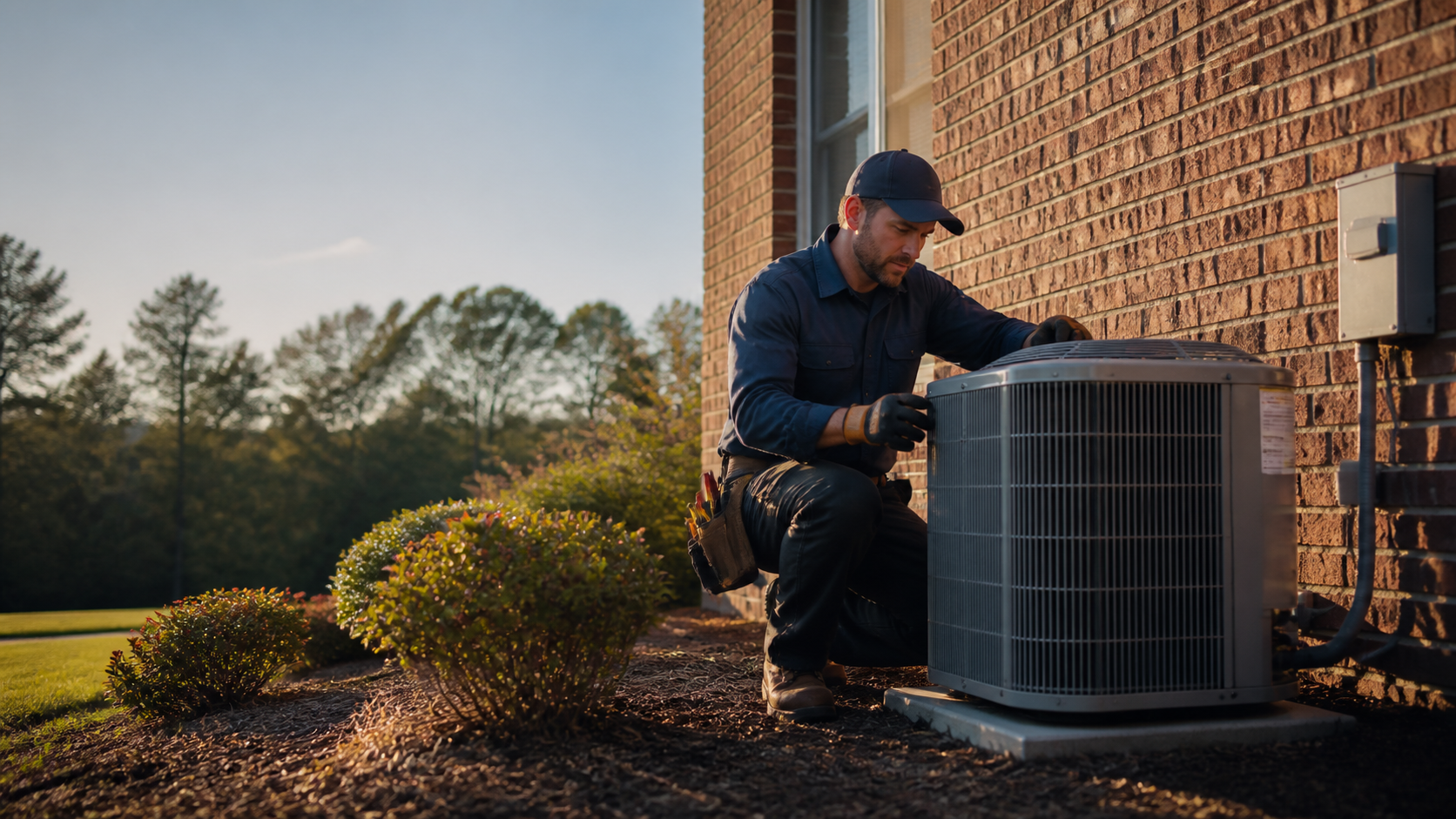
Check first
Confirm the thermostat is calling for heat, swap a visibly loaded filter for the right size, and clear supply registers and return grilles. Never run the furnace without a filter.
Stop here
Leave the home for a CO alarm, gas odor, or possible illness symptoms. Shut the furnace off for smoke, scorching, visible damage, or repeated breaker trips.
What to tell us
How long it runs, whether the burners light, whether the blower keeps going, how quickly it restarts, and whether the house ever reaches the set temperature.
What short cycling looks like
The signature is repetition: the thermostat asks for heat, the furnace begins, shuts down before the job is done, and tries again shortly after. You may hear burners or blower several times an hour, feel lukewarm air, or notice rooms that never catch up.
No single cycle length convicts every furnace. Equipment design, heating stages, thermostat controls, outdoor temperature, insulation, ductwork, and the house's heat loss all shape operation, and a brutally cold night legitimately means more run time.
Watch the pattern and the result. A furnace that never satisfies the thermostat, starts that grow more frequent, weak airflow, or a problem that survives a filter change all deserve diagnosis.
- The thermostat keeps asking while the furnace keeps quitting.
- Burners or blower start several times before the house is comfortable.
- The house stays uneven or underheated despite the apparent activity.
- Timing and sequence beat guessing at a part.
Safe checks before calling for furnace repair
Stay on the outside of the equipment: nothing here requires opening the cabinet or touching combustion and safety components. These checks can surface an airflow or control condition, but they cannot certify the furnace safe.
Check the thermostat mode and set point: Heat, above the room temperature, fresh batteries if the display asks. Note that a thermostat in direct sun, near a supply register, or beside an oven can misread the room.
Look at the filter and replace it only with the correct size and type, airflow arrow respected. Keep registers and return grilles clear of furniture, rugs, boxes, and drapes.
Do not run the system filter-less to test the theory.
A blank thermostat means checking the nearby HVAC switch or breaker. Do not keep resetting a tripping breaker, do not open panels for wiring, and copy any flashing status light or error code exactly as it appears.
Record the setting, the room temperature, the run time before shutdown, whether the blower continued, whether the air felt warm, and how soon the restart came.
- Confirm Heat mode above room temperature.
- Replace a loaded filter with the correct one; never run without one.
- Open supply registers and clear return grilles.
- Do not bypass a limit switch, hold a safety switch, adjust gas pressure, or test live electrical parts.
- Burner-area and combustion diagnosis belongs to a qualified professional.
Common causes a technician checks
Airflow comes first, because a furnace has to move heat away from the heat exchanger. A dirty filter, blocked return, closed register, dirty indoor coil, failing blower part, or duct restriction chokes that flow, heat builds, a safety control kills the burners, and the furnace retries once it cools.
A thermostat can end a heat call early if it misreads the room, has a wiring fault, runs weak batteries, or sits in a warm draft or sunlight. A technician can compare its reading against the actual room temperature and confirm the control is sending a steady call.
A limit switch shuts the furnace down on high internal temperature, and if airflow restriction is the reason it trips, replacing the switch fixes nothing. A dirty flame sensor or other flame-proving fault stops a burner seconds after lighting.
Sequence tells them apart: burner lights then dies, blower runs on, or everything stops.
Fuel-burning furnaces need proper combustion air and venting, and high-efficiency condensing models add a condensate drain that can stall operation when blocked. Duct leakage, weak distribution, or a crushed section leaves rooms uncomfortable and changes the airflow the equipment sees.
Oversizing produces its own version: the furnace warms the thermostat area fast, shuts off, and leaves the far rooms behind. A sizing review looks at the building and the ducts instead of defaulting to bigger.
- Restricted airflow can overheat the furnace into a safety shutdown.
- Thermostat placement, batteries, wiring, or misreading can cut a heat call short.
- Flame-sensing and ignition faults run a recognizable light-then-stop sequence.
- Venting, the drain that carries the furnace's water, duct distribution, and sizing all shape cycling.
When short cycling becomes a safety issue
Short cycling alone does not prove a carbon monoxide problem, but a fuel-burning furnace that changes behavior gets respect. CO is odorless and colorless, gas and oil furnaces are household sources, and fuel-burning systems should see a qualified technician annually.
Leave the house and get help immediately for a CO alarm, possible CO symptoms (headache, dizziness, nausea, weakness, shortness of breath, confusion), or a gas smell. Do not stay indoors hunting the failed part; follow the alarm instructions and call emergency services or the gas utility from outside.
Shut the furnace off and book a timely diagnosis for smoke, scorching, a strong burning odor, repeated breaker trips, visible damage, or repeated lockouts, and never keep resetting a safety control. Without emergency signs, leave the system off when practical and arrange service rather than grinding through failed cycles.
- CO alarm, gas odor, or possible CO symptoms: leave first, call from outside.
- No switches, no open furnace, no indoor part-hunting during an emergency.
- Smoke, scorching, damage, and repeat electrical trips: prompt shutdown and diagnosis.
- Never bypass a safety control or keep resetting a locking-out furnace.
Repair or replace a short-cycling furnace?
Short cycling is not itself a replacement verdict. A filter, thermostat, airflow restriction, control, or venting problem may be entirely repairable.
A good repair discussion covers what caused the cycling, what needs attention, whether the heat exchanger and combustion are safe, and whether ductwork or installation contributed.
Replacement earns a real look with a serious safety finding, repeated failures, a major component problem, a poor installation, or capacity that no longer fits the house. Age is a factor, not the factor: a newer furnace with a duct or thermostat problem needs correction, while an older furnace stacking problems may not deserve more investment.
Ask for the diagnosis in plain words. What is shutting it down, what test says so, does the repair address the cause or the symptom, and does the furnace actually fit the load and the ducts.
Those answers keep the repair-or-replace comparison level-headed.
- Ask what is shutting the furnace down and what test proves it.
- Confirm the work addresses the cause, not just the symptom.
- Ask whether the furnace fits the heating load and duct system.
- Weigh safety, condition, installation, capacity, and history before replacing.
Getting help in Frederick County
County homes range widely in ductwork, insulation, equipment age, and fuel, so a short-cycling furnace in an older house may need different diagnosis than one in a freshly upgraded build.
When you call, share the fuel type, thermostat setting, the run-and-rest pattern, filter condition, any recent work on the house, error codes, odd sounds or smells, and whether the house reaches the set point.
For a routine symptom, ask for a diagnosis that explains cause and options. For CO, gas, illness symptoms, smoke, or a serious electrical warning, the emergency steps above come first.
The goal is steady heat plus a clear account of what changed.
- Bring run time, rest time, thermostat setting, filter condition, and any error code.
- Mention recent installation, insulation, air-sealing, duct, or thermostat work.
- Ask that the symptom be tied to a test and a repair option.
- Emergencies first: gas, CO, smoke, illness symptoms, electrical warnings.
The two-minute version
Thermostat asking for heat, fresh filter, registers and returns clear: if short cycling survives those three, the answer is not in the hallway anymore.
Keep the timing notes with the service history. Run length, restart speed, and whether the burners light are the first three questions we will ask.
- Pattern first, parts never.
The line you do not cross
A CO alarm, gas odor, or illness symptoms ends the troubleshooting where you stand: leave the house and call from outside.
Smoke, scorching, visible damage, or repeated breaker trips ends it differently: shut the furnace off and arrange diagnosis. Both rules outrank curiosity.
- Some exits are through the front door.
Answers to the usual follow-up questions
Can a dirty filter make a furnace turn on and off?
Yes. A dirty filter can restrict airflow, let heat build, and trip a safety shutdown. Replace it with the correct size and watch whether the symptom returns; if it does, the airflow problem lives elsewhere or another fault is involved.
Can a dirty filter make a furnace turn on and off?Is a furnace turning on every few minutes always short cycling?
Not always. Outdoor temperature, equipment staging, thermostat controls, and the house's heat loss all affect cycle length. The stronger signal is repeated shutdown before the thermostat is satisfied, especially in ordinary weather with the house still uncomfortable.
Can a thermostat cause short cycling?
Yes. Poor placement, weak batteries, wiring problems, or a bad temperature reading can interrupt a heat call or manufacture extra ones. Check the mode, set point, display, and visible placement, and leave the wiring to a professional.
Should I keep running a furnace that short cycles?
With a gas odor, CO alarm, illness symptom, smoke, scorching, or a repeated electrical trip, leave or shut the system down and get immediate help. Without those, persistent short cycling still deserves prompt diagnosis: repeated starts add wear and leave the house underheated.
What should I ask during a furnace repair visit?
Ask what caused the shutdown, what test supports it, whether airflow and venting were checked, whether the furnace is correctly sized, and whether repair or replacement fits the equipment's condition. The answer should tie the symptom to the work.
What details help most when I call about a short-cycling furnace?
How long it runs before shutting off, whether the burners light, whether the blower continues, any smell or noise, the filter condition, and when the cycling started. That pattern beats a guessed flame sensor or filter.